We are back with Justin Williams Pope, journalist and writer of the Henry and Matilda’s Adventures children’s book series.
Justin visited us earlier in a live interview in October. We decided to follow up with him here to learn a bit more about his experiences.
Let’s jump back in!
On Education And Success
You have to dare yourself and challenge yourself to grow. If you don’t ask to do it, how will you know if you might get the opportunity? Most people miss out on these things because they are afraid to ask how they can pursue it!
Justin Williams Pope
You spent five years at Wayne Community College, in part, because you didn’t put your best foot forward in your work. What motivated you to take your education seriously?
My dreams and desires to be successful. I knew that Education was the only route for me to attain success in the area I wanted to be in and I needed to buckle down and get my education.
You struggled with a lot of different career path ideas before you ever left Wayne County. How did you focus enough to pursue a degree in Communications at the University of North Carolina at Wilmington?
I certainly did struggle. Honestly, I fell into communication studies due to my love for writing as well as my disdain for Math. I knew to be a Communications (Com) major, I could just take statistics and I could still pursue Public Relations or Journalism.
Looking back on the successes you have had so far, how important has college education been to your success as an artist in multiple genres?
A college education is invaluable because, if anything, classes teach you the best skill of all: time management. It may help teach you something specific to your major, yes. However, the biggest takeaway, in my opinion, of obtaining an undergraduate degree is the ability to manage and balance your time successfully. It is so important. Yes, you may have the skills, but if you don’t know how to manage the time you have, you can never obtain any degree of success.
What advice would you give to students like you that struggle here in their studies today?
Keep on keeping on. Take advantage of the tools and resources that are on campus: Writing Center, Math Lab, tutors, advisors, etc. to get advice from along the way. All of those are to your advantage in your educational journey. USE THEM.
You have an amazing gift for pursuing dreams and passions without fear of failure because you believe in yourself and know you can’t fail or succeed without first trying. You have not always felt this way. What helped you take such a positive approach to living your life?
You have to find that within yourself. I may not be the smartest person ever, but I have just enough about me to ask the question. For example, I think about how I ended up in the internship at One Tree Hill. I was folding washcloths at Belk one afternoon when I realized I was going to walk into my intern advisor’s office the next day and ask for that internship. Those more daring things have only served to assist in building my confidence. I also credit my yearning to know about things and to dare myself to do it. i.e – dangling nine stories up from the WFD fire tower or wading out into the intracoastal waterway without a lifejacket just to try to help find an endangered species. You have to dare yourself and challenge yourself to grow and if you don’t ask to do it, how will you know if you might get the opportunity? Most people miss out on these things because they are afraid to ask how they can pursue it!
On Journalism And Acting
There are many different types of writing, but you really fell in love with journalism from the beginning as a student writer and editor for Wayne Community College’s Campus Voice. What made you realize this career was one you really wanted to pursue?
I have two favorite mediums of writing – the first is that journalism/quasi-editorial of telling a story in a very interpersonal way. I had loved writing since 2nd grade and even when I look back at that now, I was writing very interpersonally then. I thank God for that talent and aim to use it to the best of my ability. If you can convey a story to a reader, you can change a life! The second type of writing is Public Relations writing. I love writing Press Releases. I excelled at this in college as it was a professional, clear-cut form of writing but if you can make it sound good and clean, it will wow your readers. It’s also nice to be on both sides: press release writer and then as a journalist, take that press release and create a story out of it.
Journalists used to take pride in telling well researched, honest stories that were meticulously fact checked and edited for typos. Today, simple typos appear in every article and journalists intentionally report false news as much as real news. What do you think is the cause of this change?
Sensationalism, unfortunately. I think Social Media has added to this as many people fancy themselves as journalists when they are not. Sadly, our world has changed with the advent of social media. We live in a 24 hour a day news, news, news and the need to fill space is there. Unfortunately, journalists are going so fast and there are so few of them for multiple platforms – on cam, on web, print, blog, etc. The medium is no longer just tv or the afternoon newspaper. As far as bias in journalism, all stories can be slanted to appeal to a certain audience or persuade a certain group. Or to make someone look bad. If you look back at a broadcast of the news from the 1970’s, Walter Cronkite reported just the facts of what happened. Today, journalists often insert their own opinion or feelings when they should just report the facts but they want to have their story clicked on so the word sensationalism comes to mind because ultimately, journalism is a business.
I remember pitching a story to freelance write for a local paper, and the editor took my idea and gave it to his own staff writers to complete. How competitive is journalism today and how can someone new get into it?
I feel like that was hi-jacking your idea and that’s not nice on that editor’s part to take your idea and give it to a staffer. I have never had that happen to me, yet. I feel like it is becoming harder and harder to break in as a freelancer in print media at least. There used to be 11 of us and we are now down to 3 in the Wilmington Market. Sadly, the newspapers are shrinking and the need for stringers are not needed like it was in previous years and there is just not the funding for them as advertising dollars are down.
You have said the landscape of journalism is changing as less and less readers buy print media and the publishers are converting to online subscriptions. How has this changed how writers are managed today?
In my market, I write about happy/community things so it has not affected what I do. I write about church anniversaries, school events, etc. As we have grown smaller in numbers, my area has increased. Years ago, I was only allowed to write for Pender County but now I cover all three counties. It has been a pro for me because I can cover all three areas but the problem is that if you are looking for immediate news, your phone is the go to. By the time the newspaper comes out, Trump has tweeted something new. The online version is the way to go for instant find out! I have not been asked to not cover something because I write about things that people will go to the box and pick up a paper.
How has the transition to online readers changed the types of stories you tell? Do you feel you have more or less readers now than you would have had twenty years ago?
No real changes on my story types. But size is much smaller than years ago. I used to write 850 words per story. Today – I cannot go over 350-375 or it will be cut. This is because reader’s attention span is much shorter and they will not take the time to read a longer story. I feel like 20 years ago – the print subscriptions were much stronger, but online has only increased and the print editions have decreased.
You were introduced to acting through local theatre here at Wayne Community College and, in the community, through Stage Struck Productions. One of the first things you developed to pursue a career in acting was a professional portfolio of pictures and acting experience. How important was this step towards opening the door in the acting world for you?
Eh. I never saw myself as an actor. I only developed my portfolio because I needed to as part of my senior seminar at UNCW. It was indeed helpful but it wasn’t the direction I was going in. Whatever you do, however, it is good to have a professional portfolio.
You had an internship with One Tree Hill in Wilmington. What you expected to be an open door into the world of performance art ended up being a dead end. How did you handle that seeming failure and reshape it into a positive experience?
I just kind of felt it wasn’t meant to be. There are times in life when you know that it just wasn’t meant to be and that another avenue will open up if you keep pursuing. I wasn’t going to act. I wanted to write but it didn’t seem to happen and now looking back I wouldn’t want it any other way.
You have a gap between your two front teeth that is a rather endearing identifying mark, but it hasn’t always been treated that way. What negative comments have you received about your appearance and how have you handled them without letting them derail you?
I find my gap inspiring and I never wanted to change it. I did have it closed in as it was once even larger. It was hurtful when I was told that I would never be on television because it was so large. But there are people with that opinion. I like to think of it as a unique thing because not everyone has it. I’m special!! And again, you just keep going no matter what!!!
You joined a Writers’ Guild to improve your opportunities in the field of writing. There are professional guilds for many artistic careers including acting and writing. What is a guild and how can it be beneficial for an artist to join one?
I never joined an actors guild, but I joined the Writers Guild. (It is good because) there are tons of resources that benefit a fledgling writer including agent opportunities and writer’s groups. It also gives you a professional standardization that resonates with those in the writing world.
You transitioned from acting to creating and hosting a show you are pitching to The Discovery Channel now. You proudly claim the show, Sacred Places, will be a lasting legacy of something good you will give back to the world. How difficult has it been for you to take on this role, and what has been your best help in fulfilling it?
I have had the good fortune to be able to utilize lots of resources to get this off the ground. My University of North Carolina at Wilmington resources as well as my Wilmington Star News background. The churches themselves are really the star of the show. They tell the story of our history and our time. I am just like the viewer, along for the ride but I am fortunate to be able to help share these stories with the audience and if picked up, hopefully the world. It has not been a hard task as it is something I love and I am thankful for the opportunity.
On Creative Writing
You may have the skills, but if you don’t know how to manage the time you have, you can never obtain any degree of success.
Justin Williams Pope
You have explored different types of writing including short stories, screenplays, and children’s literature. How do you determine what genre a story should be in?
It usually just starts with an idea in my head. It definitely varies as I have lots of ideas. I then use the clustering system to develop the idea and story. For my journalism stories, I use a set formula that makes it easier to write but still compels a reader in.
You were inspired to tell a travel story as a children’s book that is now a published, ongoing series about a country dog and chicken exploring historic locations in America. How do you determine locations for the series to explore while still making them believable journeys for your characters?
We have so many great places in America that I want them to travel too. The first book was a no-brainer. New York is not your average market – it is a global market so I wanted it to be a “larger market” book that would sale lots of books. As we search for new locations, I try to look at what may educate our readers as well as take them to a place of new exploration, somewhere that is fun yet still with great learning opportunity. Our 4th book that will publish in late 2020 will be in the mid-west and will be the first time we have adventured to that area.
Some of the best advice given to young writers is to write from what you know. You have done that with the Henry and Matilda’s Adventures series because you grew up on a farm (around farm animals) and used real people to inspire your work. How similar are your literary characters to the real inspiration for Henry and Matilda?
Henry and Matilda are best friends much like the real Henry (Me) and the real Matilda (my good friend Drucilla) are as we set out on an adventure to New York City. As far as what they are doing, the characters do take on a life of their own. I like to think of Henry as being very loyal and Matilda as being very sassy but they both certainly love their adventure.
As simplistic as a children’s story may be to an adult reader, it is actually far more daunting to write. What are the key factors that have to be considered when writing a children’s book?
A large part is being in harmony with your illustrator. You have to ask ‘can she draw this?’ Henry and Matilda’s illustrations are fantastic painted by a professional artist who met with me in depth over periods at the farm to capture what I wanted. The story is formulated as Henry and Matilda will always go on an adventure together, the artist is the one who brings my story and vision to life.
The market for children’s literature today is both saturated and competitive. How do you find and create a niche in that genre?
You follow through and don’t give up. You keep pushing and develop not only the story but if you want to last, you create a brand.
In the past, writers wanting to get published would submit work to publishers directly and wait to hear back. Over time, less and less publishers have accepted unsolicited work, and many of them have closed up their doors. You used an agent to help market and get your book published. How did you find an agent, and how has that helped you?
Any quality presentation would seek out assistance from the Writer’s Guild (yes, it costs money to do so) and their assistance is invaluable. The Writer’s Guild brings a prestige and professionalism to your work.
Many writers today are turning away from traditional publishing houses in favor of self-publishing and self-promotion. Presses like Amazon make it possible for writers to do their own layout and print only on demand as copies are sold. How has this made the world of writing better or worse as a whole?
I don’t think it has made it worse. I think it has actually provided an outlet for people who may just want to see their story come to life. They may have no interest in being a professional writer or a lifetime story teller. I think online has encouraged creativity and has allowed people to see themselves as an author. They may never make tons of money from it but they got their dream of having their book published.
Some writers feel they are not writers till they can write full-time and live off their writing income, but that is a pressure that often strangles creativity and is unrealistic for most writers. Do you feel writers shame themselves and each other into unrealistic goals?
The reality is that most writers have another 9-5 job until they can become professional writers in some medium. I don’t know about “shaming themselves”. I can only speak for me, and I look at it as a business just as much as it is a creative passion. Some writers can never discern the two.
Many writers benefit from the stability of a regular job and write around it. You currently write while working a 40-hour week in Public Relations in the healthcare industry. How has that job enabled you to be a better writer?
Both are so different – I’m looking at things from two opposite spectrums so I feel l can write from both arenas and it strengthens my writing.
Many of our readers are aspiring writers too (of all ages). What is your best advice to young, yet unpublished, authors?
Keep writing. Remember, that there is no plot that has not been done. What can you do to make it unique but sellable? Who is your target audience and follow the correct business steps to get published.
This concludes our two-part interview with Justin Williams Pope. You can find his Henry and Matilda’s Adventures series available wherever books are sold including Amazon and Barnes and Noble.
We hope you were enlightened and encouraged by what was shared. Please leave a comment below and share how we have encouraged you and any questions you may have to continue the discussion.
I am here with Justin Williams Pope, Wayne County native and graduate of Charles B. Aycock High School and Wayne Community College. Justin and I went to college together, here at Wayne Community College, and followed each other to the University of North Carolina at Wilmington. Justin has a Bachelor’s degree in Public Relations and has made a successful life for himself pursuing his passion for writing and communication. He has come back to Wayne Community College (and this blog) to share a little of his story and knowledge of the writing industry and motivate us to pursue our dreams.
Justin, tell us a little bit about yourself and who you are.
Source: Wayne Community College
Thank you for joining us!
We hope you found this event to be an encouragement towards your own life goals.
“We are afraid to care too much, for fear that the other person does not care at all.”
— Eleanor Roosevelt
When I was growing up, I was a cute little blonde with blue eyes and curly hair and dimples. I had a cheery personality and everyone liked me–I had no problem making friends–but I was invisible to the boys. As I got older and into my dating years, I felt really self-conscious when I didn’t have a date. What was wrong with me? Why didn’t anyone ask me out?
Being invisible became a real problem for my self-esteem. I compared myself to other girls and automatically assumed everyone else was better than me. I hated myself because I wasn’t the girl every guy wanted to get with. I hated other women because they were the girls every guy wanted to get with. In judging others, I perpetuated a lie that I was not good enough to be loved exactly as I am for who I am without any changes. The more I believed the lie, the more I trapped myself in hatred of myself and other women. The more trapped I was, the farther I fell from ever really seeing the truth. I WAS worthy of love…a truly awe-inspiring love story.
A Truly Awe-Inspiring Love Story
I’ve had a rough journey when it comes to love. I’ve been putting my heart out there and trying to trust guys for years, but every relationship or attempt at one leaves me burned.
I told myself that when I got to a certain goal or deadline, I would get back out there and try again. That moment came and went, though, and I couldn’t do it. I wasn’t sure I would ever trust again. Maybe I’ll just stay single, I thought. I started thinking about building a family through adoption, and I started making plans for a house of my own. Maybe a truly awe-inspiring love story is just not in the cards for me.
Take Time To Love Yourself
Being single can be the most miserable place to be–especially if you are relationship-oriented like me. The challenge, in this time is to keep telling myself it’s all going to be okay even when I don’t really know it is.
I try to fill my time with things for myself that I hadn’t been able to pursue before. For example, I was able to focus and finish my Master’s degree after a breakup. I have also spent the alone time to focus on ignored health needs and learn new skills.
It’s important to do healthy things that make your heart feel better too. Now is the time to read a mystery instead of a romance, watch The Crown on Netflix, finish a project, go somewhere new, and spend more time with quality friends.
“Personal development is the belief that you are worth the effort, time and energy needed to develop yourself.”
―Denis Waitley
Final Thoughts
I am not an expert on relationships. I am still figuring this out for myself too. But I know this much: you don’t have to be a perfect person to be loved, and just because your love life is a mess now, doesn’t mean it will be that way forever.
Give yourself some room to focus on you and get healthy.
Love will come when it is right and when your heart is healed and ready for it. When it does, be smarter from your past mistakes; don’t hold on to bad fish for years hoping they will get their lives together and stop stinking.
Dare to believe you are worth a love that will go the distance for you, and you just might be one of the lucky ones that finds it.
The longest relationship I have ever had started online through the dating app, Plenty of Fish (POF). Back then, the app was still new and lots of people I knew were meeting on it. The fact that the app referenced a fish (a known symbol of Christianity) made many of us think it was a Christian app. That Christian connection made you feel safe–even when it was the farthest thing from the truth.
Simple and Free Isn’t
POF started as a free app, and you could communicate with matches without payment. When this review was updated in 2022, many users claimed that you could not move forward with communication without paying for a membership.
Questionable Matches
My profile got a lot of attention. At first, it was intoxicating and self-affirming because I was no longer invisible and guys were messaging me from all over. What started as one nice digital complement, however, turned ugly. A few nude pictures and inappropriate invitations down the road, I was ready to leave the app. The same was true for the man that would become my boyfriend, but even he had enough problems that we couldn’t last long term.
Images from the app store showing negative reviews as of 1.07.2022
Trying Again on POF
Five years down the road from my first experience with the app, I went back in for a new connection and had a totally different experience. Within 24 hours of going back to POF, I had over 50 guys messaging me, and the caliber of these matches was significantly upgraded. Most were men with good character, strong jobs, and handsome, athletic bodies.
There were still plenty of matches just looking for hookups, but they were outnumbered by the good fish claiming to want women with good hearts (not gym rats).
Setting Filters
I was overwhelmed with options, so I decided to establish filters for the matches I talked to. First, I asked all the tough questions about core values in the app itself. It was easy to say goodbye quickly and safely if we wanted different things; there would be no hard feelings. Next, I listened to what the matches chose to talk about. What a person treasures is revealed through how they talk. This filtering process helped me narrow down from 50+ matches to three.
Money Requests Change Connections
One day, one of the guys I had narrowed downed to asked me if I had a credit card. I freaked out, thought he wanted money, and told one of the other guys about it. That guy–who was overseas at the time–went out of his way to find a way to video chat with me from overseas.
I needed to video chat with my matches to see they were who they said they were. The fact that this one match was willing to do so while also on the front lines of military service made him quickly rise to the head of my pack. With more conversation, I was ignoring everyone else but him. I didn’t expect everything about him was a lie.
Reporting Liars is Not Supported
When Chris was a lie, I went back to POF to report him, but he was already gone. I tried to report the guy who asked for a credit card, and he was gone as well.
Angry about being lied to, I decided to stay on the app and see who would reach out again. I felt like bait tangling in a shark tank, but if I could snag a few bad fish and report them, I thought it would be worth it.
One day, I got a nibble. The next, a juicy bite. In a few short questions, I was identifying 5-7 catfishers and liars per day.
What Is A Catfisher?
Catfishers are people who take pictures of real people (often from their social media accounts) and pretend to be someone they are not online in order to create emotional bonds they can exploit for money. Sometimes they even promise to not ask for money, but that is a tactic used to build trust and make you offer it later.
Catfishers will say whatever you want to hear and be whomever you want them to be, but their conversations poke holes in their stories. First, they write in broken English. Then, the details don’t add up. One minute they are a saxophone player, the next a guitarist. They claim to be from a particular area but can’t accurately report the time and weather there.
Every word from a catfisher is a lie—sometimes plagiarized word for word from online—so do your research! Google what they tell you to see if it makes sense. If they claim to be military, make friends with some real military folks and ask questions.
Catfishers often claim to be victims of multiple tragedies. One guy told me his wife cheated on him with his best friend and got pregnant with him then she took his kid and left. He also claimed he lost his only brother and father in (military) service. That’s a lot of tragedy for one man to endure. True or not, tragedy inspires sympathy, and sympathy opens wallets. Be wary.
There are different levels of proficiency in the art of scamming. In my experience, novice scammers show their cards early; experienced ones are in it for the long game. They do their research and back up their lies with believable truths. They get you so convinced that you still have feelings for them long after you know they were a lie. This is how so many women across the world are hurt today thinking a service member wronged them (stolen valor).
What is a Shark?
Sharks are people that lie to you for non-monetary reasons. Most of the time these are the ones that send sleazy pictures and pick up lines late at night to try to get a quick booty call. Other times, these are the fish that lie about their relationship status or even their gender. They get a thrill out of baiting people. In the mildest of cases, it is someone pretending to be single when they are not. In the worst, it can be an entirely false persona.
One guy told me he was single when he was actually engaged. I contacted the woman supposed to be his ex and showed her screenshots of what he said. It’s up to her to decide what she will do with him, but I hope she values herself enough to not marry him. He was definitely a shark.
Another scenario I read about was even scarier. A guy was a big fan of a serial killer series, and he posed as a woman online to meet guys. When the guys went to where they were supposed to meet “her” in real life, the poser attacked and tried to kill them.
Resources to Help You Fact-Check
Use third-party websites to verify pictures, phone numbers, addresses, and more. I used at least three different websites to help identify catfishers and scammers and a fourth to report them. Some services are free, but most require payment. If you don’t want to invest in a service like this, at least Google search the name and personal information you are given.
You should become layered in your online presence and vigilant about protecting your identity. To learn more about that and why it is important, read my article about how to protect yourself from catfishers on social media.
Leaving the Fish Tank For Good
When I went to POF the second time around, I had high hopes of finding love. Several catfish and shark later, I felt jaded. I couldn’t trust anyone. It got to a point that I didn’t even trust my eyes were looking at pictures of the same person I was talking to. My trust in people in general was bruised too.
I left POF for good. I haven’t looked back–not even to update this article.
As I was leaving, I was asked to complete an exit survey. The results of that said I was too “narrow-minded” especially in my “religious” desire to not have sex until I was married. If I had any doubts, that confirmed it: POF is not a Christian site. They went on to suggest that I needed to lower my standards if I wanted to find a match.
I went on other dating sites after POF, and they all have problems. That is a story for another day….
When I met Christopher Smith Williams, he was stationed overseas in Kabul, Afghanistan. He was a military officer working as a Bomb Specialist there. He had already served his full term in the Army; this was a short term contractor gig. He was looking for a new life and wanted to find a woman to settle down and build it with.
I wasn’t very serious about him at first. I was still talking to other guys online and made that clear to him. None of the guys liked that but I wanted to be sure that whomever I chose to talk to exclusively would be a guy I felt compatibility with in core issues. Chris wanted me to be exclusive but he was understanding too. He would ask me about the other guys and let me tell him about his competition.
At one point, I got really spooked by one of the other guys because he asked me if I had a credit card. I immediately thought he was trying to scam me, and I told Chris about it.
Without even telling him, Chris knew I needed to see his face. He went 50 miles outside of camp to get to a safe room and video call me that night from a secure room.
The video was scratchy and wouldn’t connect right, but I caught a glimpse of him. He was even more handsome and humorous than his pictures implied. I couldn’t believe he would go out of his way to do something like that for me just because he knew I needed it. I was smitten.
Things Got Serious
I found myself on pins and needles to hear from him. I was always worried that silence meant something happened to him. He would affirm me that he felt “very comfortable” in his job and that “God had protected him this far” and would continue to do so till the end. He had less than a year left on his contract, so I determined to turn my fears to prayers. Every time I was scared for him, I prayed. He appreciated that. The angst I felt about his safety spoke volumes to me about my feelings for him too. Chris was quickly rising to the top of the pack, and I was ready to be exclusive with him. Once I made the choice to just focus on Chris and let the other guys go, things got serious fast. Christopher Smith Williams really pursued me. He was texting me every day and talking about deep heart issues and values. We talked about stuff that mattered not just casual flirtations. I was attracted to him in so many ways. He was tall, athletic, had a good job, and shared my core values. He accepted me just as I was and respected my boundaries. He found me attractive and wanted intimacy with me but was willing to wait for sex. He was coming to meet me and, if all went well, we would be planning a wedding soon. He didn’t always say things right, but he sounded like someone worth my time and attention. He sounded perfect.
Things Got Fishy
I was caught up in a whirlwind romance and we were making plans to see each other in a month. I put together stuff for a care package and asked him for his address. He gave me an email address and said I had to get on an approved list with his commander. I thought that was understandable. Then he asked me to just send him a gift card because it would be easier to help him “get his needs”. He claimed care packages were intercepted by terrorists over there, and Amazon gift cards would be easier to use and get through the mail. He also claimed that Trump was holding his pay and he couldn’t buy all his needs. His story smelled fishy enough that I contacted some active duty military friends and asked some questions. I also contacted a friend who would have done some work with his unit over there. They gave me specific things to ask and look out for. All of my friends seemed a hair trigger from pummeling Chris into next year, and I found myself having to filter and defend him already. They were mad about him, and I didn’t know why.
When I asked the questions my friends gave me, Chris gave me specifics that added up. But there was still something off: every time I asked him to explain his job, the response came back in broken English.
Trust but verify (him).
–J. Tallent
I didn’t want to doubt Chris, but I had never really met him.
I didn’t know where to start to verify that what Chris told me was true, so I just immersed myself in as much military culture as I could find online. I read and watched countless videos and articles online about being the significant other of a military person. I searched constantly. I thought I was learning how to be a better mate for Chris.
Red Flags
I looked up some of the exact things that Chris had told me about himself. He had given me exact rank and unit information, but when I looked it up, the units didn’t match the divisions he claimed they were from. Furthermore, all of my active duty friends assured me that his rank did not make sense after 20 years of service.
I Googled the exact wording of his job descriptions and my heart sank. Each description had been taken from online websites such as Chron.com (an online newspaper that has no official tie to the military). Here is one of the descriptions I was able to prove was plagiarized.
Christopher and I had been chatting every day through Google Hangouts because he said it was easier than texting his satellite phone. I used a third-party search and searched his phone number. That’s when I discovered I had been texting a VOIP most likely out of Florida not Kabul, Afghanistan.
I Googled his name and found a picture of a romance scammer by his name. I discredited it because it didn’t look like him, but it did give me pause. None of the things people were saying about this Chris were what I was hearing online…but he did look a lot more like the guy I saw in the video.
Stolen Valor
I would have never imagined that I would become the target of a romance scam going after both my heart and my wallet. Realizing that Chris was most-likely a lie made me sick to my stomach. I didn’t even know that stolen valor (when a scammer poses as a military person) was a thing, and when it happened to me, I felt guilty. I felt guilty because I come from an Army background; I should have been able to see the lies.
You will find veteran organizations fighting by identifying fakers and notifying the public of this crime. The US Army–a branch of our military that is copied by fakers a lot–is aware of the crime and are trying to inform the public about it. Unfortunately, it isn’t hard to fake military service and we tend to fall for it in our ignorance of what it takes to live the military life.
No wonder my friends were ready to pummel Chris; they smelled a rat. They were respectful of my tender heart, but they knew enough to know that I wasn’t seeing the truth from this guy.
It takes the heart of a Warrior to find deception and take it down.
stolenvalor.com
How To Catch A Scammer (updated 7-11-2019)
If you think they are legit, have them email you from their .mil military email address. It’s pretty simple. If you are military at all, you have one…and you have it for life. The military does not use .com addresses. Chris never responded to this one, but if he was legit, his email would have confirmed his story. The address adjusts to whatever roll you are currently in, so it would have confirmed he was a military contractor. It never goes away, so the lack of compliance to this simple request was a sign that Chris was a scammer.
If you think they are legit and they claim to be overseas, have them give you their APO address. Service members have special addresses to send things to when they are deployed. It’s not a physical address because they can’t give you that information; it’s like having a PO Box but different. If they are legitimately serving, they have one. Also, there is no such thing as needing to be on an approved list to send a package. Care packages are sent all the time to troops from people they don’t know that just want to show that they care. It makes no sense to only be able to receive stuff from approved senders. When I asked Chris for his APO address, he told me I would have to contact his commander and get on an approved list. The address for his commander was a .com address. The military does not use .com addresses. This was another sign that Chris was a scammer.
Learn the lingo of military life and know more than they do about it. Scammers know they are doing the wrong thing long before you do, and they are counting on you being ignorant about what all that military stuff means. The more ignorant you are, the more they can get out of you. However, be careful not to correct them or give them more information. If they are scammers, they are most likely learning from you how to be better at what they do. Most scammers are believed to be working in teams in Nigeria doing this as their job. They rely on what they can get off the internet and from you to perfect their schemes, but the internet is faulty especially in issues of rank.
Enlist your military friends for advice. Going off-book is the best thing I did to figure out the truth about Chris because nobody knows the current state of the military like an active service member. Ask someone that you know in the service if what you are being told sounds right. If you don’t know anyone in active service, do deeper research online on official military websites and blogs.
If you still can’t find the answers you need, reach out to some military spouses. Military spouses are incredibly resourceful; if they don’t know the answer, they know where to find it. I had one military spouse friend arrange for a conference call with her husband to help answer my military questions.
Educate yourself on the common lines. One thing the Internet is good for is getting the word out about something, and there are A LOT of things posted about romance scammers. The Army has been warning people for years against romance scams perpetuated in the name of a service member. Read their 2014 article here. Find out more about romance scams on non-profit sites and blogs dedicated to recovering from scammers. You can find actual claims they are using and see if what you are being told is a common thread being used by scammers. I caught some scammers even going so far as to use the same descriptions in multiple dating profiles and conversation threads.
Stop entertaining them; report them. If you’ve gone far enough to care at all about this profile, this is the hardest thing to do. You really want to believe them. Even when you know they are liars, you might think you are doing good to talk to them because at least you are keeping them from hurting someone else. Their is an art to lying, and you are just helping them master it. Scammers take everything you tell them and use it to fine tune their craft. Fraudsupport.org and Army.mil recommend that you report a faker to the place you found him/her and to proper authorities. Furthermore, they suggest you follow procedures to secure yourself online. If you are a victim, file a claim today.
Healing From Victimization
It is sickening to think that some of these pictures are real soldiers who either died in action, went missing, or had their identities stolen AND women are still upset thinking a soldier did them wrong!
No one expects to be a victim. Whether you gave this person your heart, your trust, your wallet, or all of the above, it is going to take time to heal. Allow yourself the room to feel anger and discouragement, but don’t give up on life, love, and humanity in general. There are still a lot of good people out there in the world, and there are still legitimately lonely hearts looking for love online. Don’t give up hope completely. Just be cautious. Remember: trust, but verify.
You would love my son.
When he was young, his black hair curled around his ears and bounced when he ran outside to play. He had long eyelashes that feathered his light skin like angel wings when he slept.
It was hard for my son to sit still–he was like his father in that. He was always on a mission to build the next fort, fight the next enemy raid, save the next princess, or build the next rocket to Mars. When his imaginary world wasn’t fully booking his time, he was in the garden or kitchen or studio helping me. He was always bringing me flowers or little drawings to make me smile. He was not the kind of son that troubles his parents; he was the one that lived to make them proud. My son’s imaginative and compassionate heart surpassed my wildest dreams for him.
You wouldhave loved my son…if he were here yet.
Sometimes we dream about the future and what is yet to be. That’s the way my son came to me. I knew his name and his character long before I met the man that would be my husband. Though I have never held my son in my arms, I feel the joy and pain of his memory as if it had really happened.
I am not a mother.
Yet the dream of my son rests heavy on my heart denying the truth of that statement.
I am not a mother…yet.
This world is full of injustices:
One woman has an unwanted pregnancy while another tries for years to have one. One woman longs for a godly husband while another cheats on the good one she has. One child wants for nothing while another struggles to find a safe, happy home. One parent sacrifices everything to care for her child while another ignores hers to pursue her own selfish desires. Children are forced to act like adults in a godless world devoid of a moral compass.
All this angers me. All this grieves the heart of God too.
I am not old and yet, at my age, most of my peers are married with children having children now. If I think about it too much, I am easily angered by the fact that I am not there yet. Why, oh God, do you give me the vision of a happy life, married, and my son…why my son!…when every year my body ages towards infertility or worse!
You may have said something similar to God yourself. God likes to remind me of Sarah every time I do. Um, you know I made a dream like this come true for a woman in her 80s, right?
Oh Lord, please don’t wait that long!
But that’s the point: WAIT!
When the vision hasn’t happened, prepare your heart and life as if it were. That’s what it means to wait. Get ready in every way possible. If you can save money towards your vision, save. If you can get healthier, get healthy. Some complications and health risks in pregnancy can be avoided by losing weight and getting healthier before you are even trying to get pregnant. You’ll be thankful you put in the effort too when you try to chase around a toddler in your 80s…I hope that isn’t literal for any of us. 😉
During this time in our lives when we don’t really understand what God is doing or why we don’t have the hopes and dreams we planned to at this time, it is easy to start comparing ourselves to others and despairing at our lack. I like what a local friend and pastor said about this:
When you compare yourself to others, you rob yourself of what God is trying to do in your life. –Ryan Barbato
It is very easy to get caught up in comparisons and judgments of others, but we cannot change the world, we can only change ourselves. Furthermore, judging others fills us with resentment and anger about people and situations we don’t know all the facts about. God is writing their stories in the same way that he is writing ours, and he can make lemonade out of our lemons better than we can.
Maybe we need to start asking God to help us judge others from His perspective through eyes of forgiveness and love instead of holding on to our sour lemons.
A house is made of walls and beams; a home is made of love and dreams. –Anonymous
I still remember my earliest dream. I lived in a castle and a winged unicorn flew to my window and carried me away into the clouds. I explored the world in safety on the back of my alicorn. The colors and details were so vivid that when I woke up, I wrote them all down. It became the first book I published. I was seven.
It’s been a while, but I never did get the castle window or the alicorn of my dreams. I think it is safe to say my life is better off without it anyway. But what about the more realistic dreams I’ve had that would make life better?
We all have that list. You know the one. It’s the one that tells you to get a better job, lose weight, buy a house already and stop paying rent, land a ring from that man before you’re forty, have some kids before your ovaries turn into raisins, etc. That list. It is a never-ending fault finder, yet we judge our lives by what it says.
Over sixty years ago, two kids who knew very little about lists fell in love. They were both working class farm kids from the plains of the Midwest. The young man saw the young pretty girl at a church social, but he soon discovered she lived far away from him. That didn’t stop him from pursuing her. Determined to win her, he wore out seven cars driving to see her before they finally were wed.
Three kids, seven grandkids, and sixty years later, there were hundreds of photos proving they lived happily ever after. As one of the seven, I was there to witness and take a lot of them. Yet my favorite is the one taken at the beginning of it all.
They are just home from their honeymoon and standing beside the row of trees they planted on their homestead. Their arms are wrapped around each other and their faces are spread widely with smiles. He stands tall with a puffed out chest, proud of the woman on his arm. She snuggles up tight to him and laughs, her face hidden in the shadow of his. The caption written in her handwriting says, “I caught my man.”
We should all be so deliriously happy.
They jumped into life together without counting costs or making lists. They had each other and Jesus. They were fearless.
Fearless doesn’t mean they didn’t see hard times. It doesn’t even mean they lived blissfully without fighting. But when they fought, when times got tough, they talked it out and prayed it out. The hard times strengthened them.
Their homestead wasn’t fancy, but it was the home of my dreams.
It was a home full of love, encouragement, and creativity. It was a home with too much activity for binge watching tv. It was a home where strangers felt welcome and family piled in to stay. Food stretched farther through generosity, and blankets made comfortable pallets on the floor.
It was a home that believed in the power of prayer. When fear crept in or tried to attack the family, it ignited their warrior prayer. Days and nights were filled with reading and talking about scripture; it wasn’t just words on a page to them.
If this is the dream, how do I get there?
If I want the deliriously happy home I remember, I have to start with myself.
I have to start being the change I seek.
If I want a home that is focused on the power of prayer, I need to pray more now. If I want to live generously, I need to give generously now. If I want to be more creative and less hooked to devices, I need to unplug more now. Eventually, I will find myself in the home of my dreams.
What can you start doing today to further your goals and your dreams?
After reading Educated, I found myself really wrestling with some issues. Not only had the book wrecked me to see a child so mistreated, but it also upset me to see her worldview so warped against God.
After reading her book, I craved something happy, but not just anything good…I needed something true about Jesus. Enter Charles Martin’s book, What If It’s True?
‘What If It’s True’ — An Explanation from Author Charles Martin on Vimeo.
What we often lose in translation when we read the Bible is the why of what was done. We don’t understand why David cut off a corner piece of Saul’s robe or why a sick woman would be an outcast in society. We miss the implied meaning in the actions of the Bible because we no longer live in a culture saturated with meaning the way our ancestors did.
In the past, cultures lived with constant reminders of where they came from. These reminders were in monuments and walls you passed by every day. They were talked about in stories in school and reinforced in lessons at home. They were mentioned in required prayers prayed throughout the day. They were even echoed in the choices made concerning clothing. You might forget the details, but you couldn’t escaping the lessons of the past.
Today, we live our lives in perpetual motion. We protest reminders of the past and treat each day like it isn’t moving forward fast enough. We don’t care to look backwards at the tracks we are leaving. If something happened twenty years ago, we think it is old school or vintage. We don’t dare to dig back any further than that, so we lose the power of knowing where we came from and what, exactly, is influencing our world.
In this book, Martin writes like a millennial who has taken his face out of a phone long enough to speak plainly about the Bible. Yes, I realize as I am saying this that Martin is older than me and probably more of the Gen-X generation, but he doesn’t write like one. His words are fresh and modern; they reveal the humanity of the moment in translation to a language that can be relevantly read today.
Martin says this book is, in short, for broken people to find freedom. After reading Educated, I desperately wanted Tara to have this book. I wanted her to have this book because no matter how much we may free ourselves from the tyranny of others, we cannot free ourselves of the scars it leaves on our hearts. Only the gospel of Jesus Christ can heal those kinds of wounds.
I hope that someone tells Tara about the true Jesus Christ–not the lies she was told. If you found yourself identifying with Tara’s story, I hope you will read this book too and start the journey of getting to know Jesus. This book is not a substitute for the raw material of God’s Word, the Bible, but it does do a fair job of bridging the gap of understanding between us and it. I hope you will read it.
I won’t tell you how the story ends, but I will tell you that it is about a girl who grows up in a stifling environment with parents who never believed in giving her a high-school education. When she was finally old enough to fight for an education, her choice would often come between her and her family.
I could not deny the truth of the book. I knew it was true because it echoed too loudly the voices of the students I teach every day. I teach adults who didn’t finish high school, and the stories of why they never finished can be shocking.
One student walked for two hours to be here because it was the only way he could get to school. Any other time he came, he said, his dad would find out he was here and come and drag him out of class. I tried to picture his fragile frame being dragged down the hallway, legs flailing, while teachers stood agape in the doorways. I tried to imagine a time when any of my peers would have let that happen to him…on government property…where we should haveat least held the upper hand. If I knew him then, I like to think I would have said something. I would not have just watched. But by the time I did know him, it was too late. He was too convinced he was worthless. I never saw him again.
Another student came to me with his arms folded and his nose held high in the air. He was determined not to work with his classmates on any group assignments that I gave him. He said he was “better than them” because he “needed his education more”. He had been homeless for years. He had lived in tents in the woods. He had lived with his family splintered when poverty finally caused his mother to suffer mental illness and not be able to recognize her own children. When I finally got this student to see his classmates as friends, he became one of the best tutors I have ever seen. He could explain material better than I could teach it with all my elevated degrees. He completed his high school degree and, later, his college degree while also tutoring strangers in the community. Education changed his life and gave him options he would have never had without it.
When I read Educated, I thought of all the students I have seen and continue to see that suffer a likewise fate. I have treated my job as a battlefield on which I am doing the very real work of saving people from the tyranny of ignorance. I have treated education as the saving grace that would get them out of the mess they are in. I still believe education is the key to a successful future, but I have to wonder if education isn’t also educating the educated on those who don’t have it as well as they do.
Harriet Beecher Stowe wrote a book in the 1850s that would change forever the way we looked at slavery. Jacob Riis’s photography exposed the harsh realities of poverty vs. the gilded age of wealth in 1890s New York. Could Tara Westover’s book cause a likewise revolution in how we look at and treat uneducated people in America today?
As much as I wanted to believe the book was ground-breaking, I struggled with the fact that Tara returned to her abusive environment year after year even when she knew better and had every opportunity to stay away. I reasoned that the family couldn’t possibly be that bad if she would return to them. Then I remembered another one of my students. This student had been abused in every possible way by her father before the government stepped in and took her away from him, yet she still tried to call him and reach out for him from foster care. When she finally graduated high school as an adult years later, it was her abusive biological parents she was proudly introducing me to.
Why would any educated, abused person return to the place of their torment once they know better?
I can’t really answer that question, but I believe it lies in the importance of the bonds we make in our childhood. It seems that no matter how good or bad your parents are, you still seek their approval. You still want to make them happy. It is just something innate in us as human beings.
That leads me to another question: why didn’t anyone who knew what was going on, step in to make a difference at an earlier time in their childhood?
In Tara’s story, I think no one intervened because of the sheer force of the person they would have had to come against. He was scary. On the other hand, the family was so isolated that not many people knew anything about the truth of what happened until her book came out. Now the decisions that saved her–the decisions to educate herself and develop her own identity–would come in adulthood.
Like so many of the students I see every day, Tara had to wait till adulthood to take charge of bettering her life. Waiting that long, however, has left deep scars and regrets and ideologies that are hard to shake loose even with the elevated degrees she now holds. I can’t help but feel it would all be different if someone said something or did something earlier. If someone helped her as a child, could she have lived in more freedom today?
I think the real challenge of this book is the challenge for educated people to learn about people unlike themselves and challenge themselves to pay more attention to the people around them. Poverty and ignorance are everywhere; if we all got more involved, we could make a real difference in ending injustice before it becomes a lifetime of trauma for an adult to unwind.
The island of England has been invaded and conquered by Romans, Anglo-Saxons, Vikings, and French Normans. They have survived and adapted through a devastating plague, religious reform, and political unrest. They have risen to the challenge of bettering themselves through education and religion. The peasant class is no more as a rising middle class challenges the social order.
Now on Michael Wood’s Story of England: “Victoria to the Present Day”
Throughout this course, we will be journeying through time and space to visit the history of England as it was discovered in the town of Kibworth. Kibworth is a place that just so happens to hold archeological proof of life all the way back to the Romans as well as through every other major shift in civilization. To help us grasp the effects of history on common people, we will be watching this series throughout this course. Episodes will appear in this historical perspective lesson as they pertain to the section of history we are in. I hope you find the information enlightening and inspiring as I have.
The island of England has been invaded and conquered by Romans, Anglo-Saxons, Vikings, and French Normans. They have survived and adapted through a devastating plague and risen to the challenge of bettering themselves through education and religion. The peasant class is no more as a rising middle-class challenge the social order.
Now on Historical Perspective…
There was a lot going on in the world between 1485-1625, so it is no wonder that it is one of the most storied time in British history. Countless written works were produced during this time as well as about it–as well as many Oscar-winning movies. Two major movements influenced the thought and literature of this period: the Renaissance and the Reformation. The Renaissance, meaning “rebirth,” was characterized by innovations in art, science, and exploration, and a rediscovery of long-neglected classical works. Beginning in Italy, it gradually spread northward. Renaissance scholars of northern Europe, like Erasmus, attempted to reform the Catholic Church. The German theologian Martin Luther, however, initiated the movement known as the Reformation. The Reformation led to the founding of Protestantism. Luther stressed the Bible, rather than the Pope, as the source of authority and the importance of faith, rather than good works, for salvation. Of the two major English works of this period, Shakespeare’s plays and the King James Bible, the first is a product of the Renaissance and the second a product of the Reformation.
The Renaissance…sought to revive the learning of ancient Greece and Rome. It was a secular movement that encouraged voyages of discovery and emphasized human aspiration. During this period, the very dimensions of the world shifted and enlarged, as Europeans discovered new parts of the globe, and Polish scientist Nicolaus Copernicus first proposed that the sun, not the Earth, was the center of the solar system. Everything exciting and enlightened seemed to be coming from Italy during this time. For example, Leonardo Da Vinci painted the Mona Lisa, a painting still heavily guarded today, and Michelangelo painted the ceiling of Sistine Chapel, a wonder that thousands still travel to Rome to see. Shakespeare gave a nod to all this greatness by setting many of his plays in Italian locations. Renaissance ideas blossomed first in the Italian city-states from 1350-1550 and then slowly spread northward giving rise to the English Renaissance from 1485-1625.
The Reformation, inspired by the ideas of the German theologian Martin Luther from 1483-1546, began in part as a reaction against what many perceived as corruption in the Catholic Church. (Priests had become corrupted by money and power. They had been exhorting taxes from the people at increasing rates and were taking bribes from the rich to secure their place in Heaven.) Reformation thinkers wanted to return to what they took to be a more pure idea of Christianity. Once again, an attempt to return to early ideas led to something new, as reformers created a denomination of Christianity known as Protestantism.
England became swept up in both of these two wider European movements, sometimes in a dramatic, even bloody, fashion. In the late 1400s, England was beginning to heal after thirty years of civil war. By the early 1500s, the country had plunged into the religious controversies of the Reformation. At the same time, the spirit of the Renaissance breathed new life into the arts.
Henry Tutor Courtesy of The Bridgeman Art Library
The story begins in 1485, when Henry Tudor became King Henry VII, ending a civil war and reconciling the two factions in the war, the House of York and the House of Lancaster. With him began the reign of the Tudors. His son, Henry VIII, inherited a strong, stable country, but Henry VIII himself was not a strong man.
Henry VIII was a man easily swayed by his wants, and a man who feared what others said about him. He chose commoners to take positions of importance in the court because he thought he could trust them more than the nobles, but he turned on them as well. Anyone that did not please him was subject to torture, imprisonment, banishment, or beheading. He used his power to rule by force and take whomever he wanted. His court lived in constant fear of stepping out of his favor; it was a fear that would start unraveling the strong stability his father worked to create.
Henry VIII
Henry VIII’s particular weakness was women, and he married and left six of them during his lifetime–in addition to countless mistresses. Henry VIII married his older brother’s widow, Catherine of Aragon, and she bore him a daughter, Mary. However, Henry then fell in love with Anne Boleyn, a beautiful lady of the court. He also wanted a male heir, which Catherine had not provided him. He, therefore, petitioned the Pope for a divorce on the grounds that his marriage to his brother’s widow was invalid.
Henry had written a treatise attacking Luther, and the Pope had designated Henry the “Defender of the Faith,” a title English monarchs retain to this day. However, when the Pope denied his petition to remarry, Henry refused to comply, marrying Anne Boleyn in 1533 and eventually severing all ties with Rome. In 1534, he established the Protestant Church of England with himself at its head. Religious affiliation and allegiance to the king were suddenly united.
To read more about Henry’s wives or the Tudor period, check out Lara Eakins’ website.
Elizabeth I
The woman who was to become perhaps the greatest of England’s monarchs, Elizabeth I, was born to Henry and Anne Boleyn in 1533.
Before Elizabeth took the throne in 1558, Catholics and Protestants struggled for control of the country, and Elizabeth’s ascent to the throne was marked by turmoil and death. When Elizabeth took power, however, she firmly established England as a Protestant nation and ushered in a golden age of prosperity and peace.
The greatest threat to her rule came in 1588, when Catholic Spain assembled an armada, or fleet of warships, to conquer England. Elizabeth rallied her people, and the English fleet, aided by bad weather, shattered the armada. This glorious moment produced a surge of spirit and sense of power that swept the entire nation.
Elizabeth I never married and had no heir. The final days of her reign were clouded with questions of who would succeed her. In 1603, James I became her successor and the first of the ill-starred Stuart line. By the end of his reign, his struggles with Parliament foreshadowed the civil war that would come during the reign of his son, Charles I.
Now on Michael Wood’s Story of England: “Henry VIII to the Industrial Revolution”
Additional Sources: Google (images), & Pearson Education, Inc. Prentice Hall Literature:The British Tradition. Upper Saddle River, NJ: Pearson, 2012. Pages 236-239
They came to conquer and stayed to build. First, it was the Romans in A.D. 43 who drove the original Celtic inhabitants of Britain into the north (Scotland) and west (Wales) of the island. Then, in A.D.449, after the last Roman troops had been summoned home to defend Rome against the barbarian invaders, a group of Germanic tribes, the Angles, the Saxons, and the Jutes, crossed the North Sea and occupied the island the Romans had called Albion. In a short time, “Angle-land” became England.
The next incursion, in A.D.597, was more peaceful, led by the Roman cleric St. Augustine. He and his followers converted to Christianity the pagans who were there. The Bible of these Christians was written in Latin and they brought Latin learning with them.
In the eighth century, the Danes (Vikings) arrived. At first they raided and looted the towns and monasteries of the northeast, but eventually, they settled that area. In 871, when they tried to overrun the rest of the island, they were stopped by Alfred the Great, who is now considered the first King of England. The Danes, too, converted, assimilated, and gave us words like sky, skill, and skate.
The last successful invasion of England occurred in 1066 when the Duke of Normandy in France claimed and won the throne. Known as William the Conqueror, he brought his court and its language to the country he seized. For some time, England was a bilingual country of conquerors and conquered. In his novel Ivanhoe, which is set in the Middle Ages, the nineteenth-century writer Sir Walter Scott captures this duality: animals are swine, oxen, and calves on the hoof, but pork, beef, and veal in the kitchen of the noble Lord. Even today, we make a last will and testament, repeating the same meaning in Anglo-Saxon and Norman French, respectively.
The last Anglo-Saxon king, Harold II, fought William of Normandy and died along with many Anglo-Saxon commoners-made-soldiers at The Battle of Hastings, a battle that is remembered and reenacted still today.
Michael Wood’s Story of England: “Romans to Normans”
Throughout this series about the historical perspective of British literature, we will be journeying through time and space to visit the history of England as it was discovered in the town of Kibworth. Kibworth is a place that just so happens to hold archeological proof of life all the way back to the Romans as well as through every other major shift in civilization. To help us grasp the effects of history on common people, we will be watching this series throughout this course. Episodes will appear in this historical perspective lesson as they pertain to the section of history we are in. I hope you find the information enlightening and inspiring as I have.
The island of England has been invaded and conquered by Romans, Anglo-Saxons, Vikings, and French Normans. They have survived and adapted through each change, but this last invasion threatens everything they know about their way of life.
Now the Normans brought more than their language to the island. They also brought a form of government, social order, and land tenure we call feudalism. This is a vision of the natural and human world as a triangle or pyramid. At the peak is the king and below, in carefully graded steps, are nobles and freemen, down to the serfs who till the land.
Yet all social systems are more fluid than they appear from the outside, and the feudal era in England was a tempestuous time. In 1215, a group of nobles forced King John to sign the Magna Carta. This Great Charter, which limited the powers of the king, marks the beginning of parliamentary government in England. Other kings faced more violent opposition from the nobles and two of them, Edward II in 1327 and Richard II in 1399, were deposed and assassinated. The Black Death, a grim name for the plague, ravaged England in the 14th century and may have killed one-third of the population. Drained by an intermittent series of wars with France, which dragged out for more than one hundred years, England was then torn by a brutal civil war from 1455 to 1485.
At the end of England’s bloody civil war, Henry VII came to the throne and all of the forces that had shaped the island kingdom for a thousand years came together in a newly unified state. England was poised to participate in an incredible period of discovery and expansion.
They had come, the conquerors, warriors, and priests, the knights and serfs, the outlaws and the righteous, the men, the women, the children, and had settled an island that a glacier had sliced off the European continent. On that relatively small stretch of land, they created a country, a language, and literature that was to become one of the wonders of the world.
Source: Pearson Education, Inc. Prentice Hall Literature: The British Tradition. Upper Saddle River, NJ: Pearson, 2012. Pages 4-5
Michael Wood’s Story of England: “The Great Famine and the Black Death”
The island of England has been invaded and conquered by Romans, Anglo-Saxons, Vikings, and French Normans. They have survived and adapted through each change, and they have developed into a country with a shared rule with its kings.
A devastating plague known as the Black Death has ravaged the country and taken approximately one-third of the population. Subsequent survivors faced further hardships as England went to war with France and with itself.
Now on Michael Wood’s Story of England: “Peasants’ Revolt to Tudors”
Those that survived the Black Death are anxious for change. They won’t sit still in the 14th century until they have it.
Additional Source: Pearson Education, Inc. Prentice Hall Literature: The British Tradition. Upper Saddle River, NJ: Pearson, 2012. Pages 4-5
There is a picture of a pier on a wall where I work. It stretches out over a placid blue sea where grey clouds hover just above the surface in odd shaped boats and hearts. It is dusk and the lights are on. In the distance, yellow lights illuminate life on distant islands. My little pier is empty. It is illuminated just to look out on other shores where richer people than I are living richer lives than mine. It reminds me of The Great Gatsby.
In The Great Gatsby, a poor man fell in love with a rich girl and spent all his efforts to build riches to win her. Though she is married to another man, he still builds a mansion across the bay and looks out across the end of his pier to the green light beaconing from her house to his. It doesn’t end well, but the beauty of his love for her and his willingness to work hard for an impossible dream is an inspiration. It is what I think of when I think of the American dream.
Creativity is like that.
I used to think that words were endless. I would have no shortage of ideas to share or people to listen. Then I discovered new art forms.
When I was exploring painting, I made things up as I went along. I played with paint and glue and ketchup bottles and made my own Jackson Pollack-like painting with embedded words and pictures in the paint. People still stand in awe of that painting and want to buy it.
When I started baking castle cakes, I had a base recipe and experimented from there. I made a castle shaped cake that was split diagonally in half as chocolate and vanilla. I took it to a party and it became all the rage to do again and again in different flavors. I made homemade sorbets to pair with the cakes too. My favorite was a mixed fruit pair that tasted like Juicy Fruit gum.
A friend taught me how to knit and purl, and I was smitten. I took two sticks and started playing with yarn. I figured out how to cable stitch and create different knit textures. I made several scarves freestyling this way before I ever figured out how to read a pattern. It was something my more accomplished friend said she wouldn’t dare to do.
I have been actively exploring a great many creative gifts. It is my passion and my guilty pleasure, but I have learned it may be the reason my writing has gone silent from time to time.
I will let you in on a little secret: I don’t think creativity really leaves us. I think it migrates to other forms of expression. When I was painting and baking and knitting, I wasn’t writing as much. I left the words alone on the pier so I could go party in the greener pastures of my other creative endeavors.
Sometimes creativity in one area takes away from creativity in another. We have a dominant creative voice, for me, it is writing, and when we pull too far from it we start to miss it so much we aren’t whole till it is back in our lives.
Something else about creativity is that it takes discipline and hard work. It is easy to play with different expressions of creativity as an outlet; it is a whole different thing to hone one’s skills into a well-crafted art. We have to make time for ourselves to work on our gifts even when time itself seems to be working against us.
Sometimes creativity migrates; other times it hides. Doubt, stress, and the sheer responsibilities of life keep us from being our best selves.
I have a goal to blog weekly on this blog, seasonally on bairnsbard, and as needed on whitmansacademics. Every week that I got behind on my own deadlines to write made me feel like a failure. The guilt compounded till my words ran dry and over a month of blog posts passed me by. I regret that.
Recently, a local newspaper featured me on a front page story about my blogging and teaching. It reminded me of my responsibility to my writing and to my readers. After some priming, the words returned to the well.
When you think you are in a creative block, have you noticed yourself expressing yourself creatively in other areas of your life? Share your experiences in the comments below.
When I first met Nydia Negron-Lopez, I was inspired by her bravery and enthusiasm. Dressed in red, white, and blue decorations, she acted out the part of a human firework for a group cover of Katy Perry’s “Firework”. She was not afraid to look silly for a good cause and bring on the laughs. It made me want to know more about her, so I contacted her for an interview for this blog.
Nydia was born in New York and raised in Puerto Rico. She loves summertime and the beach and spending as much time as she can with her family. Nydia has a passion for reaching the needs of the Latino community. She started teaching adults in 1999. She worked for the Employment Security Commission (now NC Works) and taught part-time at Wayne Community College and Sampson Community College. She continued working like this for seven years before a position opened up for her to become the ESL and HSED Coordinator in the College and Career Readiness Department at Sampson Community College.
Interview Q & A
What made you choose to become an adult educator?
I chose to become an adult educator because of my interest in helping adult students become better educated, especially the English language learners who are in need to learn English and integrate into the community.
The adult student is different depending on local demographics and what academic level you are teaching. Describe the average student in your classroom today and some of the ways you encourage their engagement in the classroom.
My class is very diverse, but most are Latinos. To encourage students, I ask them to do their best. I assure them that it is ok to make mistakes because that’s how we learn. I also allow and encourage students to help each other while understanding that respecting everyone is imperative
As an educator of English Language Learners (ELL), I’m sure you have heard a lot of stories from your students about why they are pursuing their education. What are some of the biggest motivating factors they have shared with you?
There are many factors why students are enrolled in English as a Second Language program. Some students had shared that their willingness to learn English is to be able to incorporate in the society or to get a promotion at work that might get them a higher salary. However, the reason that stands for why they are in class is to be able to help their kids with school work and able to understand school officials and teachers.
ELL students create a community environment with their classmates and instructors that encourages growth and retention. Why do you think this is a characteristic trait of ELL students?
One characteristic of the Latino population is that they like to accomplish what they have in mind and their commitment to learning the English language. That’s what attributes a positive learning environment where everyone helps each other and learns. These students incorporate students from other counties and make them feel welcome immediately. There is a sense of camaraderie. They value their instructor and the effort they make to help them learn the language and their new culture
What are some of the ways you encourage the community environment in your classes?
Explaining we all are diverse, and we can learn from each other is a method to create a positive learning community. We have events where students can showcase their culture, their food, and their folk. Another way to create a positive classroom environment is by having students understand that the differences make us unique; therefore, we have to respect each other at all times.
Students during a celebration of Hispanic Heritage Month
Students during a celebration of Hispanic Heritage Month
Students during a celebration of Hispanic Heritage Month
You have a natural charisma that makes you work well with others, how does that help you in the classroom?
I think what helps me is that my parents raised me explaining that we all are human beings despite our skin color, who you are, where you come from, the social status, or everything else society tried to dictate us. My parents preached to us that being humble, and help others without judging is what we need to do to make this world better. Therefore, I place myself in my student’s shoes. I put myself if I am in a foreign country unable to speak the language, unable to understand, speak or not even knowing the culture. Nonetheless, I try to understand their needs, assist them with school and to provide community information. One important rule is we can do all by respecting everyone.
What life experiences do you believe best shaped who you are as an educator today?
Many life experiences shaped who I am today; anyhow, the education I received from my parents was the most significant one. Another person who influenced how I am today as an educator is my aunt. She was a professor, entrepreneur, and now retired from one of the most prestigious Universities in PR. She had a Ph.D. in Math and wrote children’s books. She taught us that educators could improve people’s life; by teaching valuable lessons, where students not only learn academics but life skills.
What are some helpful ways that you have been able to reshape negative situations into positive opportunities in your life?
As with our daily lives, we learn from our negative outcomes. This is how we also used the classroom negatives outcomes and turned them into a positive one. For example, when a student makes a mistake, and the outcome turns wrong, it is imperative to explain to the students that it is normal, healthy and that is how we learn. Always explaining them we fall many times before we learned to walk, we mispronounced many items before we learned to talk; therefore, with practice and time, we will master our objective.
How has the ability to shape negatives into positives helped you with your students? Explain.
It help me demonstrating students that mistakes are the way we reach perfection.
What are some things happening in your program at Sampson Community College that make it unique from other colleges?
What makes SCC ESL classes unique is the way faculty and staff approach students. Making them feel welcome, comprehending them while providing an excellent classroom atmosphere, and going above and beyond to make sure students are receiving the best in academic and their necessary daily skills.
As educators, we are always encouraged to teach towards jobs and job markets that haven’t been created yet, so we stay ahead of the curve and teach what is needed for the demand of the marketplace.
We also see a changing demographic in our student populations over time. Based on your experience, what do you predict the future student to be like in your program and what do you think the job market will be for you to fill?
I foresee the Community College system providing more trade and certification classes. This way students are more prepared to enter the workplace with knowledge and some training and experience.
What advice would you give to a new instructor coming into the field of ELL education?
My advice to a new instructor is to make sure to understand and nourish the students. Understanding that every culture is different and by not establishing bias or judging because we never know what the reasons are for why they migrate to the USA.
When I was growing up, my summers consisted of road trips across the country from North Carolina to Colorado. Through the Carolinas you could see rolling hills covered in evergreens and blue-purple mountains frosted in a thin layer of fog. The road west spiraled around steel arches in St. Louis and over paddleboats in the Mississippi river. The river ran wide and crossing it opened a whole new prairie landscape. Gone were the trees. Gone were the hills. Now we were driving through endless flat fields of grass and grain and corn. We were in the land of the cowboys and the setting of many western films that I saw as a kid. Before too long, we were in Colorado and pulling into my grandma’s yard.
Grandma’s house was the kind of house that always had room for everyone. Though it was just a three bedroom double-wide, beds sprung up from the floor and in the travel camper when family arrived. Some of the best memories of my childhood revolve around summers in that house with all my Kunau cousins gathered from Colorado and Texas.
The eldest cousin was also the only boy cousin, and we all looked up to him. We would run around the yard getting into grandpa’s garage full of junk, exploring the yard for Indian paint brushes, catching crickets, and digging up carrots in the garden. One year, there was a three wheeler to ride, and we all took turns letting Christopher drive us around the yard. It was excellent country-style fun.
My Aunt Glenda was the kind of woman who never left her room without her makeup on and her hair fixed. She was a true Southern lady. She was soft spoken in person, but she had a lot to say on paper. When we were apart, she wrote the most beautiful letters and cards to us. In these letters, she often encouraged me in my writing.
In 2007, she wrote, “make time in life for what gives you pleasure…writing is part of who God called you to be. Keep writing!”
This letter meant a lot to me. It inspired me as an artist, and I used it in one of my paintings.
I did not think it would be my last letter from her.
My Uncle Dennis was my mom’s eldest brother. He went off to Bible College where he met and married Glenda. The two of them spent many years in ministry together in Colorado, Carolina, and Texas. Most of this happened before my time. I remember Uncle Dennis more for his second career in security at the county jail.
My Uncle Dennis was a jokester. He loved the Three Stooges and often made similar facial expressions. He teased and joked more often than he was serious. When he was serious, there was profound depth to his wisdom and insight. He was also a gifted musician and played the steel guitar.
I remember Dennis and Glenda as two halves of the same whole. They worked well together and never seemed to have disagreements. Perhaps that is why we had to say goodbye to them together.
Saturday, October 6, 2018, Aunt Glenda went on to be with the Lord. She was only 69. Yesterday, October 13, 2018, Uncle Dennis joined her. He was only 66.
Though both of them had health troubles, it is hard to imagine losing either of them at such a young age. My cousins, Christopher and Charity, are shocked by the loss.
How can anyone find meaning in loss especially when it is the loss of both of your parents? What hope, what reason, could God have in taking them away?
The righteous perish,and no one takes it to heart;the devout are taken away,and no one understandsthat the righteous are taken awayto be spared from evil.Those who walk uprightlyenter into peace;they find rest as they lie in death.
Isaiah 57: 1-2
The legacy of righteousness is that there is no sadness left for us in dying. To be absent from the body is to be present with the Lord, the God who made us. For those that follow Christ, death is only the beginning to eternal life in Heaven. Today, my aunt and uncle are having church in Heaven. They have joined the angels in singing praises to God. They are shouting hallelujah to the twang of a steel guitar.
Though they will be missed here on Earth, there will be a day when we will be reunited with them. This is the hope we have in Christ.
May we all live a life worthy of the righteous legacy, and may we be happily satisfied at the end of this journey.
I still remember what it was like playing baseball when I was a kid. I’d walk out onto the diamond, step into the batter’s box, tap my number four Louisville slugger bat on the home plate, and look out toward the pitcher and the fields behind him. At that moment, I knew where I was and what I needed to do. There was no question. I was there to swing the bat and hit that ball and run through the bases. There wasn’t any time to question why I was there or what I was going to do. In a couple of seconds, a hard baseball was going to come my way traveling upwards of 90 mph.
About five year ago, I had a stroke that ended up setting me back in a huge way in my health. My mobility was shot. My talking was severely challenged. I was a pastor and an accomplished singer, but all that was lost. Diabetes ravaged my body and continues to today despite my best efforts to control it. It produces sores on my legs that have sent me to the hospital many times. It has taken my sight and almost my life.
I’m wearing the highest level of reading glasses as I write this, and I still can’t really see what I am writing. I have cried out to God repeatedly, and I am sure he has heard my cry. Nevertheless, I don’t understand how I spent so many years doing all these great works for Jesus, and sometimes feel so disoriented that I can’t find my True North anymore.
Life moves on quickly. Sometimes you are at the diamond knowing exactly what to do; other times you are in the hospital bed crying out to God for understanding. Changes happen every day. The things that are familiar and comfortable become the fond memories that get us through the tough times. Hold on to those memories. Hold on to all you know is true. THAT is your True North when the rest of the world is confusing. This life we live is an incredibly short trip; it is up to us to make the most of our journey and chart our course towards Heaven.
Shelton Whitman served as an ordained minister for over thirty years in Colorado and North Carolina. He was well known and loved for his smooth, Elvis-like singing voice and his fiery sermons. He retired early due to health issues, and now lives with his wife, Wanda, in rural North Carolina on the farm his father and grandfather started.
When I was a growing up, I moved a lot. I had one sibling. I saw cousins on special occasions. I made friends, but they were hard to keep when I moved. The one constant friend in my world was my sister, but I did not treat her as a friend at the time.
I thought that being “big sis” was a job description. I corralled my little sister away from trouble and, sometimes, into it. Like a wild stallion, she bucked against being controlled and resented me for it. My control and her desire for freedom created friction in our relationship that would last into our thirties.
In my stubborn effort to control my sister, I said a lot of things that I regret now. My biggest regret now is that I never trusted her to make her own decisions. It took me too many years to let go of the need to control and protect her. I regret the years I lost misjudging her and devaluing her unique individuality.
As adults, we had to learn to treat each other as equals and respect our right to live our lives differently. As adults, we had to learn to love each other without judgement. My sister was the first to learn and show me that in our relationship. Her humility and patience has spoken volumes to me.
Where would we be today if we had learned all this earlier?
I’ve always been blessed with the gift of words, but that is not the same thing as being a responsible steward of how I use them. Sometimes being skilled with words just makes it easier to hurt someone with them. It’s not true that words can’t hurt us; words cut deep and leave lasting scars.
How do hurtful words effect us when we are children?
When kids say hurtful stuff to kids, we call it bullying. We counsel bullies to stop bullying and victims to not take their words to heart. When adults say hurtful stuff to kids, however, it sticks with them. Whether they want to be this way or not, kids are like sponges; they absorb what is said and done to them when they are young, and it shapes the adults they become. Hurtful words spoken to a child become issues they have to face in adulthood. When kids say hurtful things to adults, they challenge the adult’s ability to keep a level head. They make the adult feel disrespected and devalued and want to hurt them back. It is the challenge of an adult to not retaliate in revenge or hurt but to reinforce rules and boundaries and think before they speak.
It’s not always easy to be the adult when your feelings get hurt. I faced this recently when I visited my two nieces. The two angels that used to be enamored with everything I brought to do with them were now engrossed in their phones and barely saying “hello” to me. The auntie they referred to as their own fairy godmother was now out of magic. If they said anything at all to the adults around them, it was incredibly hurtful. They were 10 and 12 and already acting like teenagers.
In my great frustration, I wrestled with giving the girls a piece of my mind. I felt checked in my spirit about doing so. I felt God leading me to pray instead. I went online and found a prayer that spoke to the hurt I was feeling and I prayed it over my family.
Proverbs 4:23 instructs us to guard our hearts, but constructing healthy boundaries among the family God has placed us with is extremely challenging. In the gap between fresh hurt and restored peace, the words with which we choose to express our emotions can be critically wounding, or soul restoring. To process emotion as our Savior would, it’s best to talk out our conflicts with Him in prayer.
Father, praise You for family. You tell us that it’s not good for us to be alone, and therefore have placed people around us that impact our lives and move us away from the loneliness of solitude. “The Lord is my strength and my song,” Exodus 15:2 reminds. We must remember that the family we live with is not responsible for our happiness. They are not charged with the status of our hearts and souls. And they cannot control how we feel, nor leap into our minds in an effort to understand the depth of our emotions.
When we are misunderstood, or a family member misunderstands us, we feel hopeless to plead our case. Help us to hold onto Exodus 15:2. You are our strength. The inability to filter our thoughts is a cue to hand them over to You. In the moments when silence is Your answer, help us to be patient. Through the power of Your Holy Spirit, inspire us to recall who You say we are. Loved. Forgiven. Saved. Purposed. Unique.
Thank You for the comfort of family. The warm embrace of a mother and father, siblings, and extended family. There is something about being related that earns our trust easier other relationships. When and if that trust is broken through abuse and/or abandonment, we pray for your protection physically, and Your guardianship of our hearts and minds. Empower us to seek help and counsel from You, and from others trained to help us remove ourselves from danger and harm. Anyone intending to harm us or treat us abusively is never +w You intend us to linger with.
We confess all of the words we wish we could take back. Because of Adam and Eve’s mistake in the garden, our sinful nature can lead us down paths that we know are wrong, and into mistakes that we had no intention of making. Yet because of Jesus’ sacrifice, we are forgiven over and over again when we confess to You in our Savior’s name. Help us to pass the same compassion on to others who wear on our hearts and patience. Bless us to be patient and wise, to seek You first, and speak kindness. Convict us when we are wrong, and strengthen our resolve to apologize.
Hurt within families can destroy relationships permanently. But with Your guidance, anything, and anyone, can be restored. You are our Healer. In You, we find peace. Our hope lies in You. And our faith can pull us across any divide when we let go and let You determine the way. Luke tells us “when these things begin to take place, stand up and lift up your heads, because your redemption is near” (Luke 21:5-28). Jesus is coming. There’s no doubt about that. We want to follow Him fast and focused until He returns to take us home, or we arrive home in heaven to Him.
In the midst of conflict and hurt, it’s easy to be bitter. Misunderstanding can breed justification for cutting off a relationship like a dead tree branch. Payback and comebacks replay in our minds. Vindication runs on repeat. But God, You tell us to focus on You (Colossians 2:19). Let the world explain away, but let us listen to You first.
God, You are there in the pain we cannot bear, do not understand, and want to run from. Hold us and help us. Help us to endure long silences until we are sure You have inspired our choice of words. Quicken our hearts to forgive, and to pray for those on the other side of disagreements. Bless those who hurt us, and help us to be a blessing that shines bright in Your Name. In Jesus’ Name, Amen.
When someone close to you hurts you, it hurts more because it feels like a betrayal. Someone close to your heart turned on you. Yet, Christ tells us to pray for people like that. Luke 6:27-38 tells us to bless and pray for those that hurt us. In times when you want to hit back, take a step closer to Jesus instead.
A Guest Post By Shelton D. Whitman Desperation began with a strong urge to cry uncontrollably. It moved to a choking feeling, and I was suddenly overwhelmed. Emptiness echoed inside; I was lost in a tunnel crying out, “anybody here?” and hearing nothing back. Sometimes the sound of silence is the loudest sound of all. As the seven strong young Army men of the honor guard from Fort Bragg went through their program to honor my dad, I struggled to keep my composure. They escorted his casket to the grave, played Taps on the trumpet perfectly, folded the American flag that had draped his coffin, and presented it to the family. They fired a 21 gun salute and picked up every shell. They carried my dad to the mausoleum he would rest in and sealed it closed. At no time did I feel in control of myself. In fact, I was sure that I wasn’t even there. My mind just shut down. I guess it was trying to protect me. When the dam broke, a flood of emotions overtook me, and there was nothing I could do but yield. The tears flowed uncontrollably, and I made no effort to stop them. My thoughts soon drifted to better days. I remembered happier times I had with my dad and two brothers out fishing in a cool, Colorado river or trolling down an eleven mile reservoir for Kokanee Salmon. I could hear the sizzle of the fresh catch as they fried on the pan over the open camp fire. The taste of their warm, salty meat hit my tongue as though I was there experiencing it all again. I remembered walking for miles into the Meeker and Creede,Colorado to big game hunt elk and deer. We would start walking early in the morning when the air was so cold we prayed for sunrise to come ribbon across the mountain and thaw us. We would start the day with boiled potatoes in our pockets to keep our hands warm. Later, we would eat them for breakfast. I remembered the deep bellowing bugle of a bull elk and the way I stood in awe at his majestic silhouette. Our hunting trips were not always successful, but we had a tremendous time just being together and enjoying the adventure of the outdoors. All of a sudden, I was back again–crash landed into the reality of what was happening now. This amazing man who had conquered wild game and worked hard to provide a good life for his family, this man who served multiple active duty tours in the US Army and was shot at and nearly died but survived, this man who seemed larger than life, this unending giant was being laid to rest. Ernest Shelton Whitman–my father–who had begun his life on this patch of soil in Duplin country, was being laid to rest in the same patch of ground he got started in. Duplin county in North Carolina is largely a rural county. Chicken, turkey, and hog farms abound. The land is quilted in large patches of corn, cotton, tobacco, and watermelon. Trees form natural borders with neighbors and cluster around creeks and streams that snake jagged lines through the county. Modern day GPS devices often get lost finding the private roads and lanes that lead to peoples’ houses. On September 27, 1938, a native son was born to Robert Steele and Ethel Whitman. Ernest Shelton was the third child born to them, and he was the second child to die following them. The death of Ernest Shelton Whitman reflected the life of Ernest Shelton Whitman. His wife, three sons, three daughters-in-law, six grand kids, and six great-grand kids looked on in shock and disbelief as wonderful words of honor, respect, and comfort were spoken to them. Pastors Jeff Dale and Doug Bartlett spoke very well. I am thankful for all those who stood strong with our family and helped us through such a difficult time. I am the eldest son, and my recollections may be slightly different than the rest of the family. This day proved to be one of the worst days I would ever have to navigate. Much of the day just went by me; I just tried to remember to keep breathing. Over the next days, weeks, months, and years, the reality of all this would somehow be absorbed into the fabrics of our lives. We would learn to stand a little taller, hold on to each other a little longer, and fight a little harder to move on. I’m not sure how three years have already passed, but the calendar says it is true. It still just doesn’t seem possible that he is gone. I still break down into an emotional mess at the mere remembrance of my father, a man larger than life itself to me. I don’t know why he is not there when I call his house fully expecting him to say, “hello, son.” I still vividly remember the last time I saw him alive. We were looking through his impressive collection of watches. He handed me watches, one at a time, his face beaming with pride and satisfaction as he told me about each one. Then he surprised me by presenting me with his much coveted Omega wrist watch. I was thankful and stumbling over my words; he was smiling and glad to have such a reaction. We parted each other’s company with familiar words: “love you, dad. See ya next time”. But there wouldn’t be a next time. I wouldn’t see him again until he lay dying in his hospital bed. I don’t know how one goes on from something like this. I guess we have to just keep putting one step in front of the other, and try to remember to breathe. I can’t see the numbers on the watch dad gave me when I wear it, but I wear it anyway to remember him. My memories growing up with my dad have become more precious to me. Memories have great power to heal us. When I need to talk to my dad, I look back into those memories and think about the man he was and would be today if he could be here.
Shelton Whitman served as an ordained minister for over thirty years in Colorado and North Carolina. He was well known and loved for his smooth, Elvis-like singing voice and his fiery sermons. He retired early due to health issues, and now lives with his wife, Wanda, in rural North Carolina on the farm his father and grandfather started. He shares his thoughts on his blog at: https://sheltondwhitman.wordpress.com/
This post is written by Fiona Ingram as part of a blog tour for her latest book, The Temple of the Crystal Timekeeper. For more about Fiona or to join her blog tour, check out the information here.
Transforming an adult non-reader into an interested reader might seem, at the outset, to be an insurmountable task. How does one persuade someone who is perhaps now entrenched in their ways, who perhaps has a fixed mindset, that reading is fun and once they start they will discover a new way of thinking?
There are a few reasons an adult is a non-reader.
This could be physical, either poor eyesight or dyslexia that has not been properly diagnosed, and this should be addressed. Perhaps they read as a child, but life, work, busyness, stress, the vagaries of modern living made it impossible to settle down with a book at the end of a hard day, and so they got out of the habit of reading. It could be they were never taught properly during school, were mocked for being ‘slow,’ and did not have either parental or teacher support when they needed it. They may have had to leave school early to go out to work and bring money into the family. The list can go on.
There are easy ways to start a transformation from an adult non-reader to a reader, but it will be slow, depending on the person’s physical abilities and the willingness to learn.
Children may feel embarrassed about not being good readers, but an adult will feel this even more. An adult must rid themselves of any feeling of guilt or shame at not reading. Turn the ‘page,’ so to speak, wipe the slate clean and get ready for a new beginning.
The teacher/tutor or facilitator of the adult reading group can come up with wonderfully creative ideas to get those little grey cells working and to get the group interested.
Start small.
Find out what each person is interested in, what subjects or hobbies they enjoy. Everyone is interested in something. It can be anything from knitting to car maintenance to an interest in whale watching. That is the first and possibly most important step. An excellent task is to invite the group members to bring something – a magazine or newspaper article or a book from the local library – to the group and read an extract to the group for five minutes, outlining something of interest to the other members. The time required is short, most of the meeting will be spent listening to others read their extracts, and suddenly the whole idea is more of a warm and friendly get-together than a cold lesson in the ABCs.
Take the session outdoors.
If the weather permits, and there is a park or an open green space nearby, the tutor can take the students outside, let them relax on rugs (brought for the purpose), and each person reads a short poem. Luckily most modern poems are very short, and a collection won’t be hard to find. Of course, everyone will say they can’t read poetry, they never read poetry, and the last time they read a poem was at school, but soon they’ll all see that no one is a shining star; everyone is in the same boat. Discussion will naturally follow suit.
An adult non-reader will possibly automatically assume that reading always involves books. Not so. Magazines (any kind), the newspaper, journals, publications such as Time Magazine or National Geographic, or collectible part series for hobbyists all have value.
It doesn’t matter what someone reads, as long as they read.
Show and Tell.
Another fun task is to ask the group participants to work on reading something at home, be it an article, newspaper or just a few chapters of a book, and to tell the group about it when they next meet. They can speak for up to two minutes, nothing too long. If this is a topic that piques their interest, you’ll find the person will surprise themselves.
Show and Tell is such a fun way to get people involved. Let the members bring something to show the others while they ‘tell’ them about it. This can be interesting and perhaps even tasty if someone decides to use a recipe for cookies as part of the show, brings cookies, and then gets to tell everyone about the ingredients.
Swop topics.
Everyone writes down on a piece of paper the topic that they are most interested in. Then the members pick the paper slips out of a hat and that’s their topic to research and bring to the next meeting. This can result in some hilarious stuff. Allow people to swop so they don’t feel forced to do a topic but encourage people to rise to the challenge. Keep tasks short, simple and to the point. The facilitator can also do some extra homework and find titles of books – either fiction or non-fiction – on the topics that the group members are interested in. Often people don’t know what they’d like to read after years of not reading.
These suggestions sound like a whole lot of activity and not much reading, but the point is not to sit and watch someone wade painfully through a book. It’s to find the spark that ignites the person’s interest in picking up the printed word for themselves.
Enthusiasm and energy are required to get these non-reading wheels turning, but it can be done. As with youngsters, getting people interested in something is easier when they are having fun!
About the Author
Fiona Ingram is a children’s author, but up until a few years ago, she was a journalist and editor. Something rather unexpected sparked her new career as an author—a family trip to Egypt with her mother and two young nephews. They had a great time and she thought she’d write them a short story as a different kind of souvenir…. Well, one book and a planned book series later, she had changed careers. She has now published Book 3 (The Temple of the Crystal Timekeeper) in her middle-grade adventure series Chronicles of the Stone, with many awards for the first book,
The Secret of the Sacred Scarab, and a few for Book 2, The Search for the Stone of Excalibur, and one already for Book 3! She also teaches online novel writing for aspiring authors and she finds that very satisfying. Relaxation time finds her enjoying something creative or artistic, music, books, theatre or ballet. She loves doing research for her book series. Fiona loves animals and has written two animal rescue stories. She has two adorable (naughty) little dogs called Chloe and Pumpkin, and a beautiful black cat called Bertie.
This post is written by Fiona Ingram as part of the blog tour for her latest book, The Temple of the Crystal Timekeeper. For more about Fiona or to join her blog tour, check out the information here.
Developing a children’s series is both rewarding and taxing for the author, and possibly gratefully welcomed by parents whose children suddenly discover a hero they can relate to and whose actions keep them riveted. Isn’t it wonderful when a child begs, nay, commands its parents to go out and buy the next in a favorite series because they ‘absolutely must know’ what is going to happen next? There are many children’s series currently on the market and perhaps many adults are reading them as well as their children.
Developing a children’s series is not an exact science and not a guaranteed road to writing success.
Sometimes an author will start out with an idea, and try to stretch the story over several books, but to no avail. They discover that when a story is done… it’s done! On the other hand, an author may find that the story takes off and grows into something that spills over the last two words (“The End”) and shapes itself into another and then another and then another book, before winding down to a great final climax. Yet another scenario is when the author creates a set of characters that have several adventures, each one clearly contained with a storyline. The characters have a particular history or set of circumstances to retain the familiarity for readers who keep coming back for more action.
Can a writer tell if the story has the potential for a series?
The plot will evolve naturally if the characters are appealing, and if their personal growth and development hold readers’ attention. Again, appealing characters are not worth anything if the action and conflict are not compelling. There must be a perfect marriage between plot and characters to sustain the strength of a series.
So why do children love an exciting series?
A gifted author will be able to create characters that readers can relate to, and either love or hate. The readers get to know the characters well as the action evolves and, as each book comes out, can explore something new about their heroes. Characters become friends to the avid young reader, who shares in the hopes, dreams and choices the characters make. Readers are amazingly loyal to their favorite characters, even though they may often disagree with the characters’ choices. A good writer can explore these further, enabling readers to begin to make their own choices, especially in a moral dilemma or emotional conflict.
Parents who make the time to read with their children, or who are interested in their children’s book choices, will be able to discuss these issues further. It’s a great way of dealing with ‘sticky’ issues because the discussion is less focused on the child and more on a fictional character. It may be easier for a child to express an opinion if discussing a topic via a character’s choices.
Sensible advice to writers
There are many good reasons why a first-time author should NOT start out with a series. But wait a moment, I hear you ask, aren’t you marketing your own books in a series. Yes, although I hadn’t planned on that initially. I thought I’d create lots of exciting, unrelated adventures for my heroes. But just after the halfway mark in Book One, things changed and the mythology behind the story grew and grew into almost a story on its own.
It was then that I surrendered and said to the characters, “Okay, you win, it’s a series.” Whereupon they all burst into mad cheering, especially the ones who made it into Book Two.
Perhaps writers shouldn’t set out to ‘create’ a series but rather let an original good story develop, allowing the characters and plot potential to determine the result.
About the Author
Fiona Ingram is a children’s author, but up until a few years ago, she was a journalist and editor. Something rather unexpected sparked her new career as an author—a family trip to Egypt with her mother and two young nephews. They had a great time and she thought she’d write them a short story as a different kind of souvenir…. Well, one book and a planned book series later, she had changed careers. She has now published Book 3 (The Temple of the Crystal Timekeeper) in her middle-grade adventure series Chronicles of the Stone, with many awards for the first book,
The Secret of the Sacred Scarab, and a few for Book 2, The Search for the Stone of Excalibur, and one already for Book 3! She also teaches online novel writing for aspiring authors and she finds that very satisfying. Relaxation time finds her enjoying something creative or artistic, music, books, theatre or ballet. She loves doing research for her book series. Fiona loves animals and has written two animal rescue stories. She has two adorable (naughty) little dogs called Chloe and Pumpkin, and a beautiful black cat called Bertie.
The following post is by Fiona Ingram and part of a blog tour promoting her new book, The Temple of the Crystal Timekeeper. To join the blog tour, see the list of dates posted here.
What makes children want to read, and how do parents encourage them to read, especially in a world where there is a dizzying array of technological devices to draw them away from the printed word. How can one make reading fun in a media driven world where social media and technology have such an impact on the
simple act of reading?
Digital and visual literacies are the new wave of communication specialization. Most people will have technologies readily available not only to communicate but also to create, to manipulate, to design, to self-actualize. Children learn these skills as part of their lives, like language which they learn without realizing they are learning it. Our children are natives of cyberspace—they are digitally well informed. The greatest challenge is moving beyond the glitz and pizzazz of flashy technology to teach true literacy in this new milieu, without losing hold of the basic building blocks of reading the old-fashioned way.
There are many creative ways to get kids to rediscover reading and one of them is by engaging them with something all kids understand: computers.
Many parents see computers as an obstacle to children reading the printed word. Many parents also fear that their children will lose out on the tactile pleasure of handling a real book, of learning to love and cherish firm favorites, and that their concentration will be affected by the instant gratification of technology-driven devices. This is also true where children show distinct signs of illiteracy yet can instantly manage to work a cell phone and tap into the sub-language that defines texting. However, some novel and fun ways of using technology creatively will get kids right where parents want them—reading! Parents can use computers to get kids more interested in reading by letting them create their own ‘books’ and projects.
Empower Your Child
Kids love playing around on computers so turn the idea of reading around—let them create their own story, become an author. What could be more empowering! This will allow them ‘ownership’ of the story, and that’s an irresistible challenge for any child.
Creative Thinking
The subject can be about them, an incident, or a fictitious character. They’ll not just create it but illustrate it (either their own drawings or using free images available from the Internet), design it and print it out. Parents will be amazed at what happens once the child takes charge of their own project. You can help your child develop the story, getting them to write it out first by hand, and then going through it several times (maybe another family member can also give their input). They can then create the project on the computer.
Share the Results
When their book project is finished, parents can suggest the child hand it in to their grade teacher for inclusion in the school magazine or newspaper. Or perhaps it can be a gift for a grandparent or family member. You could even have it properly bound at a local stationer.
Offer Praise
Praise and success are incredibly motivating factors in any child’s development. They’ll automatically feel inspired to achieve more. Now parents can introduce new activities that show printed books in a very novel light.
Read Together
This is a good time to find a book you both like and, besides reading together, ask your child to suggest alternative actions on the part of certain characters, asking if they agree on how the story is unfolding, and how they would have written the characters’ actions if they disagree. Encouraging a thought process will make your child feel their opinion counts. Once the book is finished, have your child create their own ‘review’ on the computer, print it out and either post or email it to your local bookshop or library. Imagine their pride and delight if the review is published in a local newspaper or put up on the library notice board.
Wonderful Websites
Most successful children’s books and book series have websites with interesting aspects to explore. Is the series set in a real or fantasy place? Do the characters have important choices to make? Don’t be afraid to let your child get onto the computer and read all about the series, the author, the movie, the actors, the settings, and the characters. Ask your child questions about what they have learned and praise their research.
Far from being an obstacle to reading, computers can enable children to think creatively in producing their own literary projects. Taking ownership of something unique and special will encourage a child’s confidence and inspire them to read and research more. Parents can assist their child to achieve the desired results by helping with practical aspects of the book project, by praising their child’s efforts, by involving other family members or teachers, and by reading together with their child.
About the Author
Fiona Ingram is a children’s author, but up until a few years ago, she was a journalist and editor. Something rather unexpected sparked her new career as an author—a family trip to Egypt with her mother and two young nephews. They had a great time and she thought she’d write them a short story as a different kind of souvenir…. Well, one book and a planned book series later, she had changed careers. She has now published Book 3 (The Temple of the Crystal Timekeeper) in her middle-grade adventure series Chronicles of the Stone, with many awards for the first book,
The Secret of the Sacred Scarab, and a few for Book 2, The Search for the Stone of Excalibur, and one already for Book 3! She also teaches online novel writing for aspiring authors and she finds that very satisfying. Relaxation time finds her enjoying something creative or artistic, music, books, theatre or ballet. She loves doing research for her book series. Fiona loves animals and has written two animal rescue stories. She has two adorable (naughty) little dogs called Chloe and Pumpkin, and a beautiful black cat called Bertie.
In 1964, in the rural country of Micro, NC, a young man named Charles Pulley was forced to fill some very big shoes when his father’s health deteriorated to the point of no longer being able to maintain the family farm. At seventeen, he left school and went to work on the farm. He met a girl at a dance, fell in love, and married her. If he had any hope of returning to school, that hope ended when he got married. Within a year, he was a father. Over the next eleven years, they would have two more children.
Charles did not regret his choices. He loves and lives for his family; he is a family man. Still, he regrets that his sacrifice was not enough to save the farm. By 1965, he was forced to sell it. The farm had been in his family for generations.
Charles divorced and remarried in the 1970s. He lights up when he talks about his second wife, Kathy, and the 42 happy years they have had together. Charles is happiest with his family; he has lived a full life with them. He worked in construction for over 50 years building bridges. Though he was a superintendent most of those years, he got involved with all aspects of the job. “You always got to jump in and help,” he says, “you can’t just sit around.” He was good with his hands and good with math; he was proud of the work he could do.
As his family grew, Charles grew more ashamed of his education. He had six grandchildren, and he didn’t want to tell them that he didn’t finish school.
“I want my grandkids to finish school and be the best that they can be,” he said, “and I don’t want to be the only one in my family without a high school education.”
Working and taking care of his family, Charles never really had the chance to come back and finish his high school education. When he started summer classes at Wayne Community College in 2018, he realized that it was harder than it used to be. Though he had designed and built bridges and managed job sites for half a century, he was dumbfounded by the math needed to complete the High School Equivalency test.
“I thought of dropping out,” he said, “but I told myself that I am not a quitter. I have never been a quitter, and I’m not gonna start being one now.”
Instead of quitting, Charles jumped in and committed himself to learning as quickly as he could. He attended night classes faithfully and absorbed material like a sponge. When he wasn’t picking up the math as quickly as it was being taught, he took it to his granddaughter and had her help him. Within a month–faster than most students half his age–Charles completed his High School Equivalency degree. On a test that requires a minimum scaled score of 45 to complete it, he scored 63. He didn’t just finish his degree, he finished with excellence.
Charles Pulley
Charles advises his peers to try harder and keep pushing towards completing their educational goals.
“Education is one of the main things in life,” he says, “Ignorance is an uneducated person.”
Charles is looking forward to the graduation ceremony in May 2019. He is on the church board at his church and has a lot of friends who want to be here to see him walk. “I like that,” he smiles, “I think that will be fun.”
Charles looks forward to sharing his story with his grandkids and encouraging them to pursue their dreams.
This story was written by Mabel Ingram, daughter of Fiona Ingram, and is part of the Blog Tour promoting her mother’s book. Mabel is writing in her youth; she is under 18 as she writes this post.
My name is Mabel Ingram. I was raised by my Paper Mom, Fiona Ingram, who is a children’s author, and my birth parents. I call Fiona my Paper Mom because first she fostered me and then later adopted me, becoming my mom on paper, but she made sure I never lost sight of my roots and my biological family. Fiona calls me the Rainbow Child because I was born just before the end of apartheid in 1994, the change that heralded what Nelson Mandela called the Rainbow Nation in South Africa. My mother was a domestic worker who had not finished school. With very little education and five children to look after, my mother was always a lady with a plan in mind and her biggest dream was for all her children to finish school and be independent.
As the last born, with an over 5-year age group between me and the last of my siblings, I was a bit out of touch with everyone. When I started school, it was quite difficult not only for me, but for my mother as well. With my mom having little to no education and teaching herself how to speak and read English, homework was a battle for us both. That’s when my Paper Mom, Fiona, came into the picture.
My mother, who was working for Fiona at the time, asked for her help. At this point I was about to repeat Grade 4. This was my second time repeating a year at school as I had repeated Grade 2 already. Repeating really brought down my self-esteem, making me more self-conscious about myself because my peers were two years younger. That’s when I start to think, ‘What is wrong with me? Why can’t I be like other children and enjoy all aspects of school and not just lunch time with friends?’
English was my biggest hurdle. Struggling with writing and reading meant I could not understand the lessons taught. This affected all my subjects in school and my self-confidence. I was slowly losing hope and determination. Fiona saw the potential within me, and so she fostered me. I came to live with her. We read all kinds of books together, and she introduced me to reading in a fun way. I now had a proper homework schedule and Fiona made sure I attended extra lessons after school. These English and Maths lessons helped me to improve and understand what was being taught in class.
Children are sponges, they pick up on things you say and how you say them. I started learning from Fiona. English is second nature to my Paper Mom. She was also working as an editor and was the right person to help me through school because she has so much love and passion for the English language. Life was giving me a second chance and so I was introduced to goals. It was hard sticking to the goal of getting an education because when you’re a child all you want to do is go outside and play. But I had to work twice as hard to catch up with my peers and achieve my goals.
I finally made it to high school, the biggest push. At this stage my spoken English and understanding of language was far better than my written English. There were also more essays one had to write in just about every subject. High school was just as challenging as junior school. My first year of high school was at a private school. This all went to my head as I rebelled against continuing with my extra lessons. But both my biological mother and my Paper Mom were there to guide me firmly down the right path. The following year I went to a government school where I did not feel the need to show off. And so, I focused on myself more, I focused on achieving small goals, passing the weekly tests, passing the term papers and, most important, passing the grade! Learning was fun now, reading was amazing, and who knew so many wonderful places and people could be created by words on paper?
At this point I saw I’d also had a mental block, but if you enjoy something it does not feel like you’re working. Maths was still a problem, but I could understand what was being asked of me. English, history and geography were the lessons I loved and excelled in. I enjoyed school so much that the one year I was in the top 10 in my grade. There were about 30 of us in one class and about 4 classes of that grade, so it was a great achievement for me. Not only did I pass Matric (grade 12), which was my high school goal, I passed Matric well enough to get accepted into a tertiary institution.
With a clear understanding of where the problem is, learning can improve. A good support system makes learning easier. Looking back, it was not easy for me, but I made it through with good guidance and support. I would encourage all young people to find a mentor or person who will support you in your goals and help you in fixing your weak spots in learning and reading. Fiona, my Paper Mom, changed my life in so many ways. She literally gave me a new life.
Good morning readers! If you have been following me long, you know that I have been involved in a blog tour before that promoted another writer’s work. A blog tour is like a traveling book tour, but all the traveling happens across blogs. The writer writes specific posts and shares them across the participating blogs, bloggers read and post reviews of his/her book, and promoters get the word out about the tour for a lot of people to come and see it. I was a bit skeptical to get started, to be honest, because I am very protective of you and the voice of the message(s) I share with you. Nevertheless, the tours afford me the opportunity to introduce myself to people who would not have found me otherwise. I have taken a chance on them with writers I felt were worth the effort, and I have not been disappointed.
Fiona Ingram’s blog tour starts this week and I can’t be more excited about this author! I’m so excited, that I am writing this extra post outside of the ones I agreed upon just to tell you about her.
I have a lot of respect for writers–especially children’s book authors. I have a lot of respect for Fiona because she also adopted a child. Her adopted child will be stopping by to share her story on my blog about her “paper mom”. You don’t want to miss it. Check out the blog tour listed below and stay tuned to the posts forthcoming on my blogs from this author.
WOW! WOMEN ON WRITING TOUR OF The Temple of the Crystal Timekeeper
Tour Begins August 13th
Book Summary
A plane crash! Lost in the jungle! Hunted by their old enemy, will Adam, Justin, and Kim survive long enough to find the Third Stone of Power? With only a young boy, Tukum, as their guide, the kids make their way through the dense and dangerous jungle to find the lost city of stone gods, where the Stone of Power might be located. River rafting on a crocodile-infested river and evading predators are just part of this hazardous task. Of course, their old adversary Dr. Khalid is close behind as the kids press on. But he is not the worst of their problems. This time Adam will clash with a terrible enemy who adopts the persona of an evil Aztec god, Tezcatlipoca, and is keen to revive the ancient tradition of human sacrifice. Adam, Justin, and Tukum must play a dreadful ball game of life and death and maybe survive. Will they emerge alive from the jungle? Will Dr. Khalid find the third Stone of Power before they do?
Print Length: 318 Pages
Genre: Middle-Grade Fiction, Adventure
Publisher: Bublish, Incorporated (November 2017)
ISBN: 978-1946229465
The Temple of the Crystal Timekeeper is available to purchase on Amazon.com.
About the Author
Fiona Ingram is a children’s author, but up until a few years ago, she was a journalist and editor. Something rather unexpected sparked her new career as an author—a family trip to Egypt with her mother and two young nephews. They had a great time and she thought she’d write them a short story as a different kind of souvenir…. Well, one book and a planned book series later, she had changed careers. She has now published Book 3 (The Temple of the Crystal Timekeeper) in her middle-grade adventure series Chronicles of the Stone, with many awards for the first book,
The Secret of the Sacred Scarab, and a few for Book 2, The Search for the Stone of Excalibur, and one already for Book 3! She also teaches online novel writing for aspiring authors and she finds that very satisfying. Relaxation time finds her enjoying something creative or artistic, music, books, theatre or ballet. She loves doing research for her book series. Fiona loves animals and has written two animal rescue stories. She has two adorable (naughty) little dogs called Chloe and Pumpkin, and a beautiful black cat called Bertie.
What goes better in the morning with coffee than a muffin? Grab your cup of morning brew and join us today when we celebrate the launch of Fiona Ingram’s book, The Temple of the Crystal Timekeeper. You can read our interview with the author and enter to win a copy of the book.
Stop by Rebecca’s blog Bairn’s Bard today where you can read a post by Fiona Ingram’s daughter and also you can read about Rebecca’s thoughts on the book The Temple of the Crystal Timekeeper.
Come by Margo Dill’s blog Look to the Western Sky where Fiona Ingram writes about her experiences fostering (and later adopting) an illiterate African child who is now a lovely young woman who loves reading.
Stop by Jennifer’s blog where she shares what she her thoughts about Fiona Ingram’s incredible middle grade adventure book The Temple of the Crystal Timekeeper.
If I could characterize my graduate school journey by any one thing, I would have to say it is a lot like Robert Frost’s poem, “The Road Not Taken”. I started my master’s degree with one clear-minded goal to teach full-time in college. At the time, all my advisors pushed me to get my master’s in Adult Education. After the first few classes, I quickly realized that a degree in this field would lead to management not teaching. I looked into open teaching positions and researched what a college professor would need to teach English at my local community college. I confirmed my findings with the Department Head. I needed a master’s in English not Adult Education.
I expected the change to be relatively easy. I’d fill out a form and change my major and be done with it. I started taking English classes right away while I was still an Adult Education student. I didn’t think twice about the paperwork until I was almost done with all the English classes for the degree. When I went to fill out the paperwork, I discovered that it was a great insult to enter the program that way. I was informed that I had to apply for the program like everyone else and I “hadn’t given enough reasons to justify” my acceptance into the program.
I was shocked and really scared that all my hard work and money would be lost. I contacted a friend of mine who is an Assistant Director of a program at Appalachian State University. I knew I could talk to him freely and get good advice about how to plead my case. He encouraged me to take ownership of my mistakes and plead my case addressing all my correspondence by their Doctorate degree. Addressing the head of admissions to the TPC program as Doctor seemed to be the added push I needed. I begged for her to accept me despite my mistakes, and she did. I’ve called every professor by their Doctorate name since then to be safe.
My entire college career has been a journey I have excelled in and loved every minute of. I always had good grades and did exemplary work. I always had instructors who were more like friends and remain friends to me today. That was my expectation coming into a master’s degree at ECU, but that was not what I got at all.
How It Was Different
The biggest difference came in the way I approached my instructors. I expected to be able to come to my instructors as mentors and ask for their advice and guidance. However, very few instructors invited us to communicate our emotions, and most treated any such dialogue as a sign that we hadn’t read the material. Anytime I asked a question about anything, I was referred to the website. At one point, I was specifically told by an advisor to go read the manual for the program because I had “no more excuses (to say that) I didn’t know (anything) anymore”. I remember a few instructors who graded discussion forums based on our use of direct references to the textbooks. There was no room for letting the work move and change us; we were supposed to absorb the work like robots. As you can tell, I have not learned that lesson yet.
Instead of feeling like I could come to my instructors with pride and thankfulness, I grew to fear them. I was constantly afraid I would say the wrong thing and hurt my grade. The dark cloud of how I entered the program was always hanging over my head as were the words of the administrator that reluctantly let me enter it. Later, when I suffered the loss of a loved one and my GPA fell below 3.0, I lived with the devastation of feeling like I was as worthless as the way I had been treated. I was kicked out of the program and took a year off per the Department Chair’s recommendation. I begged my way back in. Still, I worried that my academic record would mark me as a failure before I could even be given a chance. My overall experience with my instructors made me scared to offer anything more than an edited version of myself.
The next difference came in my grades. Many times I would pour hours into a project, turn it in expecting an A, and get it back with a C. The harder I tried to make an A in a class, the further I got from it. If I dared to tell an instructor that I was trying to get an A in their class, I was often graded more harshly. On rare occasions, a professor would work with me but still make me earn it. In the children’s literature course, for example, I went through multiple revisions of documents before they met Dr. Tedesco’s standards for an A. I had to make several trips to meet her in person for that, but I will always thank her for being willing to work with me so diligently. Very few of my other instructors were willing to work with me in this way. One instructor, in particular, failed me when I asked for an incomplete. In my entire academic career, I can’t remember ever failing a class until grad school.
The next difference I experienced was scheduling. I expected all classes to run on the understanding that the week starts and ends on a specific day. For example, it would start on Monday and end on Sunday. What I found, instead, was that every instructor measured time differently. Weeks started and stopped as they wanted them to; no two class calendars were the same. Different calendars meant that class deadlines were constantly changing and overlapping. That was especially true with instructors that taught through external websites outside of Blackboard. Eventually, I had to take the entire outline of each class calendar and add the events to my own personal Google calendar to keep track of my deadlines. Additionally, I checked the websites daily for revisions and updates. I was always worried about falling behind, but this helped me stay ahead enough to find time for other things in my schedule too.
The final difference I experienced was in technology. Most of my experience as a student and as an instructor with education had been face-to-face instruction or instruction using the same uniform learning platform. As a graduate student, I experienced learning through WordPress, Blackboard, and a variety of other external websites. Every instructor had a different approach to how a course should be taught, and those approaches came through onion layers of technology. I had to learn to navigate my way to websites within websites and documents within documents. The only thing I could expect for certain was that every class would have a discussion forum. The rest was fluid. It was hard to get used to that much flexibility, but it was that flexibility that would ultimately inspire my CAP project.
Specific Course Feedback
My experiences with instructors at East Carolina University was diverse. The instructor I had for English 6715 and 7701 was particularly impossible to please. I made countless revisions on work for him, gave him material strong enough for publishing, and got back disgusted remarks and failing grades. I took one of his courses twice because he failed me out of the course the first time while I was going through a personal family crisis. If anyone professor could be responsible for my negative experience and resulting Academic Probation period, it was him.
Not all TPC instructors were like that. In English 6721, I learned a lot about formats, fonts, headers, and copy-editing in his classes. The instructor was very helpful and kind–I almost needed a translation chart to get through the punctuation marks–but I wish I could grade my papers by his marks. It would definitely be a lot more efficient use of my time.
Another professor introduced me to teaching through WordPress. I learned a lot from him and started my own blogs on WordPress because of what I experienced in his and other instructors’ courses. My main blog, rebeccawhitman.wordpress.com, has been active for four years. I have been visited over 2000 times and have accrued a following of 240+ followers through simple word-of-mouth marketing. I post weekly to the site and will be more aggressively marketing it soon. Additionally, I started a blog for educators at whitmansacademics.wordpress.com. I’ve received a lot of recent recognition on that blog for my accomplishments with Google Classroom and my interviews with successful students and educators. One recent interview garnishes 50 views in less than 24 hours.
While most of the textbooks in my TPC classes did not have much relevance for me, I did find some that were applicable to other situations. For example, in the English 7721 Editing class, we read Richard Hamilton’s Managing Writers: A Real World Guide to Managing Documentation. While the book was very specific to the field of TPC management, it was also metaphorically significant for other leadership roles. For example, the sections talking about management philosophy and work environments could be applicable to any job.
Of all the TPC instructors, I learned the most from Dr. Frost. Her Health and Medical Rhetorics class challenged me to see the value and aesthetic beauty of medical texts. I did not enjoy most of the texts, but I was inspired to see works like Michel Foucault’s The Birth of the Clinic and Rebecca Skloot’s The Immortal Life of Henrietta Lacks as intriguing. I was particularly moved by Skloot’s book and the raw candor of medical history and racial experience that she expressed. As I was reintroduced to it later in the Dr. Frost’s Writing Public Science course, I realized it would be an excellent textbook for my students. Another book introduced in the writing course, Andy Weir’s The Martian, became my second textbook for the course I created: Science Through Literature.
Far and away, my top favorite classes were the ones in writing and multicultural literature. That’s not surprising considering that my BFA was in Creative Writing at UNC Wilmington, and I am an English teacher now. I’m always more attracted to literature than the mechanics behind it.
In English 5890, the instructor was highly knowledgeable about scriptwriting and the filmmaking business in general. I remember being excited about his use of special collaboration software to allow us to virtually contribute to writing workshops. Nothing was quite so exciting as hearing my work and my characters read and discussed by my peers. I wrote a lot of notes and made a lot of revisions. I didn’t follow through with completing the script, but it meant a lot to me that the instructor invited me to continue working on it with him in another course. (An honor he did not give unless he saw promise in the work.) His choice of textbooks was equally helpful. We read Syd Field’s The Foundations of Screenwriting. The textbook was not as important as the work we were doing and discussing creatively, but it was particularly helpful about the field of screenwriting itself. It was not overly scholarly; it was practical. For example, I remember it discussing how much a film budget could expect to be based on the length of the screenwriter’s manuscript. It never occurred to me that overly wordy text could cost thousands to millions of dollars somewhere else. Now it makes sense why so many scenes are cut before they can even be shot.
In English 7005, I was challenged to read text from different cultures I would not have normally read. I particularly remember reading Adichie’s Americanah and having a negative review of the author afterward. The instructor was always inspiring. He shamelessly pleaded with students for feedback and course enrollment through mass emails. He also made discussion boards competitive by sending us response letters featuring different students who stood out to him on the boards. I remember wanting to get featured in his letter and trying harder to comment intellectually on the boards to earn it. The instructor’s clever marketing ploys were part of what got me motivated to come back and finish my degree after a period of academic suspension. They were also what inspired me to enroll all my students in a free texting app, Remind, where I frequently send out prodding texts for their attendance and class participation.
It has been on my heart to write a particular children’s series, The Bohemian Princess. I was not quite sure how to flesh it out, so I really wanted to take a children’s literature course. I contacted the children’s literature instructor, and she created a custom course for me. A respected voice in the field of literary criticism about children’s literature herself, Dr. Tedesco challenged me as a reader and a writer in English 6515. I read more children’s books and books about children’s books than I knew existed. Many of them became so personally relevant to me that I bought my own small library of their work and continued reading them long after the class was over. I was particularly fond of the criticism of Maria Tatar, a well-respected voice in the realm of children’s literary criticism. Tatar dove into the layers of meaning in fairytales and challenged my approach to writing them. She made me think about the pedagogy going into my approach to writing children’s literature. On Dr. Tedesco’s recommendation, I read Shannon Hale’s Goose Girl and fell in love with the whole Books of Bayern series. I was equally inspired by the books we read and discussed like R.J.Palacio’s Wonder, Limony Snicket’s The Bad Beginning, Rita Williams-Garcia’s P.S. Be Eleven, and E.B. White’s Charlotte’s Web. I never realized the depth of character and work that went into writing books for children. Charlotte’s Web, for example, had a far more dark discussion of the cycle of life and death than I remembered when I read it as a child. Overall, I cherished getting to know new authors in the field and reading criticism about children’s literature in general. It is something I still collect and read, and it is a field of writing I will soon join. When I have my own children’s books, I hope they will be ones that Dr. Tedesco would have approved of.
In one of my last courses at ECU, an instructor reignited my poetic voice. We read authors like Layli Long Soldier, Kaveh Akbar, Joan Kane, and Elizabeth Alexander. During this whole discussion, the instructor never related the fact that she has her own published collections. She let us freely discuss the work we read and invited some of us to write our own poetry responses to it. The freedom to read and discuss poetry was the most liberating class experience of my whole degree. I did not love all the choices–I hated some of them passionately–but the experience gave me a chance to remember why I started writing poetry at a young age, pursued a BFA in poetry, and had several poems published.
The Story Behind the CAP Project
My experiences with so many different online learning environments made me want to offer a similar experience for my students. In particular, I wanted to offer my students a customized learning environment. However, that seemed like an impossible goal because the laws governing funding for Adult Basic Skills Education, where I work, require us to rely on instructional software that has time capturing features embedded into the programs. The programs are fine, but they don’t follow all the changing standards for content that we are required to follow, and they don’t teach material in the most engaging way for students. Most premade content requires a lot of reading and writing with little to no video instruction. In my English classes alone, it requires one-three 100 word essays at the end of every reading assignment. Essays intimidate the students and require a lot of grading from the instructors. In most cases, the learning can be adequately judged by a multiple choice self-grading test instead.
As I thought through all these problems, I began to explore other learning platforms used in the curriculum departments of my college. At Wayne Community College, instructors teach online through either Moodle or Google Classroom. Both require student logins through student email accounts. Both allow instructors to post content any way they want to for the students. Both allow discussion forums, video content, pdf attachments, etc. Both are similar to Blackboard, and Google Classroom has a fully functional app version for access on mobile devices.
I discovered that we could potentially use the same learning environment of Moodle or Google Classroom if we could have approved proxy hours to count for the work completed. I found the Google Classroom to be the most efficient of the two, so I started building courses in it. At the time, I was working as an adjunct with as many as 80 students in one class at one time. I wasn’t paid for the extra time to create the project, but I was able to use it in my classes to field test it. I created and field tested a Google Classroom class in all the areas of instruction I was responsible for teaching. I submitted my work to the North Carolina Community College System Office for approval for proxy hours. State auditors visited and loved it. I was asked to give a webinar about my work and, later, teach other teachers about it at Appalachian State University. After two years of waiting, the state office finally sent us back official approval to use the work as I outlined it. You can read more about the Google Classroom project here.
My CAP project will be used as a course website in the same way that some instructors have created external websites for courses in this program. It will have all the content for the course, and instructors will use Google Classroom to monitor student work in a similar way that graduate school instructors use Blackboard to monitor work. Since the course outline was approved by the state, this website will be shared with programs across the state who are using my outline to create course material for their programs. I am excited about what this means for the world of Adult Basic Skills Education and my footprint in it.
Final Thoughts
My experiences with ECU were not as inspiring and kind as I had hoped, but they were educational. As you can see from the highlights included here, not every instructor was a discouragement, but part of finding encouragement in my learning came from learning to make lemonade from my lemons. I have to say that falling so far off my academic pedestal taught me more than I could have learned from my degree. It taught me that my self-worth can’t be dictated by a classroom or a grade point average. It taught me that when you really want something, sometimes you have to articulate your need and fight for it. I may never use my degree for a career in Technical Writing, but I will always be able to use how it taught me to fight and how it taught me to read and write critically.
In Pittsburgh, Pennsylvania in the mid-1980s, a young Andrea Barilla with brown wavy hair and wide eyes sits at a kitchen table nibbling on cookies and drinking Coke. In a nearby room, she watches her daddy talk to his clients about their life insurance. He’s one of the top salesmen in the company, and it’s not because he has charisma, it’s because he knows his clients’ kids. He knows their birthdays. He values them as individuals. The young girl smiles from the other room; she doesn’t even know yet that this moment is teaching her the secret that would later make her business.
Today, Andrea Barilla starts her coffee, grabs her planner, and steps outside in a pair of her favorite LuLaRoe leggings. “The best investment I made,” she says, “was my outside table because we so often have trouble getting outside in this line of work, and you need things to force you to get outside.”
Andrea Barilla is an established freelance editor and writer. She holds an MFA in Creative Nonfiction from UNC Wilmington and a BA in English from Westminster College in Pennsylvania. She is a member of several editing groups including the American Copy Editors Society, Editorial Freelancers Association, and Publishers Marketplace.
She has edited 300 health articles for Healthline.com, over 100 courses for Savanah College of Art and Design (SCAD), and served on the staff of three literary magazines, including Ecotone (now a national publication) and the trilingual El Protagonista in Puerto Rico. But if you ask her what she loves the most…it is the books.
Helping someone bring their book to life is like bringing a child into the world. It takes time and gentle nurturing care; it’s not something you want to rush through. It takes attention to detail like the ability to see how a punctuation mark can be misinterpreted in print.
I love working on books. I love critiquing projects, or discussing the big-picture issues of plot, characters, setting, etc. I love fixing things with copy edits—which can be very meditative and fulfilling too.
Andrea has edited book manuscripts (of various genres and types, including textbooks) for Stackpole Books; Paradigm Publishing (a division of EMC Publishing, LLC); Dorrance Publishing Co., Inc.; and individuals. One of the books she worked on, A Girl Named Nina, went on to win Best Young Adult Fiction Book in English at the 2014 International Latino Book Awards. Andrea attended the 2016 Blue Ridge Mountains Christian Writing Conference and was a guest panelist at the 2017 Professional Networking Symposium at Westminster College. Andrea also loves to help clients create query letters and book proposals to pitch to agents. She keeps her finger on the pulse of the publishing world and helps her clients take their writing to the next level.
On Life As A Freelancer
Andrea starts her day the night before with coffee grounds ready to brew in the pot and her planner set up with her next day’s schedule.
“The beauty of freelancing,” she says, “is that you have your own routine and the freedom to do what works for you. Nothing is wrong as long as it makes you productive.”
For Andrea, that is a task-oriented schedule and whatever clothing makes her as comfy as possible. Outside with her coffee and planner, she centers her day around the tasks she needs to complete that day.
“Over time, I’ve learned how many pages I can edit in an hour and how long different types of editing take me. That’s a really great thing to learn because it helps you know how many projects you can take on and how to break them down to make them manageable.” When Andrea looks at her schedule, she sees the manageable chunks of the projects she is working on. She can decide which work needs her time the most and structure her day around the goals she has to complete.
“I try to balance my schedule with critiques and copy edits. They use different parts of the brain and require different levels of energy.”
Business Coaches
One of the things that really helped Andrea early on was working with business coaches, particularly those with SCORE, a nationwide free and low-cost nonprofit supported by the U.S. Small Business Administration (SBA). She worked with these coaches to create processes and systems to streamline the things she does over and over again in the business.
“I used to panic when I got an email,” she says, “now I don’t have to panic because having these systems, these templates, makes it easier and keeps my responses professional and pretty much the same for everyone, save a tweak or two. I’ve had people thank me for being so professional because of them.”
With potential clients, Andrea starts with a paid sample edit. She likes to show the clients what they will be getting with her services and the quality of the care and work she will give their project. She treats the clients and their work as gingerly as if it were her own; that is a lesson she learned from her father, and it is the lesson that keeps clients coming back to her for repeat business.
Determining Worth
It took time for Andrea to learn how to determine her worth. “I can’t believe I am an editor,” Andrea says. “In grad school, I was surrounded by amazing authors and didn’t always give them my critiques in workshops because I didn’t feel I was worthy of giving them my opinion. It’s crazy to see where I am now versus then.”
When Andrea started her freelancing career, she thought she wanted to be a freelance writer. She would send out queries and pitches and wait anxiously for responses. Sometimes editors would take her ideas and give them to their own staff writers. It was very stressful. She had to try a lot of things to figure out what she was good at. One day she got a chance to take on a large editing job for Healthline.com. She wasn’t sure she could handle it, so she called me. I encouraged her to try because I knew she was capable of doing the work.
“I really thought I would fail,” Andrea says looking back, “but then I realized I could really do it and I enjoyed it. My whole career shifted to editing and it all hinged on one job I thought I couldn’t do until I tried it.”
On Bridge Jobs
“You’re going to have some failures,” Andrea advises, “that’s just a part of being an entrepreneur.” Nevertheless, she wishes that she would have kept a part-time job in the beginning when she was still trying to build up clientele. “There is nothing wrong with working another job while you are freelancing,” she says, “and many freelancers maintain part-time jobs for the consistent steady paychecks.”
On Rates
Andrea has an hourly rate, but she didn’t charge much and even did a few jobs for free when she first started editing. “I wanted to put feelers out there and build up my confidence and portfolio,” she says. Confidence and time can help you learn how much to charge, but there are also reference guides to know where your prices should fall. The Editorial Freelancers Association website and the Writer’s Market yearly guidebook both have respected information about industry standard rates. Andrea used both of these to help create a list of rates and services that she offers. They also give her professional leverage when she is negotiating her worth with potential clients.
Making the Budget
Being your own boss can be exciting when you control your own freedom, but there is also a huge responsibility to acquire new clients to be able to keep the bills paid. Andrea keeps a spreadsheet to see exactly how much money she has coming in and how much she needs to make to stay ahead. She knows how much each current and potential project is worth, and the spreadsheet can help her determine what kinds of projects she should pursue. “It is not good to depend all on one project,” she advises, “you need to have a couple of projects going at all times.”
A key component of Andrea’s business is repeat business with clients she refers to as her “bread and butter” clients.
Andrea says, “you want consistent work from a few bread and butter clients coming in every month. That gives you a consistent revenue to work with and room to be a little more choosy about the projects you take on with the rest of your time.”
Building Clientele
Though the field of editing can be competitive, Andrea’s organic approach is dependent on the fact that the quality of her work will create repeat business. “Try to build relationships with people who could become bread and butter clients. Try to build repeat business and, in that way, it isn’t about competition at all but about creating a product people want to come back for.”
Trust God
Andrea does not worry about where the next source of income will come from; her faith directs her business. Andrea has been amazed by the way clients always show up when she needs them, and she credits this timing to her faith.
“I have a faith in Jesus Christ. I tithe and try to put Him first in my life. I don’t stress,” she says. “I know God will provide; He always does. Still, it’s up to me to do my part, and that means sowing seeds.”
Andrea advises that you should “constantly be sowing seeds” when it comes to your business. She is constantly making connections and networking with people who can become future clients. She also keeps a list of potential clients whom she can reach out to—for example, people who are working on books, people she has worked with before, and people she has met at functions. She always tries to get testimonials from happy clients that she can put on her website and point potential clients to.
Job Boards
In the world of freelancing, a lot of jobs are posted on job boards in organizations where freelancers maintain memberships. Jobs vary widely and are filled quickly from the boards. Many scammers also fill the boards with fake or low paying ads. Nevertheless, when you are just starting out, you try anything, and you take any job you can get.
There are safe ways to navigate through job boards now. Some of the advocates for their use recommend verifying the posters are verified accounts. Others avoid foreign posters entirely.
Specialization
Andrea advocates trying as many things as you can, but she also advocates specializing in particular fields and learning what you do not want to work with. Specialization doesn’t mean you work in one area of interest only–sometimes you have to work outside your specialty. It does, however, bring you unsolicited business.
“Creating a reputation in an area is huge in this business,” Andrea says. “You become the go-to person for that area based on your reputation. Clients know to come to you.”
Determining Projects
Experience has taught Andrea a lot in this business. She has learned what kinds of projects she will enjoy and what kinds of clients will be difficult to work with. She avoids the problem clients and the projects too-far outside her comfort zone, such as poetry. She navigates to books that she feels will make a difference in the world–especially memoirs, business and education titles, Christian living and inspiration, and literary fiction. She is able to sift through potential clients by the level of their commitment. “The people who are serious,” she says, “will be willing to pay the price and sign the agreements.”
Contracts
Andrea has learned the hard way the value of having clients sign contracts. Without them, she experienced some clients disappearing mid-project and “ghosting” her on payment. “It is important to have contracts to avoid getting caught with people who will ghost you,” Andrea says.
Making Room To Write
Because Andrea is also a writer, one of the things she had to learn the hard way was not to take on work that is too similar to her own. In one particular project, she realized that it was “pulling energy away” from her own work.
Editing is usually relaxing for Andrea; it helps her maintain some mental space and energy for her own work. “I want to conserve energy for my own writing projects,” Andrea says, “and editing helps me do that.” If a project is too close to her own work, Andrea will now tell a client up front that she is not the best editor for their project. In the first few years of the job, Andrea didn’t have any time or energy to write her own stuff. Now, over eight years into her business, Andrea tries to keep one day in the week free to pursue her own creative work. She had a very popular relationship blog, and now she is working on a new Nonfiction project.
Social Life
“It is really easy to let freelancing take over your life,” Andrea says. “It helps if you have some involvements that force you to get out and have a life away from work.”
Andrea maintains active involvements with social groups in her church and community. She also has a lot of friends who pull her away from her work when she needs it. She claims that the breaks help her avoid burnout, isolation, and loneliness that are often side effects of her job.
The Benefits of Freelancing
In 2013, Andrea’s aunt states away was diagnosed with terminal cancer. However, Andrea was able to go home and spend the last month of her aunt’s life with her. She was able to be with her family and go through the grieving process with them while she worked. She was never so thankful for her job than in that moment.
Andrea also loves the fact that she is learning something new in her job every day. “I get to work on fascinating things and I’m constantly learning and meeting really cool people from diverse walks of life,” she says. “I love that I’m always learning and that people are trusting me with their stories.”
Connect
If you would like to know more about Andrea Barilla and her editing business, you can check out her services at: http://www.andreabarilla.com/
Like many of us, I got sucked into watching a stream of videos on Facebook the other day. I landed on one from a fashion blogger sharing makeup application techniques. She started with a layer of foundation about ten shades darker than her actual skin, and she proceeded through at least seven layers of MORE foundations. When she was done, she looked like a runway model. She was flawless and sexy–on fleet–but she had a lot of time and money invested in her look. There had to be over $100 invested in just the foundations she used alone to look like this. The look was so foreign to her own skin that I imagine her own mother wouldn’t recognize her is she passed her on the street. She was incognito.
When I was younger, I had the most beautiful porcelain skin. Cover Girl couldn’t make a shade light enough for me. I had bright cherry pops of color in the apples of my cheeks that other girls envied too. I was proud of my mix skin. Then, one day an art teacher pulled me aside outside of class. She wanted to inform me about a condition called rosacea that could be causing my facial blemishes. She thought she was helping me with her unsolicited medical advice. I was always self conscious about how I looked after that.
Over time, the cherries expanded, and my whole face looked a little ruddy. I tried to hide the uneven tones of my skin in foundation, but nothing stayed on. All makeup melts in the hot summer sun, even the expensive kind. My favorite skin to wear is my own.
If cells had a voice, I wonder what they would say about all the layers of makeup we put on them. Stop, you’re suffocating me?!
We put all kinds of filters on our images to change the way we look to the world. We want you to like us, but we wouldn’t know each other on the street.
At what point did we become so uncomfortable in our own skins that we had to bury them in borrowed ones to be “on fleet”? When did makeup become less about enhancing natural beauty and more about hiding it?
I’ve been doing a lot of reading lately. I’m wrapped up in poetry and editing books where I am taking the last classes of my master’s degree in English. After reading a lot of Native American poets like Layli Long Soldier, I was moved to respond to the way so many Americans are stuck looking backwards. Even though their narratives are stories happening right now, they are influenced by a perception that some Americans are victims who are owed something by other Americans who were oppressors. There is something wrong with that.
On this blog, I shared a very personal poem from my own struggles with identity and heritage. That poem went on to be published by Sylvia Magazine.
No one would imagine I would have such issues, though, because I am as white as white can be. In our culture, white is synonymous with oppression. In the South, I am particularly aware of the hateful stares of my “minority” neighbors. Everyone assumes that I have had an easier life because I am white and that my ancestors owned their ancestors. If they asked, I’d tell them the truth: my ancestors lived in tiny rooms with newspaper walls on land they did not own. They worked alongside former slaves; they didn’t own any slaves of their own.
Racial identity is a complicated thing in America. We want to claim a strand of our DNA like we are pure bred of that nationality. The truth is that we are all mixed. If it were not so, we would not have survived in this brutal, foreign land. For love or survival, we formed alliances with other cultures and mixed our blood with our neighbors.
I can look back on that and say my poor ancestors were taken advantage of by an oppressive majority race, or I can look back on that truth and say my ancestors made sacrifices to afford a better quality of life for their offspring. I believe both are true, but which one perpetuates peace and harmony in society today?
We can’t change the past. At some point, we have to make peace with what happened to our ancestors and be thankful for the sacrifices that were made to provide a chance for a new life for all of us. The American melting pot is not easy or beautiful to all groups of people, yet we all are that pot. We need to realize that it says more for our resilience and determination that we are still here despite all the atrocities of the past than it does to point fingers at others and claim we are better than them because we were victims. In every family tree, there are both victims and victimizers. Instead of more protests, insincere apologies, and tax-paid handouts, we should embrace our own life story and make the most of the days we are given.
Looking back on history is not where we find our identity; it is where we learn how to do better in our own lives. True identity can only be found in Christ.
Hello readers! Today we are talking with Sonja Redmon, former Director of Transitional Programs at Wayne Community College. Ms. Redmon has 30 years of experience in education including 22 years in the director position. During her tenure, she saw the program through many changes and helped it grow to one of the Top Ten in Enrollment in the State of North Carolina and Top Three in State Performance Measures.
The end of June 2018 marks the end of Ms. Redmon’s educational career. As she looks forward to retirement and the new adventures there, she has taken a moment to reflect back on her career and her legacy and share some wisdom with us.
How long have you worked in education? At which colleges? In what roles?
I’ve worked in education since 1988 when I was hired as a part-time Adult High School English instructor. I worked as an instructor for a few years and was then hired as the lab coordinator. In 1996 I was hired for the director’s position. All of these roles were in the Basic Skills department at Wayne Community College.
What made you choose a career in education?
As the saying goes, I fell into education sideways. In other words, I did not choose education as a career, it chose me. My mother worked at the college in 1988 and heard about a need in the Basic Skills department for an English instructor. I was ready to get into the job market at that time since both of my children were in school and I had an English degree so the rest is history. No pun intended since I also have a history degree!
You have worked in both instructor and administrative roles in your career. How did these different roles help you become a better educator and communicator with others?
Working as an instructor helped me tremendously once I became an administrator. I could still identify with the needs of the instructors and that is something that stayed with me throughout the years. Sometimes, budget or higher ups would get in the way, but I always tried to do what was best for instructors and students.
What are some of the biggest lessons you learned from teaching?
Ha ha. I quickly learned in the beginning that I didn’t know everything and that if I only listened, the students had a lot to teach me as well. Another lesson learned was that I couldn’t save them all no matter how hard I tried. It took me a few years to learn that bitter lesson.
Besides advancing your career and salary, what made you change roles from teaching to administration?
That change was primarily about career advancement and salary. Back in my day as a teacher, the maximum pay for part-time was $9.00 per hour and that was even with a masters degree.
What are some of the biggest lessons you learned from leading other educators?
I’ve learned that like the students, other educators had much to teach me. Even after all these years, I was still learning from other educators including my teachers as well as teachers and administrators from other colleges. I never attended a meeting or workshop that I didn’t learn something. That’s why I have always been a strong proponent of professional development.
You have worked in fields outside of adult education. What made you choose to work in Adult Education?
I liked helping people. It was just that simple. I liked making a difference in a student’s life, and I liked making a difference in my instructors’ lives. I cannot even count the number of times an instructor has said thank you to me for hiring them. That has been special.
You chose to not only work in adult education but get your degree in it. How did that help your career?
Being in education administration, I knew I needed to go back to school myself and earn a masters. Adult Education seemed the only way to go since I enjoyed what I was doing. I also knew an Adult Ed degree allowed for multiple career opportunities. When I applied for the director’s position, a Master’s in Adult Ed or a similar degree was a requirement, so I can safely say that my degree helped me to get hired as director.
I’ve always been glad I made that choice.
You have been an avid supporter of professional development for your team. In your opinion, why is professional development important?
Lifelong learning is important in all aspects of life and especially in this career field. Change in adult education is constant whether it’s a better way to teach math or new requirements from WIOA and OCTAE. Learning from an expert and learning from peers at other colleges is vital to stay on top of the game. Teachers and staff have been fortunate to have access to the strong adult education staff at Appalachian State University. Like I said in a previous question, I’ve never been to a workshop or even one of our weekly meetings that I didn’t learn something. For those of you reading this, if you think about it, neither have you.
We all know that education is a challenging place to work in because it is often thankless, politicized, and changing. In the past few years alone, we saw a lot of changes in adult education that affected our budget. What advice can you give to current and future administrators navigating their way through shrinking budgets?
All you can do is keep a positive attitude and plan, plan, plan. By planning ahead, you may be able to save a job or two when in a low budget year. You do this by trimming out the non-producing areas. That is hard for me to say because I’ve always thought that a class with only one student was a class that was a gift to that one student. He or she needed the one-on-one at that point in life.
Communication is also critical. Instructors and staff must realize that they hold the power to make or break a program. Enrollment and retention are 90% instructors and staff. The best recruiter is a satisfied student and the best retention is when a student learns and doesn’t feel the class is a waste of time.
When negative changes happen, it is hard to stay motivated. What advice can you give for motivating your team when circumstances are demoralizing?
I believe communication is the key. Just keep everyone updated on what is happening. Often not knowing leads to imagining even worse circumstances. Communication also allows for input from everyone on how to deal with the situation. We all like to feel useful and when we do, it’s a natural motivator.
In your experience, what has been the biggest thing that helped you adjust to changes when they happened as well as help you lead others through those difficulties?
Patience. Patience with the changes. Patience with teachers and staff protesting the changes.
A lot of the changes in adult education have influenced educators to leave adult education or retire before their positions were cut. With so much fear over job cuts, why should anyone stay in adult education?
Adult education is a worthy cause and a good career. Job cuts can and do happen in all areas of education as well as in the private sector. There were positions cut this year in curriculum. It’s just a fact of life, especially in this day and time.
Think positive and make yourself valuable to the team is my best advice to anyone whether in adult ed, curriculum, or K-12.
You have been the Director of Transitional Programs to College and Career for many years and many of the current employees you leave behind have only known you as their leader. What do you hope will be your legacy as you leave this role?
I hope that I’ll be remembered as someone who cared for both students and employees. I also hope to be remembered as the director who grew the program into one of the top ten in the state enrollment-wise and one of the top three in the state performance-wise.
As you retire and look back on your career, what advice would you give to younger educators working in adult education now?
Accept change.
Persevere through the bad times. You’ll have more good times.
Hire the best team possible. The instinct for that will be gradually learned.
Stress professional development. Knowledge makes everyone’s jobs easier.
Thank you, Ms. Redmon, for sharing your time with us today. We appreciate your insights and all you have done for your program at Wayne Community College. We wish you much joy and success in your retirement.
I don’t need a DNA test to tell me who my mother is; I know who she was. –A.D.
I tell you that what you know is wrong;
we are not natives, we are whites
more British than the British, in fact
I tell you that your mother
registered white on the census;
she was never half Indian
I tell you that the memories of her chewing
a black gum tree twig, dancing
in circles with my father, laughing
while fry bread sizzles
in an iron skillet
are just country
I tell you that the only record remotely
supporting this identity
is the marriage record saying
Colored
It never occurs to me to consider
race was a perception
not an identity
and perception lies
It never occurs to me
that one culture
can completely erase
another
Yet there it is on paper:
colored = powerless, vulnerable
White = Entitled To Own
There it is on paper:
my native antecedents slipping
off their indian skins, a thin layer
of vanilla ice cream melting
from their chins
In the mid-1800s following the Emancipation Proclamation and during reconstruction in the South, white plantation owners feared a loss of land to freed slaves and Native Americans. As a result, in North Carolina, the State Constitution made changes to label all non-whites as “colored” and designate that “colored” people could neither own land nor marry. Native Americans were encouraged to assimilate. If they could look white and pass for white, they claimed they were whites. It was the only way they could have a chance for a fair life in the new world, but it was also the way that many Native American tribes disappeared from history….including my own.
A few months after my student, Azucena Rodriguez, graduated, I was still thinking about her and contacted her about doing a story and photo shoot. She happily agreed and came in to see me again with her children. When I met Fabian, Cruz, and Miranda today, it was only the second time I had met them. In the near 40 shots from our photo shoot, they huddled close to their mother and glared at me. They didn’t fully trust me but, more importantly, they wanted to protect their mother.
This is not the story that I set out to write, but it is the story that came to me.
Born in Mexico, Azucena came to the United States as a child–a Dreamer of the Deferred Action for Childhood Arrivals (DACA). Though she never asked to come, she is thankful for America because she has been able to pursue a better quality of life here than in her home country. Contrary to popular opinion, Azucena gets nothing out of DACA. There are no free government aid programs that she qualifies for. All she gets out of it is the right to continue to apply for a work visa to stay in this country. That’s something that has become even more important to her as an adult since she is married with three children born in the United States.
“Even though my children are born in the United States (and citizens here), we would get kicked out and separated if the current administration ends DACA. Many families leave their kids behind so they can have a better life here,” Azucena said, “but I will not be separated from my children. I would take them with me. In Mexico, however, they would not be eligible to go to school or get any sort of health care.” –Azucena Rodriguez
What kind of life is that for an American Citizen?
When I met Fabian, Cruz, and Miranda today, it was only the second time I had met them. I tried to imagine what it was like to grow up with a mom that is always gone for school or work, a mom that the government can decide to take away in an instant because of what a piece of paper says about her. If I had to live with the constant threat of losing my mother, I would probably glare at an aristocratic-looking white woman too. If words on a paper are enough to identify what should happen to a person, then I would hope these words on this paper mean something too.
This slideshow requires JavaScript.
These are the faces of real people, readers. These are the faces of hard-working people that want a better life for themselves in America–the same way my European ancestors did centuries before me when they came here.
Not all illegals crossing the border came here to hurt us and NONE deserve to be kept in cages apart from their families on a non-existent wall. What we are doing is nothing less than what we did to the Japanese-Americans during WWII; those are camps, people, not cages. They were inhumane then and they are inhumane now.
Yes, we need border security, but we also need a fair path for immigrants to become citizens. Azucena grew up in America and only knows it as her home country BUT she can’t become a citizen here. As the law stands now, she has to wait for one of her own kids to turn 18 and choose to sponsor her citizenship in America. Is this what fair citizenship rules look like?
I wonder where any of us would be if our ancestors were treated like we treat the Dreamers today. Only the Native Americans can claim they sprouted from this continent and very few of us Americans can prove even a thimble-full of their blood.
“…Give me your tired, your poor,
Your huddled masses yearning to breathe free,
The wretched refuse of your teeming shore.
Send these, the homeless, tempest-tost to me,
I lift my lamp beside the golden door! –from “The New Colossus” by Emma Lazarus
Have we forgotten who we are, America? What enemy, real or imagined, could ever inspire us to treat each other the way we treat each other now?
In 2012, a young mother with small children tried to come back to school and finish her high school education. She took the entrance exams and received the sad news that she had “zero knowledge” and “needed to go back to middle school”. She felt disappointed and ignorant.
Azucena left the school, and a friend referred her to Literacy Connections of Wayne County. That’s where she met Brandy Ross. Brandy was a member of the Air Force who volunteered her spare time to tutor at the center. “Brandy was tough,” Azucena said, “she gave lots of homework and took no excuses. One time I couldn’t finish my homework because my daughter was sick. She said, ‘Look, I need you to be serious with this. I want you to do your homework and next time, don’t even come if it’s not done.’ Then she walked out and left me to do the work.”
Brandy was demanding, but she wasn’t always so tough. Learning English as a second language, Azucena struggled with grammar and vocabulary. When she didn’t understand what a word meant, Brandy would look up different ways to explain the words to her. She bought her gifts to encourage her too like boxes of pencils and erasers and Dr. Seuss books.
Brandy Ross showed me a different way to see life, and she gave me hope. –Azucena Rodriguez
Azucena (left) with Brandy Ross on the last day of her tutoring
Another person that helped during this time was the then director of Literacy Connections, Ms. Pat. Whenever Azucena got discouraged, Ms. Pat was there to encourage her and push her to find hope when there was no hope.
Ms. Pat taught me that the only thing that can stop you is yourself. –Azucena Rodriguez
Because of Pat and Brandy’s investment, Azucena got the knowledge–in a year–that she needed to enter the High School Equivalency program at Wayne Community College. That’s where I met her.
When I first met Azucena (pronounced as-zoo-see-nuh), I stumbled over her name. “Call me Lily,” she said with a smile, “that’s what it means anyway.” It was 2013, and I was fairly new to teaching. I began to look forward to seeing Lily’s bright, enthusiastic spirit in my classroom. She inspired her peers, and she inspired me.
Nevertheless, the need to work won out for her. Lily got offered a job that took her more and more away from school until, finally, she quit school altogether. “I knew school was important,” Azucena said, “but I didn’t realize how important it was to the big picture of what I wanted to do.” As the responsibilities of her job increased, so did the gnawing guilt of knowing that she was giving up on her education. She wondered how she could ever expect her children to finish school if she didn’t do so herself. She was making good money and moving into management, but she was working 24-7. “I felt like I was married to my work; I didn’t even realize how much I was tearing down my own body and hurting myself. It was crazy to work that much without rest.”
Lily had the opportunity to meet some of the executives in the company that she worked for. It was at that point that she realized that she meant nothing more than the manual labor that got the job done for them. Education would make all the difference.
Lily had further confirmation of this idea when she discovered that her work permit would not be eligible for renewal unless she was enrolled in school. So, reluctantly or otherwise, Lily came back to us in November 2016.
Azucena was a focused and devoted student, but her resolve was different this time. This time she was staying till she finished her degree. She came to every class, led small groups, and worked over 80 hours online in supplemental work. She wasn’t the cheerful Lily from before either. She was pensive and angry at herself for ever letting go of her education in the first place. She was also annoyed by the apathy of her peers. She had seen the real world and how little it had to offer to someone without an education. Why didn’t they care more?
I thought that, in life, all you had to be was a hardworking person, but it’s not true. You need education to learn what you don’t know. Being a hard worker burns you (takes all your energy), knowledge doesn’t. Without school, you’re nobody. –Azucena Rodriguez
In May 2018, Azucena Rodriguez finally achieved her goal. She walked across the auditorium stage in her cap and gown and felt the pride of a dream being fulfilled. Her mother, husband, and three children were there to love and support her.
Azucena has some fun with grad pictures with her children (left to right): Miranda, Cruz, and Fabian
For now, Azucena is enjoying time with her family. She hopes to get a part-time job and come back to school for a degree in Industrial Systems Technology.
Hello readers! Today we are talking with Karen Burnette, Program Quality and Accountability Coordinator for Transitional Programs for College and Career at Wayne Community College. Ms. Burnette has 27 years of experience in education including four years of teaching in public elementary and high schools. Her experiences in the community college system include work with literacy skills and instructional team leading. Prior to entering education, Ms. Burnette worked for seven years in scientific and agricultural research.
The end of June 2018 marks the end of Ms. Burnette’s educational career. As she looks forward to retirement and the new adventures ahead for her there, she has taken a moment to share with us some insights from her long career and advice. Thank you, Ms. Burnette, for sharing your time with us today. We appreciate your insights and wisdom.
What made you choose a career in education?
I had always wanted to be a veterinarian, but when I took Chemistry at NCSU, I decide to become a Biology Teacher!
You have worked in both instructor and administrative roles in your career. How did these different roles help you become a better educator and communicator with others?
It helps to have worked on both sides of the desk! I have implemented and developed curriculum as an instructor and then used this knowledge to assist others and develop ways to manage and streamline the process from an administrative view.
What are some of the biggest lessons you learned from teaching?
Never prejudge a student. Listen and be patient. Always remove a student from a situation before reprimanding or discussing. There are always two sides to a story and the truth is usually somewhere in between.
Besides advancing your career and salary, what made you change roles from teaching to administration?
I have always enjoyed technology part of education combined with; learning and making decisions, improvements, or adjustments to programming based on data.
What are some of the biggest lessons you learned from leading other educators?
It’s OK to make a mistake, but learn from it and don’t keep making the same mistake! Don’t procrastinate on a deadline. Don’t be afraid to try something new. Give others the trust and allow them to be creative. Be empathetic. It’s OK to ask for advice. Make a decision, because sometimes, no decision is worse than a wrong decision.
You have worked in fields outside of adult education. What made you choose to work in Adult Education?
Actually, Adult Education found me. I was looking for something at a community college when I lived in Virginia and was working at an elementary school in Roanoke Rapids. The Literacy Skills Specialist position at Halifax Community College was advertised and I thought my diverse background would be a good fit for that job. I had experience as a student teacher in a Middle School, taught high school biology (Basic, Intermediate, and Advanced), and worked in an elementary school as a reading teacher for 3rd graders.
I got the job and loved it!
You worked in the private sector before coming into education. Tell us a little about your other career experience and how that job influenced your career in education.
The private sector was where I learned all about technology and computers. I ran High Pressure and Gas Chromatography, used large databases to run reports for manufacturing facilities, used computers back during the “DOS” days to run our robot named “Tobor” (Robot spelled backward), and was sent to school to learn SAS programming at Research Triangle Park. I was also trained with Lotus 123 and WordPerfect the popular programs at the time.
All this experience gave me the knowledge to use computers, software, and new technology in the education field.
What advice would you give to those currently working in another career field but wanting to work in education?
The reason I left the private sector was the frequent turnover in the industry of buyouts, mergers, and name changes. When your company is bought out you do not have the security of a job. The state does not merge with other states and so job security was better at the time. The unfortunate part of working for the state is the pay. It took 17 years working at WCC before I matched the salary I made in the private sector. But the benefits are good for me, due to the fact I started with the state in time to get health benefits and a pension when I retire.
We all know that education is a challenging place to work in because it is often thankless, politicized, and changing. In the past few years alone, we saw a lot of changes in adult education that affected our budget. What advice can you give to current and future administrators navigating their way through shrinking budgets?
Hard decisions have to be made, but always make sure we remain student-centered.
When negative changes happen, it is hard to stay motivated. What advice can you give for motivating your team when circumstances are demoralizing?
I believe in involving the team and giving them a chance to communicate ways to implement change. I think the “Huddles” we started have been good to voice opinions and listen.
In your experience, what has been the biggest thing that helped you adjust to changes when they happened as well as help you lead others through those difficulties?
I have experienced several major changes over time from testing changes, WIA and WIOA, to personnel changes. I think the first time you go through major changes is the hardest. Once you have experienced a successful change, you are better able to implement and support future changes. You can understand the anxiety for those going through a change the first time but can talk about previous changes and how they were hard at first, but eventually work out just fine.
A lot of the changes in adult education have influenced educators to leave adult education or retire before their positions were cut. With so much fear over job cuts, why should anyone stay in adult education?
Good question! You have to love what you are doing to help others!
ALWAYS keep your resume up to date!
You have led a very diverse career in both business and education. Now you are retiring to start another career in real estate with your sister. What advice can you give to those looking forward to retirement someday?
Set up an NC 457 plan now. DO NOT procrastinate. It is very easy to do!!! Just let Melanie Bell know you would like to do so and it’s a piece of cake.
The NC 457 is a place you can stow away as little as say $25 a month, tax-deferred, and you will never miss it, but you will be glad you did when you are ready to retire. You can access this money as soon as you retire. It’s not like a 401K where you have to wait till you are 59 years old.
As you retire and look back on your career, what advice would you give to younger educators working in adult education now?
Karen’s Top Ten Advice for Younger Educators (in no certain order):
Keep a notebook of your accomplishments and certifications.
Every week, give a compliment to someone you work with, work for, and works for you.
Don’t be afraid to make a mistake or try something new.
You can’t do it all in one day….it will be there tomorrow to finish.
For the above, don’t wait until the last minute to get something done. Work on it and have time to sleep on it before it has to be complete for a deadline.
Leave your personal problems at the door!
Be flexible and always have a backup plan.
Spend money on good shoes, a good chair, and a good mattress.
Be a good listener.
When making a big decision, go with your “gut” feeling, because it is almost always right!
When I was a teenager, I had a crush on this boy named M. Linger. He was just a few years older than me. He was handsome and genuinely kind to everyone. He had medium brown locks that flipped casually around his dreamy brown eyes. Everything about him seemed effortless and cool…from the casual way he invited people to church to the 1967 Mustang he had fully restored. He had a magnetic personality that just attracted people to him. I wanted to be his friend. I dreamed of being his girlfriend. But I couldn’t say two words to him.
I happened to come to church early one day and run into him. For a moment, it was just the two of us alone in the hallway. A thousand thoughts ran through my head: this is your one chance! Say something! Maybe he will see how great you are and fall madly in love with you.
What brilliant, dazzling wit did I say, you ask? I looked up at him and heard my voice squeak, “I just ate, and my food is still digesting.”
Your food is still digesting? Really, Rebecca? That was the best you could do? Great, you’ve just ruined it for us, thanks!…
I don’t even know where that response came from, but I was mortified. As M. Linger just smiled at me politely and moved on, the internal monologue continued to degrade me for my mistake. It was one of the first times I ever tried to really talk to a boy I liked, and it would be the last time I ever let one intimidate me that much. Needless to say, nothing happened with M. Linger. He moved away, never to be seen or heard from again, but I still swoon when I see a finely crafted Mustang like his.
Somewhere in my childhood I got it in my head that everyone has this one special person that they are supposed to meet and fall in love with and live happily ever after.
I considered it my mission in life to find my person.
I looked for him in every eligible guy I met and filled countless journals with my hopes and dreams about him. Sometimes I had little “signs” that this person or that person was “the one”. Other times I felt a “connection” with someone. Many times I thought I heard from God on the subject. I just knew that this person was meant to be for me; we were kismet.
It is amazing what foolish lies our hearts can tell us.
I am embarrassed by how much time and effort I put into blindly pursuing love only to see my own heart broken, time and again, and my sense of self-worth stomped pancake thin.
In the early 90s, there was a movie called Only You that really could have been me. A young girl dabbles in fortunes and magic to find the name of the man she will marry and, years later, she gets a call from him when she is about to get married to someone else. She chases after him all the way to Italy where she meets another guy who is not him but perfect for her in every way. She is challenged to choose between her foolish notions about destiny or the truth about love.
I’ve never dabbled in magic, but I too reached a point where I had to choose between foolish notions about destiny or the truth about love.
Destiny: The Lie
Control your own destiny or someone else will. –Jack Welch
I used to believe I had to get everything right and have my life just so for love to come to me. Then I believed that if love was ever going to come to me, I had to go out and find it. I treated everything I had like some sort of prize you get into a bull pit and fight for; give life your best shot and if it doesn’t stomp you to death, you might just have something.
For destiny to work, we have to believe that the majority of what happens to us is predetermined and beyond our control or influence. We also have to believe we have one specific mate for our full lifetime. We have to trust that we can find that person–despite all odds–and keep them. There is no room in this purview for errors in judgment. If I love the wrong guy, I keep us both from our true mate. We would be constantly screwing up relationships; no one could ever, ever, be happy.
The Truth about Love
“Set me as a seal upon your heart, as a seal upon your arm, for love is strong as death, jealousy is fierce as the grave. Its flashes are flashes of fire, the very flame of the LORD. Many waters cannot quench love, neither can floods drown it. If a man offered for love all the wealth of his house, he would be utterly despised.” –Song of Solomon 8:6-7
Love is full of emotion and passion, but there are no magic signs or kismet wonders that will turn those feelings into commitment. Real love takes more than passion and emotion: it takes commitment.
Instead of one person you are supposed to be with, a Godly relationship would be one that encourages you to be with someone that has a certain set of qualities. (Qualities based on Biblical principles of right and wrong NOT a Hallmark checklist.) The person you are with should be someone that brings out the best in you and someone who reminds you, more and more, of Jesus.
“God is love. Whoever lives in love, lives in God, and God in them.” –1 John 4:16
Relationships take a lot of give and take; nobody is perfect. You grow together as you live out life together. You honor each other with purity standards before marriage and you maintain that commitment in marriage by only truly sharing intimacy with your spouse.
When it comes down to it, love is really about commitment.
I may not be much of an authority on love because I have never been married, and I recently ended a five-year relationship. We were building our lives together and talking about marriage, but something was always missing. We had all the emotion and passion of romance, but it fizzled out when it came to honor and commitment. If honor and commitment were weak while we were dating, why would they be any stronger if I married him?
Wisdom from Grandmama
Some of the best advice I’ve ever had to open my eyes, came from my grandmama. She said: When you are dating, you see the person’s present and past as an example of the person they will be in their future. Imagine everything you see now (while you are dating) is a hundred times worse when you marry them. Could you live with that person? Would you love that person, now and always, if they never changed?
That’s the kind of things we should be asking ourselves when we start talking about long-range plans with someone.
He comes in early in the morning to share a cup of coffee and meet new people. He is always smiling; the wrinkles behind his white whiskers leave a trail upwards. He is enthusiastic and kind; he loves to sit and just listen to people, but he usually has a word of advice to give them too. No one would know he ever struggled with education and reading; he went on to get a doctorate degree. He doesn’t claim to be of special importance, but he founded the first ABSPD Institute. Though he is retired, he comes out of retirement every summer to share with other younger instructors at Institute. He is a treasure of wisdom and experience. He is a man who had every excuse to be disgruntled in life but remains optimistic. He’s an inspiration. That’s who Dr. Gerald Parker is. Here’s what he said about teachers.
Who are WE? What are WE doing here? Where are we going?
In Soviet times, an old Rabbi was approached by a young man from the local militia. “Who are you? What are you doing here? Where are you going?”
The Rabbi responded, “How much do they pay you to ask those questions?”
“Two rubies a day,” was his proud reply.
“Each time you see me, I’ll pay you two rubies if you’ll keep asking me those questions.”
So–Who are WE? What are WE doing here? Where are we going?
We are gifts…
To the one who fears rejection — we show acceptance.
To the one who fears inadequacy — we guide step by step as their fears melt away.
To the one who feels disconnected — we build community.
To the one who feels lonely — we listen.
To the one who has experience failure — day by day, we celebrate success.
To the powerless — we give a pen and a voice.
To those who feel defective — we celebrate their uniqueness.
To those who feel worthless — they see reflected in our eyes — they are priceless.
To those who feel abandoned — we help reclaim as treasures.
Who are we? We are adult educators!
What are we doing here? We are making a difference that really matters!!
Who are we — roots on a tree, quiet and mostly unseen, giving life and nurture.
Who are we — air under the wings of a bird — lifting those who were caged to new heights.
Who are we — gifts — precious gifts of hope, fostering transformation of lives who will never be the same.
Who are we — bridges to expanding opportunities.
Who are we — high touch in a high-tech world.
Who are we — God’s instruments — giving “wings to caterpillars”
Who are we –blessed–far beyond what we deserve.
Where are we going? Intentionally pursuing what MATTERS!! Helping ourselves and others become more than we ever dreamed we could become!
More Wisdom from Dr. Parker
What if you could buy someone for what they think they are worth and resell them for what they are really worth? –Dr. Gerald Parker
Your fruit grows on other peoples’ trees. –Dr. Gerald Parker
The most effective professional development for me was becoming good friends with my students and finding out what worked for them, what didn’t, and how I could have done it better. –Dr. Gerald Parker
I’ve never met anyone who couldn’t teach me something. Ask people: “What are you really good at? How did you learn to do that?” –Dr. Gerald Parker
The best tutor I have ever had is the one that married me. –Dr. Gerald Parker
One person with passion can accomplish more than many with a mere interest in something. –Dr. Gerald Parker
According to the National Symposium on Neurodiversity, neurodiversity is a concept and social movement advocating for viewing many learning differences as something to be celebrated instead of something to be cured. Kate Keaveny of Leicester, England is an accomplished teacher and advocate of neurodiversity. Her experiences in the classroom have taught her many insights into working with students with dyslexia and other cognitive differences. Check out her presentation in the link below.
Adult Basic Skills Education has changed a lot over the years. Just in five years, we have seen regulations come and go about what we have to do for funding to keep our programs–our jobs–alive. When this post was written in 2018, adult education programs had to comply with the following guidelines known as the Thirteen Considerations of WIOA. These considerations are still in play today.
The original text is worded as such:
WIOA’s 13 Considerations
(1) The degree to which the eligible provider would be responsive to —
regional needs as identified in the local plan; and
serving individuals in the community who were identified in such plan as most in need of adult education and literacy activities, including individuals who have low levels of literacy skills; or who are English language learners;
(2) the ability of the eligible provider to serve eligible individuals with disabilities, including eligible individuals with learning disabilities;
(3) past effectiveness of the eligible provider in improving the literacy of eligible individuals, to meet State-adjusted performance levels, especially with respect to eligible individuals who have low levels of literacy;
(4) the extent to which the eligible provider demonstrates alignment between proposed activities and services and the strategy and goals of the local plan, as well as the activities and services of the one-stop partners;
(5) whether the eligible provider’s program—
is of sufficient intensity and quality, and based on the most rigorous research available so that participants achieve substantial learning gains; and
(B) uses instructional practices that include the essential components of reading instruction;
(6) whether the eligible provider’s activities, including whether reading, writing, speaking, mathematics, and English language acquisition instruction delivered by the eligible provider, are based on the best practices derived from the most rigorous research available and appropriate, including scientifically valid research and effective educational practice;
(7) whether the eligible provider’s activities effectively use technology services and delivery systems including distance;
(8) whether the eligible provider’s activities provide learning in context, including through integrated education and training, so that an individual acquires the skills needed to transition to and complete postsecondary education and training programs, obtain and advance in employment leading to economic self-sufficiency, and to exercise the rights and responsibilities of citizenship;
(9) whether the eligible provider’s activities are delivered by well-trained instructors, counselors, and administrators who meet any minimum qualifications established by the State, where applicable, and who have access to high quality development, including through electronic means;
(10) whether the eligible provider’s activities coordinate with other available education, training, and social service resources in the community, such as by establishing strong links with elementary schools and secondary schools, postsecondary educational institutions, institutions of higher education, local workforce investment boards, one-stop centers, job training programs, and social service agencies, business, industry, labor organizations, community-based organizations, nonprofit organizations, and intermediaries, for the development of career pathways;
(11) whether the eligible provider’s activities offer flexible schedules and coordination with Federal, State, and local support services (such as child care, mental health services, and career planning) that are necessary to enable individuals, including individuals with disabilities or other special needs, to attend and complete programs;
(12) whether the eligible provider maintains a high-quality information management system that has the capacity to report measurable participant outcomes and to monitor program performance; and
(13) whether the local areas in which the eligible provider is located have a demonstrated need for additional English language acquisition programs and civics education programs.
These considerations are important to understand, and we can benefit from a translation into plain English. Thanks to Steve Schmidt, Assistant Director of Adult Basic Skills Professional Development at Appalachian State University, we have the following translation.
WIOA’s 13 Considerations in Plain English
We serve students who most need our services, especially lower level students
We serve individuals with learning and other disabilities
We meet state student performance standards, especially at the lowest levels
We and our partners work together to meet our local plan goals
Our program lasts long enough for students to make progress, and we use research-based reading practices
All of our instruction is based on scientifically valid research and best practices
Our instructors use technology effectively for both classroom and distance learners
We provide learning in context so individuals acquire skills to transition to post-secondary, obtain career/jobs and exercise their citizenship rights
Our staff is well-trained and pursues quality professional development including through technology
External partners help us create career pathways and support students to completion
We offer flexible schedules and necessary support so our students succeed
We keep an excellent student management system that reports student and program outcomes
We teach ESOL and civics education to adults in our communities
How are you doing meeting the letter of the law in your program?
One of my favorite things about any ABSPD Institute training at Appalachian State University is learning new technology available for my classroom. New ideas and tools invigorate our methods and make our classrooms more interesting. Here are some of the ideas from the 2018 Institute.
Fortune-Telling Game
Jeff Goodman created a simple writing game by using some of his photography to make a set of “fortune telling” cards. The cards have been physically printed and turned face down on a table to reveal just their backside (a mosaic of one larger image). Students pick a card and a different image is revealed on the face side of the card. Peer students write a fortune for the student based on the image that was chosen. The fortunes are shared orally and used to discuss cognitive theory such as how everyone saw something different in the image. In the digital version of the game, images of the cards are projected through a slideshow and animation is used to link image slides to a master slide to create the card flipping action. A shortened version of the digital game is shown on this post, but you can download the full game here.
This slideshow requires JavaScript.
Select and Speak – Text to Speech Google Chrome Add-On
Select and Speak is an add-on tool for Google Chrome that will let users highlight text and have it read to them in multiple languages. It can be very useful for English Second Language learners as well as learners with Learning Differences such as dyslexia or visual impairments. The add-on is free, but it does have an upgrade that you can do at an additional cost. You can find the add-on and a short video about it here.
Click to Dictate – Speech to Text Google Chrome Add-On
Click to Dictate is an add-on tool for Google Chrome that will let users talk to their computer and have it type for them. It can be helpful for visually-impared students, but it is also a great time saver in general. I dictated a whole set of lessons in Google Docs using this tool. It is not good at punctuation, so you will need to edit it for corrections, but it will translate every word it hears with fair accuracy. Check it out here.
Newsela – News Articles in Different Reading Levels
Newsela is a pretty impressive resource that offers articles in a wide range of current and historical events. Every article is available with multiple reading levels and questions for quizzes and/or activities. I have used the free account access to expand reading comprehension with my students in the context of the subject I was teaching them at the time. The quality of this product and its expansive selection are very impressive. Check it out here.
ABSPD Vocabulary Lessons
Part of what students struggle within testing is simple lack of knowledge of key vocabulary terms. There are tier 2 words that students need to be familiar with in any subject area, but teaching them can be a burden to make creative and fun. ABSPD created a series of lessons to help with this. Each lesson teaches five tier 2 words with breakout activities and discussion. Lessons are downloadable here.
Google Suite for Collaboration
Part of having a Gmail account is having access to a free network of tools called the Google Suite. In the Suite, you have cloud storage, word processing, spreadsheets, calendars, drawing capabilities, and more. Any add-ons you have on your Google Chrome will also work in the Suite, so, for example, I can use my add-on to dictate text into a document. I used that to transcribe a whole series of grammar lessons. Anyone can share a file via email and work on it with other team members by using the Google Suite. Use is free and easy with most accounts though there is a limit on storage. For more information, check them out here.
ASL Sign Language Dictionary
If you have a student that is hearing-impaired, you may want to try this app. The app allows you to look up a word and learn how to say it in sign language by watching a short video. One teacher used to help communicate with a student and other students became excited about it and wanted to learn too. It can be a great team-building skill as well as a necessary life skill for some learners. Check out the app here.
National Library of Virtual Manipulatives – Math
Sometimes it helps to be able to teach a math concept with objects that can be physically moved around and manipulated to learn the concept with. This website hosts a vast array of manipulatives for math and some games. Tools range for levels K-12 in all areas of math. You can explore the website for free here.
Free Audio Books – Librovox.org
I love having audio books to read through a text and I have found a lot of good readers submit their work for free to Librovox.org. The whole site is copyright free and can be downloaded or streamed for instructional purposes. I have used several books here, but my favorite read is Jane Austen’s Pride and Prejudice. Check it out here.
NASA – Great Science stuff
NASA releases high-definition images from space and Earth on its website as well as tons of articles, streaming video, downloadables, and other cool bits of Earth and Space science. Check out their website for more information here.
Mind Vector – Brainstorming
This app is a lot of fun for brainstorming for writing essays or group projects. It can also be used to create organizational charts. The app itself is free for Mac or Android. You can find out more about it here.
Table Topics Cards – Writing Prompts
Table Topics cards are a set of flash cards you can use for writing practice. They were created to be conversation starters around a table at a party, but they can make for fun writing practice as well. Coupled with Mind Vector, they become engaging tools for students who may struggle with writing in general. Find out more about the cards here.
Story Cubes – Writing Prompts
Story Cubes offer a fun way to prompt writing practice with a set of dice that have pictures on them. Sets of cubes come with different themes and can be used individually or in groups. Users toss the dice and have to create a story using whatever random set of images they land on. For more about the cubes, check out their website here.
The featured image on this post is of a !Kung San storyteller in 1947. The storyteller sits with his hands raised and every muscle in his body tensed to tell the details of his tale. His audience is completely captivated and excited by his tale. Nobody is sneaking out a cell phone to get on Facebook or play a game here; they are all in to what he is telling them. Wouldn’t it be lovely if teachers saw the same dedication in their students in the classroom? Why can’t it be?
I love what my friend Jeff Goodman does concerning cell phones in his class. He first tells them that they need to be off their cell phones and give their full attention to the class because they don’t have much time in the class each day and need to stay focused. Then he tells them that if they do take out their cell phone, he will be forced to call his mother.
A student got on their phone in class after this warning, and Jeff followed through with calling his mother. He made a big show of crying to his mom about how he was such a failure as a teacher because he couldn’t keep his students engaged enough to not even want to get on their phone. He put the phone on speaker, so the students knew he was really talking to his mom. Of course, his elderly mom is used to calls like this now and they don’t upset her, but the point was clearly made to the student about the message he was sending to the instructor and the other students by such disrespectful behavior. The student put away his phone and never got on it again for that class or any other class through the rest of his entire college career.
There is no instruction without emotion, meaning, delight, and connection. –Jeff Goodman
A group of students were given a standardized test and right before they went in to take the test, they were shown a picture of a man’s face.
Some of the students were shown a face with a wide grin and eyes crinkled with smile wrinkles. He looked happy and enthusiastic like he would be a nice guy if you met him.
The other students were shown a face with a furrowed brow, flared nostrils, and a mouth slightly parted and frowned. He looked angry and like he would either cuss you out or punch you into the ground if you met him.
The test results for the students were markedly different. Those that saw the nice guy got higher scores; those that saw the mean guy got lower scores than if they had been left alone entirely.
No school has ever had a former student say a standardized test has changed their life. –Joe Martin
I’ve just modeled for you, in this post, two examples of telling a story to teach a lesson. We humans are story-telling creatures and we remember the lessons we hear through a story much more than those without it.
How does story-telling look in a classroom?
In my English classes, I teach grammar as if the sentences were relationships. Compound sentences are marriage because two independent people (clauses) are agreeing to live together as equals. Complex sentences are a parent-child relationship because one person (clause) is dependent on the other to survive as a sentence.
In my math classes, I talked about converting mixed fractions like you were climbing up a mountain. You climb up the mountain by multiplying the bottom number by the whole number. Then you cross over the mountain by adding the top number to that.
In my science classes, I teach the different aspects of science by how they are experienced through books. Our two main books, The Martian by Andy Weir and The Immortal Life of Henrietta Lacks by Rebecca Skloot, introduce amazing scientific questions for us to explore through discussion questions and material on our class website.
In my history classes, I love to teach with film. Students connect with characters and engage in what really happened in the past while they also answer questions based on the films.
How would your class look if you included more story in it?
The Lascaux Paleolithic cave paintings in southwestern of France are famous. They join neighboring painted caves on the UNESCO World Heritage Sites list. These paintings are significant because they are over 20,000 years old and contain images of animals that used to be native to the region but are no longer there. They are evidence of an important part of our history, but they are also a testament to the power of creativity.
There was no real life-altering purpose for painting in the caves. One could suggest that the caveman would have been better served spending his time hunting and gathering, discovering fire, or creating a wheel. Nevertheless, history shows us that it was the man that created art that survived. Why is that?
Creativity is unalienable tied to our evolutionary history and success as a species.
Think of a baby that is just learning to walk. In the beginning, you can see the little worry lines of thought cross their foreheads as they weigh out the possible consequences of moving from squat to stand to first steps. In those first moments, creativity accesses a part of our brains that challenges us and enables us to problem-solve. We learn and grow as we take on new tasks. Not all creativity serves the same purpose. Some exist merely for the beauty of it or the challenge of accomplishing it.
Nevertheless, each opportunity we take advantage of to create something new, we empower our brains to accomplish more work.
Creative thinking is essential to success.
We often think about problem-solving and creativity in terms of invention, but that is not the only place where it is needed. More and more, we are seeing employers require creativity in everyday job tasks like maintenance and cleaning. Creative thinking enables workers to manage multiple demands on their schedules while also being sensitive to the needs around them like a family sleeping in the room you are supposed to clean.
Creativity empowers students with learning differences.
The brain is a powerful and interesting machine. It is more active than a thigh muscle during a marathon and it can help us creatively maneuver around problems. Such is the case with many people with learning differences who achieve success daily by developing coping skills around their differences. The ability to adapt so readily creates long-term success for them. According to a study reported in the New York Times, 35% of entrepreneurs are dyslexic in America. That number is higher than in other countries. You can read the New York Times article to find out more about it here.
Images from Jeff Goodman, Department of Curriculum and Instruction, Appalachian State University
How Can I Bring This Home In The Classroom?
Being creative is a process of trial and error in the classroom. Your goal should be to always keep the class interesting and exciting. Don’t be afraid to try new things, and don’t be afraid to ask your students for honest feedback.
If you care about getting something across to your class, put extra emphasis on it through personal stories, visuals, activities, etc. A lot of times we are so focused on covering the material we are supposed to cover in our lesson plan that we don’t even care about making sure that the students are actually getting it. Try asking them what they remember the next day after you taught it to them. Would you like to be a student in your class? If you don’t think you’d enjoy being a student in your own class, why should they?
–Jeff Goodman, Instructor at Appalachian State University
Another approach could be to establish an atmosphere where students are able to question material and decide for themselves what they need to learn. I leave you with Danez Smith’s experiences on this subject.
When you realize the value of creativity, one of the questions that begin to probe your mind is: how can I get started integrating innovation and creativity in learning environments?
One approach is through Design Thinking
Design Thinking is a problem-solving process that begins by seeking to understand the end user of a product and challenge and redefine ideas and assumptions about making that product to better suit the needs of the end user.
What does design thinking look like in the real world?
There was a doctor named Doug Dietz who saw a problem with our modern MRI system.
The problem he found was that children were really scared to go into the system, so it was hard for them to be still enough to get a clear scan. To resolve this issue, Dr. Dietz thought about what designs changes could be done to the machine to make it less intimidating to kids. The results were amazing.
Dr. Dietz created whole worlds that made the MRI become a portal into a new adventure. Kids responded well to the new machine and were excited to use it. (I would be too.)
These are the sort of out of the box solutions that the world is craving on a large scale, but this kind of thinking is also needed on a smaller scale. Take, for example, a janitor in a hospital at night. The janitor is told to vacuum in the waiting room, but he realizes that a family is sleeping in that area right now. Instead of disturbing the family while they sleep, he decides to do some of the other work on his shift and come back to vacuum at a later time. His design thinking provided extra quality of care for the customers when they needed it the most. We can’t train employees fast enough to meet the demand for creative thinkers like this.
What are the steps in Design Thinking?
Images from Jeff Goodman, Dept. of Curriculum and Instruction, Appalachian State University
Empathize
Think about the people experiencing the problem and in need of your solution
Imagine how they feel and what it is like to live their life
Gain perspective about them through market research such as interviews, historical sketches, etc.
Define
Outline what the problem actually is including any sub-parts of it
Identify what you want to achieve by solving this problem
Identify any barriers to solving the problem
Ideate (Brainstorm)
Think through the issues defined about the problem and its proposed customers
Sketch out ideas to resolve the problem and meet the needs of the customer
Work together in groups and/or on collaborative software such as Google Draw or Google Docs
Prototype
Create a 3-D model of what the solution to the problem will be
Physically build the solution in a replica form; don’t just let it stay on paper or conversation
Work together in groups and/or on collaborative software such as Google Draw or Google Docs
Test
Conduct a series of experiments to test the product with consumers to see if it fixed the problem
Modify the product as needed to obtain the desired solution
Repeat this process as necessary till a workable product is obtained
How can we use design thinking in the classroom?
Design thinking is more than creating a project for students to complete together. It is more like creating a story with many complex and interworking parts. Design thinking should be something that challenges students to do research and think through problems that develop along the way on their own or in a collaborative group.
Imagine having students identify a reoccurring problem in the class and set about creating a solution to fix it?
What if they decided to work together to create their own survival kit for a bomb shelter in World War II?
What sort of business could students design that would also give back to charities in the community?
Given a set budget and a travel book to a foreign country, what sort of vacation would they plan?
What could students do to provide supplies for a fall-out shelter if you have to make your own energy, clean water, and food?
To find out more about Design Thinking and why some of the world’s leading brands and top universities are using it, check out this website.
One of the first students I ever really struggled with was a student who had been in our program for many years but never really progressed. He bounced from one class to another. He showed up to do the work and, most days, he was happy and engaged about it…but he just couldn’t do the work at the same level as his peers. We started to have conversations about conversations with him. It was suggested that we should have a conversation with him about his “ability to benefit” from the education he was getting–or not getting–in the classroom. None of us had the heart to have that talk, and he eventually left on his own. Years later, it still bothers me what happened to him.
We call disabilities “learning differences” because it removes the stigma and provides a more accurate term for the broad range of differences in our students. Students can have physical limitations, intellectual challenges, emotional challenges, and/or learning difficulties. Some of these problems are actual diseases and illnesses; others are phobias students are working through; considerably more are not diagnosed at all. According to the Learning Disabilities Association of America, one-third of students enrolled in adult basic skills education programs have a disclosed or undisclosed learning difference or disability.
As educators, we are told to meet certain standards and follow certain benchmarks that keep inching ahead of us…changing before we can meet them. It is hard enough to get a student to these benchmarks when they have every cognitive ability to do well in class, but what about the ones who don’t? What about the ones who are different? How do we get them across the benchmark?
If you really want to make a difference, start seeing the differences as assets, not deficits.
I love what the writer, Nalo Hopkinson, said about herself. She has a non-verbal learning difference and doesn’t pick up on a lot of social cues, but she says of herself that it is “a good brain for a writer to have”. As she explains what her mind is like in this short video, she keeps telling you why her differences are a good thing.
Learning Difference (LD) learners need extra encouragement in a classroom because they have very few positive experiences in learning. The last thing an LD wants to do is try to learn when it already carries bad associations of bullying peers and teachers who cared more about content cramming and bottom-line scores then what they needed to do to help them learn.
An LD may not look like much on the struggling side of learning, but look what they can become!
This slideshow requires JavaScript.
Adopting the right attitude can change a bad experience into a positive one.
(Teachers) Be patient with your students and be willing to change your teaching styles to whatever works best for them NOT you. Get CREATIVE!
Reinforce a positive perspective on their abilities; minimize focus on their inabilities. Take this project for example; it is a beautiful representation of turning a learning difference into a positive situation.
Change your mindset to see their weaknesses as gifts. Learn growth mindset!
(Students) Be willing to work your way out of accommodations.
The greatest lesson I have learned in life is that I still have a lot to learn. –Anonymous
Over thirty years ago, Dr. Carol Dweck began studying students’ attitudes about failure. Her research led her to coin the terms “fixed mindset” and “growth mindset” to describe the way people view intelligence and their ability to learn. More specifically, she studied the way the brain worked and how neuron connectivity can change with experience. Her discoveries backed the idea that the brain can learn new ways to process information. Couple that with a changed belief structure (believing your brain can grow) and really impossible results become possible.
In a fixed mindset, students believe their basic abilities, their intelligence, their talents, are just fixed traits. They have a certain amount and that’s that, and then their goal becomes to look smart all the time and never look dumb.
In a growth mindset, people believe that their most basic abilities can be developed through dedication and hard work—brains and talent are just the starting point.
This view creates a love of learning and a resilience that is essential for great accomplishment. –Dr. Carol Dweck, 2012.
The key to a growth mindset is perspective.
Both students and teachers need to believe that someone can grow and change even when they do not currently show signs of ability to do so. Discouragement does more to stop progress in a classroom than anything else does. It is the teacher’s job to encourage and motivate his/her students to see their own worth and put in the effort to live up to their potential.
Growth mindset starts with teaching cognitive learning theory.
Research shows that educational goals are reached when both students and teachers are knowledgeable about how the brain works and learns new material. Teachers should discuss successful learning practices with their students before they cover the necessary material of their course; taking the time to do so will enable those students to actually retain the information they are about to receive. USA Today did a great article on how the brain works for students about to enter college. This article can be a tool for training and discussion in the classroom. Teachers can also read more about growth mindset and download the lesson plan used by Dr. Dweck’s team to teach it here.
Growth mindset is a journey not a destination.
Changing the way you think about yourself is not something that is going to happen overnight. We cannot always have a growth mindset because discouragement is going to happen. That is just a part of life. However, we can recognize fixed mindset elements in ourselves and get feedback and strategies for improvement. The Mindset Works website has a quick interactive quiz for this. In a few short questions, you can gauge where you are and get feedback on how to improve. Check it out here.
When I was very young, maybe five, I visited my great-grandmother. She was crippled with arthritis and bed-ridden and she scared the crap out of me. She said, “come here let me squeeze the puddin’ out of ya'” and I thought she really could squeeze the life out of me. Of course, I know better now, but that doesn’t change the fact that my only living memory of a woman I would later love and respect is one of fear and retreat.
When I was a little older, I used to visit nursing homes with my parents. We would sing old hymns and dad would preach a short sermon. Then we would visit the rooms and pray with anyone that needed it. I remember the people would smile and mumble along to the familiar tunes. They were especially happy to see young people and stared at my sister and me as if they could drink in our youth through exposure. I remember they smelled like moth balls and looked a little frightening with their sagging jaws and skin.
When I became an adult, I volunteered at a nursing home to help teach a lady to paint. I went into her room and talked to her about her life and shared with her some fun techniques to try with her art. I got to know her and some of her life story. She didn’t seem old or scary, she was experienced and interesting with a strong, healthy mind. I thought of her as a friend. One day she had bad headaches and couldn’t see me. One day turned into two. Another day she was fine and happy to talk again, but she told me she didn’t want me to “waste my time” coming out there. I got busy and stopped coming for a while. The next I heard, she was dead and gone. I never got to say goodbye.
I think humans are funny about age. When we are born, we think it is adorable when babies are covered in drool, spilling their food, and making messes. We have compassion for their short-comings and reward every small gain they have because it is progress. But when all these things happen with an adult, we treat them with fear and disdain. We invest in plastic surgery, exotic pills, and drastic health care programs to try to stave off getting older. Nothing stops the inevitable.
It’s one thing to deal with the effects of aging personally, but what about when our parents are getting older?
My pastor, Andrew Price, says there are four stages that aging parents go through.
First, they become grandparents and enjoy being able to invest in their kids’ kids without all the hard work of day-to-day parenting.
Second, they become retirees and get to reap the rewards of hard work and investments. They have time to relax, travel, and enjoy life. They make great mentors for others at this stage.
Thirdly, they realize they can’t do all they used to do and they have to start relying on their kids to do some things for them. During this role-reversal stage, parents worry about having enough insurance and money to cover their needs and children struggle to care for their parents without treating them like children.
Fourth, they become completely dependent on others for their care. In this stage, parents are no longer able to care for themselves, so the kids have to arrange for care for them. This can become a financial and emotional burden for everyone.
Children’s children are a crown to the aged, and parents are the pride of their children. Proverbs 17:6, NIV
There is a lot of joy for stages one and two here, but I feel a deep sadness for stages three and four. Some may say it is because dealing with aging parents reminds us of our own mortality, but for me, it is more personal than that. My parents are my heroes; I’ve always looked up to them. They are barely into their sixties, yet I am living through part of these later stages with them now because of their health.
It is hard to see your heroes get knocked down.
It is hard to see them depend on people for their basic care. It is infuriating when those people also don’t care about doing their jobs well...if at all. Strangers will never know the value of your loved ones or care to know their story the way you do.
What is also hard about stages three and four is realizing that the person you love may not be with you much longer. You’ve gotten used to life with them in it. Now you feel cheated to think they won’t be there for the rest of it. At some point, whether you want to or not, we all have to say goodbye and try to live without our loved ones. It’s not easy.
I’ve had to say goodbye to more loved ones than I care to think about, and I have never been good at it. I’ve realized that I have a lot to learn from old people, even the mean, and scary ones.
Our days may come to seventy years, or eighty, if our strength endures; yet the best of them are but trouble and sorrow, for they quickly pass, and we fly away. Psalms 90:10 NIV
Some Lessons I’ve Learned From Older People
First, take care of your health. The stuff you put off when you are young catches up to you when you are old. It pays back with interest…negatively.
Second, spend quality time with the people you care about. If you didn’t care to get off your phone and play with them when they were young, why should they care about taking time out of their busy lives to visit you when you are old?
Third, be encouraging to your children. No child deserves to be put down by their parents. If you can’t be nice to them and encourage them into being a better person, you probably shouldn’t have been a parent at all. Don’t be surprised when no one comes to your funeral.
Fourth, plan ahead. Save what you can save. Invest what you can invest. Life costs more when you are older.
Fifth, don’t live with comparisons and regrets. You can control your choices but you can’t control them for someone else. You gain nothing from holding back on your dreams and goals or comparing what you have to what others have. At the end of the day, Facebook lies, Twitter glimpses, and Instagram only shows the cropped shots. If you get too caught up in what others have, you will end up scared and wasteful with what you do have.
There is a time for everything,and a season for every activity under the heavens: a time to be born and a time to die, a time to plant and a time to uproot…What do workers gain from their toil?I have seen the burden God has laid on the human race.He has made everything beautiful in its time.
He has also set eternity in the human heart; yet no one can fathom what God has done from beginning to end.
I know that there is nothing better for people than to be happy and to do good while they live. That each of them may eat and drink, and find satisfaction in all their toil—this is the gift of God.
I know that everything God does will endure forever; nothing can be added to it and nothing taken from it. God does it so that people will fear (revere) him.
On this legal holiday that so many have turned into the day to start their summer vacations, backyard barbecues, or simply another day off, I’ve wondered if the original reason for the day has been horribly obscured.
I was in a local store recently and noticed a few flags and wreaths meant to decorate grave sites. There were markedly fewer of these then I remember in the past years.
We have been celebrating Decoration Day since the days following the Civil War, but Congress made it an official holiday in 1971. This day was meant to be a day to commemorate those who gave their ultimate sacrifice— there lives—for our freedom.
Our veterans have contributed to our freedom about as much as our Charlotte’s Web friend, Wilbur, has contributed to our breakfast meal of bacon and eggs. Plainly, there would be no freedom to enjoy without the veterans’ contribution.
Memorial day is a time to remember those that sacrifice for our freedom. I include the sacrifice of our Lord and Savior Jesus Christ, the son of the Living God, in this too because if it wasn’t for his willingness to lay down his life for us, we would not have the hope of Heaven.
Christ committed his life to us just like our troops commit their lives to us every time they step out in service. Take time to remember and be thankful.
This week’s post is a guest post from author, Wendy Brown-Baez, on her book tour for Catch A Dream.
What if home is not where we come from but where we feel we belong? What are we willing to give up to stay?
In Catch a Dream, Lily reflects on traveling: “Is it because I don’t believe in borders and want to cross them freely like the birds do, without nationality, without history, without strife and war, the barriers and borders of separation?”
After years of traveling as a free spirit, Lily has a deep inner longing to put down roots. She states that she wants to be free to travel like the birds do, without borders, and yet there is also the intrinsic human desire to belong, to be part of a community. Is it possible to have that connection with a place that is not where we happened to be born? At what point do we give up freedom to travel and explore in order to land?
Lily has this uncanny connection to the land of Israel although she is not Jewish. The combination of her fascination with Jewish history, the strength of family all around her, and immersion in the cycles of Jewish life inspire her to plant roots. But the reality is that she must either convert to Judaism or marry an Israeli citizen in order to stay permanently. The laws of immigration were decided by the religious parties when Israel first became a state: their objective is a Jewish nation. Neither option appeals to her.
She wrestles both practically and philosophically with how to stay where she feels she belongs.
This is so relevant to today’s discussion about immigration. People give up homes, leave behind families, communities, a career or profession, the security of living where you speak the language and know the culture, to start over somewhere else. Some immigrants never lose their longing to go back. Others sink down roots for generations in their adopted country. Sometimes immigrants are escaping war or oppression or extreme poverty and it can be very dangerous to make the crossing, even to the loss of life. And to go back is also dangerous and can mean arrest or death. Political asylum can rescue someone in this situation but it can also exile them. But sometimes we reach the limits of what we can give up. Sometimes the price is too high.
I wanted to stay in Israel but if I converted, my son would have to convert. He wanted to return to the USA where he spoke the language (although fluent in conversation, academics in Hebrew were hard) and he wanted to play football. I came back to the states planning to return but then I started thinking about the mandatory army service which he would be obligated to do. As a dedicated pacifist, it didn’t sit well with me. Could I go against my beliefs to fulfill my longing? In the end, I just couldn’t. That price was one I wasn’t willing to pay. Life moved on but I carry with me the beauty of the land, the heartbreak of the conflict, and love of the Jewish people and Jewish traditions, in my memories and in my story. I have also learned that when we plant roots, our friendships deepen and our circles of connection develop. “Grow where you are planted,” is a saying I have often contemplated since leaving Israel.
About the Author
Wendy Brown-Báez is the author of a poetry CD Longing for Home, the full-length poetry collection Ceremonies of the Spirit (Plain View Press, ’09), and chapbooks: Transparencies of Light (Finishing Line Press, ’11) and Elegy for Newtown (Red Bird Chapbooks, ’14). She has published both poetry and prose in numerous literary journals and anthologies, both in print and online. She received McKnight, Mn State Arts Board and Saint Louis Park Arts & Culture grants to bring writing workshops into non-profits and community centers.
Wendy has facilitated writing workshops since 1994 including at Cornerstone’s support groups, the Women & Spirituality conference at MSU Mankato, Celebrate Yourself women’s retreats, All About the Journey healing center, The Aliveness Project, Unity Minneapolis, El Colegio High School and Jacob’s Well women’s retreat. Wendy received 2008 and 2009 McKnight grants through COMPAS Community Art Program to teach writing workshops for youth in crisis. The project at SafeZone and Face to Face Academy developed into an art installation showcasing their recorded writings. When it was noted that students’ reading scores improved, she was hired as Face to Face’s writing instructor.
In 2012, she was awarded an MN State Arts Board Artist Initiative grant to teach writing workshops in twelve non-profit arts and human service organizations. She continues to teach at Pathways: a healing center, in Mn prisons, and in community spaces such as public libraries, yoga studios, churches, and cafes.
Wendy has taught memoir at MCTC continuing ed and through Minneapolis community ed.
In addition, Wendy has managed shelters for the homeless and visited incarcerated teens. She is trained as a hospice volunteer and as a facilitator of Monologue Life Stories. Wendy studied alternative healing, ceremony, and spiritual traditions with Earthwalks for Health and lived in Mexico and Israel. She has collected wisdom teachings from these diverse cultures, as well as written memoirs of her adventures.
A woman’s healing journey begins in a country embroiled in relentless turmoil. In Israel, the first Intifada has just begun. Palestinian frustration for a homeland erupts in strikes, demonstrations and suicide bombings and Israel responds with tear gas, arrests, and house demolitions. Lily Ambrosia and Rainbow Dove arrive in Haifa with their children on a pilgrimage to sow seeds of peace. Lily’s fascination with Jewish culture inspires her to dream she can plant roots in the Holy Land. She falls in love with the land itself, with its people, and with Levi, a charming enigma, dangerous but irresistible. Eventually, she is fully immersed in Israeli life, earning her way as a nanny, hanging out in cafes with friends, and attending Yom Kippur in the synagogue. Her son rebels against the lifestyle she has chosen and war with Syria looms on the horizon. Will she be able to stay? What does she have to give up and what will she be able to keep?
Print Length: 196 pages
Genre: Literary Fiction
Publisher: BookBaby (March 24, 2018)
ISBN-13: 9781543925579
Catch a Dream is available as an eBook at BookBaby and Amazon.
Catch A Dream Book Blog Tour Dates (in Chronological Order)
May 21st @ The Muffin
Grab a muffin and a cup of coffee and read Women on Writing’s interview with author Wendy Brown-Baez and enter to win a copy of the book Catch a Dream.
Jerry Waxler relates to the main character in To Catch a Dream as if she was a real person. His post reflects on lessons learned in this fertile ground between “memoir” and “fiction-based-on-fact.
Make sure to stop by Jill Sheet’s blog to read Wendy Brown-Baez fascinating guest post on conflict and peace. The author answers the question – is peace possible without forgiveness?
You should also stop by Rebecca Whitman’s blog where Wendy Brown-Baez talks about free spirits and belonging. What if home is not where we come from but where we feel we belong? What are we willing to give up to stay?
Come by Margo Dill’s blog to catch another guest post by author Wendy Brown-Baez. This moving post is about motherhood and how can we be a good parent and yet fulfilled as a woman?
Come by Ashley Bass’ blog to check out Wendy Brown-Baez guest post on trauma and healing. How can we stand up for ourselves? How can we reclaim our voice when we have been silenced by trauma?
Come by Veronica’s Story Teller Alley blog and find out how Wendy Brown-Baez book came to be in the Story Teller Alley feature “Where Do Stories Grow?”
Take a look at Wendy Brown-Baez guest post over at Madeline Sharples’ blog where the author talks about writing to heal. A must read during these troubled times!
(This post was presented during a live workshop presentation at the 2018 ABSPD Institute at Appalachian State University.)
If you are a teacher like me, you are constantly looking for a way to help your students be more engaged in their learning. Let me tell you a little about my history with Google Classroom.
A little over two years ago, a student came to me and asked me why we were not using Google Classroom. She had read an article about a chemistry instructor using it on campus, and she wanted to know why we, in Adult Education, were not on the boat with the rest of the college. To be honest, I was floored. I was partly impressed that my student was so motivated to learn, and I was partly embarrassed that I didn’t know more about this product being used on my own campus. I took the initiative to set up a meeting with that chemistry instructor. He graciously showed me all he knew and pointed me to the guru, Alice Keeler, to learn more. I became curious and I started to play with creating classes.
Courses launched in January 2016 for Adult High School English 3 and 4. Then courses launched for High School Equivalency in math, social studies, science, reading and writing, and digital literacy. The courses were tested by over 100 students and time was meticulously calculated and averaged for reporting and getting the courses approved by the State.
When you are considering any form of online learning, you have two major questions to answer. While Google Classroom had wonderful answers to the first question, it presented problems for the second.
1: How are my students going to access it?
Google Classroom offers free access to their platform online and through a free mobile app. Students can access their work on their phones and do their work on their phones without the need of a computer. The app does require internet access so they will need to work with their data plan and/or in a wifi area.
At first, students could only access Google Classroom through .edu accounts. These emails are made automatically for all active students of our college, but they are also deactivated every semester that a student is not actively enrolled in. It takes time to find the accounts, set up passwords, and enroll the students. If a student takes a semester off and their account is deactivated, we have to start all over with the enrollment process.
There is talk that Google is now opening Google Classroom to non-edu accounts. I have not seen that work yet, but it could resolve the access issue if students could use their existing Gmail accounts instead of ones set up for them by the school.
2: How are we going to track their time using it?
Google created the tool and gave it to us for free, but they do not plan on entering the game of telling us dates and times that students log in to do their work. The bottom line on this issue is to either use an external time clock or experiment and test your times and get them approved by the State for proxy time. While you may have a physical time clock for your program, that cannot work for students logging in to work remotely. What we did was test and submit average times for proxy approval to State. In 2018, we finally got our approval.
Here is the document we submitted for approval that includes detailed descriptions of how the courses were created, the outline for each course, and the time allotted for each assignment in each course.
During an auditor’s visit from State, I was asked to show the auditors what I was doing with Google Classroom. The people were highly impressed and asked me if I would be willing to share my work with other schools. Of course, I said yes. 😉 A few months down the road, I was invited to present during a Webinar. I shared this presentation.
We submitted the document “WCC’s Google Classroom for ASE Learners” for approval and, two years later, we finally have it! In April 2018, Arbony Cooper, Adult Education Coordinator of Integrated Technology and IEL/CE Programs for College and Career Readiness at the North Carolina College System Office, wrote my director to say our program has been approved for use starting July 1, 2018 and the information has been submitted to the NCCCS Compliance Review team.
This means the hours as specified in the document above are approved for use in North Carolina for the courses as specified! This is a BIG leap forward in Adult Education. It was approved for our program at Wayne Community College, but I see no reason why it could not be used for any other program in the state. I would reach out to Ms. Cooper for clarification if needed.
How do I Create Classes Now?
Now, when I want to use Google Classroom to teach a course, I create it following the approved outline and allotted hours earned. I create a new course and post assignment using priorly approved content and/or content equivalent that meets the standards and time requirements of the approved lesson. I schedule each assignment to be at least a day apart so they will show on the reports. I also include the approved time in the assignment title so the time will show on the reports. I can adjust the due dates as need be for my course, and use the reports generated by Google to suffice for the end of course reporting.
How do I Handle Reporting Now?
If I am using Google Classroom in combination with other courses in Odysseyware–another platform I create content in–then I create custom reports and update them weekly. For assignments completed in Google Classroom, I give credit for the approved time according to the report submitted to and approved by the State. At the end of the course, I will present my custom reports as well as the Google Classroom reports as proof of the time recorded during the term in Web Advisor.
What are some helpful resources for learning more about Google Classroom?
In addition to the links above, I recommend starting with the source itself–Google–and reading all they have to say about Classroom, apps that work with it, and their other interesting projects here.
Next, I recommend reading blogs from teachers that are currently using it. Alice Keeler is a go to in the industry. She is a big supporter of technology, blended learning, and flipped learning. She believes Google Classroom should be used to connect and interact with students. You can read more from her on her blog at http://www.alicekeeler.com/
I’ve created a YouTube playlist of several videos that teach more about Google Classroom and how to use it. There is also an introductory version of my presentation for students. You can access my playlist here.
How can Google Classroom help prepare students for College and Career?
At Wayne Community College, we have asked businesses in the community what they see most lacking in their new hires that are also our students. The overwhelming response was that they were very well trained for their jobs, but lacked soft skills like responsibility, teamwork, professionalism, and showing up to work on time. Transitioning from Adult Education to College, I have asked professors what they see most lacking in their new students. The overwhelming response was that they are not prepared for the online learning environment and the level of discussion and collaboration that they will be required to do there. Google Classroom can help with all of this.
I find that the best way to better soft skills with students is not to teach it directly–like lessons about time management–but indirectly–in the level of expectation we expect from them in their existing classes. In my classes, grades (in Adult High School) and practice tests (in High School Equivalency) are dependent on their attention to their work, class attendance, and participation. Many of the student assignments involve teamwork and a professionally organized presentation. If students play around, leave early, or don’t do their work, their ability to practice test and/or earn good grades will suffer for it. Furthermore, all students are required to enroll in Remind, a free texting app, and let me know if they are running late or going to miss a class. When they notify me, I arrange for work to be available online to make up for their missed time. If a student misses more than four classes, they can be dropped from the course. All of these requirements raise the bar of expectancy for my students; most of them will rise to that level. Having high expectations on them now will help them be better employees and students in the future.
As far as preparing them for online learning in college, I like to do this through the applications I have them use for student assignments. Not all students have computers, and those that do are not always equipped with expensive software programs. I like to stick to using mostly the Google Suite–Google Docs, Sheets, Forms, Open Docs, etc.–because I know students will need to be familiar with them for college and career and they have free access to those programs with their Gmail accounts. In addition to familiarity with collaborative tools, students need to understand how to make constructive feedback comments on discussion posts. To help them learn this, I use the questions feature in the Google Classroom environment to host discussion boards. I also teach a lesson on blogs and how to respond to them using my own blogs and those of a few trusted friends.
What can I do for course content in Google Classroom?
Google Classroom makes it easy for you to use any type of information that you want to use to build a course. You can link websites, upload YouTube videos, insert docs from your Google Drive, insert self-grading tests from Google Forms, and more. What is super cool now, is that several web content sites are joining in on creating content that will add directly to your Google Classroom. My favorite for this is Khan Academy
For help proofing everything you do online for grammar, sign up for free access to Grammarly
You can find English and grammar assignments to attach to Google Classroom at NoRedInk. While much of the content requires a paid service, you can still do a lot with just the free access level of material.
I love to teach history through film. I will use movies and my own questions for this, but the two best comprehensive series are called “Mankind: The Story of All of Us” and “America: The Story of Us”. Both are produced by the History Channel and can be found on their website. Episodes can sometimes be found on YouTube as well. I developed a question series for each that is available on my blog here: History through Film To avoid student plagiarism, the answers are not posted with the questions. If you are an instructor, you can contact me and I will happily share the answers with you.
Consider planting a garden as an interactive lesson in both science in math. You can read more about gardening as a lesson here: Gardening: Math & Science
Math
Everything from elementary to Calculus with video lessons and practice questions. Math is what this site is known for. https://www.khanacademy.org/math
This is a great resource for worksheets but be careful; sometimes students look up the same worksheets and cheat with the answers. https://www.kutasoftware.com/
This is another good resource for worksheets and it is slightly harder for students to follow, find, and cheat from. http://www.purplemath.com/
Consider planting a garden as an interactive lesson in both science in math. You can read more about gardening as a lesson here: Gardening: Math & Science
Everything about entering college and career with some information about personal finances and entrepreneurship through video lessons and practice projects https://www.khanacademy.org/college-careers-more
Gather videos about your college like the ones in these YouTube playlists about Wayne Community College: WCC Programs and 15 Seconds of Wayne
In addition to all of the websites and information linked here, I hope you will consider my blogs as a resource for course content. Sign up to follow this website, and be the first to see new content post specifically for teachers of adults on Whitman’s Academics. Consider following Bairn’s Bard for original children’s stories and Rebecca Whitman for inspirational non-fiction and commentary.
Copyright Permission
Users are free to use the content from any of my blogs for educational purposes as long as the use credits Rebecca Whitman as the author and links directly to the online blog for use. Content is not to be printed or copied without the express written permission of the author.
After reading my post, How to Comment on a Blog, I instruct students to practice what they have learned by commenting on blogs. The following lesson is what I use to create a discussion board through existing blogs. Most of these blog writers are people I know and trust, so I do not have to worry about the content of what the students are reading; I know whatever they read will encourage good character and self-analysis.
Here are the instructions.
Read 15 posts from a blog(s) on the approved list of bloggers below. (You can use the same blogger for multiple posts if you like, but you can only use bloggers on the approved list for this assignment.)
Write a comment on each of the fifteen posts you chose to read and send it to the blogger. (Your posts should be visible in the author’s comment stream. Sometimes the comments are pending approval and will post within a few days. Most of these bloggers regularly blog and check their comments, so don’t be surprised if you hear back from them on your post. You will be notified by email using the email you used to log in and leave a comment. Be polite and respond back to them as necessary if you do hear from them. Networking with a writer is always a good thing, and your feedback as their reader is invaluable to them.)
Copy and paste the urls for the posts you commented in an email to your instructor for grading. You should have fifteen separate posts that you read and commented on by the end of this assignment. (This step will be used to follow up on your work and grade your assignment.)
The personal blog of your teacher 😉 written intentionally to inspire and encourage the perspective that you are made for a purpose and greatly loved by God.
Most authors today write blogs in addition to or in place of published books. Our learning and our reading are expanding at a rapid pace online. Bloggers rely on readership and comments. Readership is when someone likes or follows a blog and reads it faithfully. Comments are when someone reads a blog and writes a message to the blogger in response to the blog on the individual post itself. Readership is a key factor in growth but comments are often how bloggers perfect themselves in their craft.
As a blogger, I have seen all types of comments come into my blog. Some comments show more reflection than others. Take the following comment for example:
I didn’t know that quote about woman made from Adam’s rib was from Matthew Henry. It is a lot older than I thought. I thought it was more contemporary – since women’s lib /rights, etc. became prominent. Love the CS Lewis. Very good article you have written.
In this comment, the reader reflected that she had not only read my blog post, but she was also moved by it. The reader shared points that impressed her as well as her overall impression from the post. Sometimes a blog post can make you think of how it applies to you personally and inspire you to relate to the author. Take the following comment for example:
Much wisdom here. I think your prayers in the previous relationship were answered for your best good. The one who needed space was not the one for you. The breakup hurt, of course, but it ultimately made room for someone better. I remember needing time to work on my relationship with Jesus before I’d be ready for a healthy relationship. I didn’t realize that at the time, but God knew.
In this comment, the reader was relating with the author about what they were sharing about relationships. In both of these examples, the readers were interacting with the blogger through what I like to call “meaningful comments”.
What are meaningful comments?
Meaningful comments express how the reader is learning from the blogger and, in some ways, they reach out relationally to them. In these examples, the comments were encouraging the blogger and praising their work. However, not all meaningful comments are sharing praise. Take the following comment for example:
The part that stands out to me about the title of the blog is where it talks about how all the history of New Bern has basically been unchanged. I don’t know much about New Bern so everything it talks about is something new I’m learning about it. I like the fact that it tells you about all the old shops that are still in business. I wouldn’t mind visiting it, and trying out the Pepsi shop they have there. I can tell that the author seems to have been there before from the information I read. I would have probably talked about festivals or activities they have down there, so in that case more people would want to visit New Bern. You can probably get brochures and compare the information between the blog and the brochures. But the best person to talk to about it would more then likely be a tour guide because they’ve probably lived there their whole life.
In this comment, the reader seems a bit disconnected. His sentences are choppy and written more like he is talking to a wall than a real person. However, he does bring out some good critical points where the blogger could have done a better job with her post. Amidst his praise for the post, he was also offering constructive criticism about how it could be better. Though not all comments need to do this, it is especially helpful to a blogger when a reader does have insights like this to share because it gives the blogger something to better themselves in.
Occasionally, a blog post will end with questions. Those questions are an invitation to the reader to answer the questions in the comments and thereby continue the conversation. Questions can often be a good way to spark comments and they are intended to do just that.
Generally speaking, you should comment on blogs in complete sentences. Occasionally it is okay to include phrases in your response to a blog post. Before you press the send button, however, make sure you have not left out any words or misspelled anything; you want your meaning to be clear.
One day during my teaching career, a student came to visit during my office hours. This particular student had been struggling with more than her fair share of life issues, and it left her seriously questioning her identity and value. She had returned to self-harming as a result of the stresses in her life, and she was very angry at the people she said she loved. As she shared with me the depth of hurt and anger she is battling through, I felt God whisper in my heart: “How much love is enough love?”
I encouraged her to pour love, grace, and patience into the relationships challenging her–especially to the person she was most angry about. Then I felt the conviction myself.
In God’s eyes, there is no limit, no end, to love. Could I say I had been as forgiving, patient, or kind with my love? Probably not. I found myself looking at love in a whole new way.
The Dream and the Lie
Most of my youth was spent wishing for a handsome prince who would see me and pursue me like a precious prize to be won and treasured. I imagined him on a white horse in a suit of shining armor riding up to my front door. Then I imagined him in a long dark cloak blaring love songs from a boombox outside my window–total John Cusack 80’s style. When a man puts his heart on his sleeve and is brave enough to make his feelings known to a woman–when he risks public rejection and heartbreak to win her–it is a beautiful and powerful thing. I always dreamed of a love like this and never appreciated it when I had it.
Women today are more likely to cripple a man than to give him an opportunity to shine. We dumb down our standards and dress like dime store whores because we think that if we show more and ask for less, we will attract the Prince Charming of our dreams. We don’t just holler from street corners either; we go out seeking him. We chase men down and lure them in with deceptive double-talk and sensuality like we think a real man will want to be played more than he wants pure honesty.
Don’t Play Games
Real men don’t play games. Real men are honest and tender with hearts that crumble when they are lied to or cheated on. Real men have standards and attach like glue to a good woman when they find one. If their hearts are ever broken, they are twice as hard as a woman’s to rebuild because it is harder for them to trust again. Real men have a dream to be someone’s hero, but they doubt they will ever really meet the mark. They tell themselves they are losers more than any woman ever will. Real men have real physical needs; they might fall for a cheap whore for a moment, but the idea of marrying her and having kids with her repulses them. Real men need time with other real men. They juggle responsibilities to their jobs, their homes, and their hobbies, and they hope a woman will understand their need for downtime without being clingy or feeling ignored.
Treat a Woman as Treasure Divine
When a man gets the opportunity to love a woman the way she deserves to be loved and the woman reciprocates that love to him, the result is a love like what we see in Proverbs 31. The Proverbs 31 woman was greatly respected in the town. She was known for being wise, resourceful, and trust-worthy. The Bible says that her husband had full confidence in her–he trusted her–and he talked highly about her to everyone in town. When a woman gives a man the room to be a man, it unlocks a part of him he didn’t even know he had. Her encouragement inspires him to believe in himself and do more to provide for himself and for her. That’s what happened when Ruth gave herself to Boaz on the threshing floor. The love of a good woman gives a man wings to be the best version of himself. When he can rest in her love–when he can truly trust his love found a home with her–he will feel less like a loser and more like a hero in his own world.
Women Need to Nurture Superheroes
There is a reason why little boys dress like superheroes, cowboys, and sheriffs; they are hard-wired to fight for and defend something important. Little girls dress up as princesses not to be damsels-in-distress, but to be ladies encouraging princes to have something important to fight for and defend. Parents, let your little ones dream big dreams and pretend to be superheroes. Encourage their belief in themselves and in their importance in the world because they really ARE the key to saving the world. The very hope of the world–the message of salvation through Jesus Christ alone–rests on us. Boys and girls are meant to grow up and become real superheroes. We are Christ’s ambassadors, and God is making his appeal to all mankind through us Christians (2 Corinthians 5:11-21). Furthermore, the love God has for each of us individually shows its fullest expression on Earth in the marriage of men to women.
Love Like Jesus
When I am closest to Christ through reading the Bible, prayer, and worship, I feel his presence wrap around me in tangible ways. He brings me flowers and chocolate and we sit and enjoy a sunset together. He brings me rain and cuddles up to sleep in with me. He pulls back my hair and whispers how beautiful I am in my ear. He helps me make the bed and encourages me that I can finish that quilt to make it up next time. He encourages me to try new things and challenge myself. He tells me a joke to hear me laugh. He shows me an array of colors to remind me that he is an artist too. He knows my deepest thoughts and longings. He holds me when I cry, and he’s brave enough to love me when all I have for him are shouts of “why?!” Christ loves me with a never-ending, patience. His love is a love that can’t get enough of me. He sees beyond me to what I will become, and he loves me despite all my failings. His love is the love I took for granted and never appreciated when I had it. The good news is that this love was ready and waiting for me when I turned back to it.
I believe that Christ loves me–and all who accept him as Lord–like this so I will have a tangible example of how to show his love to others. It was his idea that I made my apartment into a honeymoon suite for my sister and brother-in-law when they were first married and too poor to get away anywhere. It was his idea to leave special gifts in the mailboxes of my co-workers at Christmas. It was his idea to talk about love today because someone somewhere needed to hear these very words: God sees you, He knows you, and He loves you right where you are right now. Dear single hearts, I challenge you to begin to celebrate the love of Christ in your life. Let him fill your heart with the wealth of his great love for you and teach you to be a whole person and happy in Him. My friend Bill Rose Jr. is writing about and teaching on this in his sermon series, “Vows”. I found it very helpful. You can check it out here. Dear coupled hearts, I challenge you to begin to celebrate the love of Christ in your relationship. Let him fill your heart with the wealth of his great love for you and show you how to treat your mate like a treasure. Nurture goodness and virtue in your mate and see how that returns blessings to you as well. Dear parenting and teaching hearts, I challenge you to begin to celebrate the love of Christ in your relationships with your children and/or students. Let him fill your heart with the wealth of his great love for you and show you ways to share that love with them. Let him show you ways to nurture greatness in them because your influence is far greater than you know or can see right now. Dear lost hearts, if it’s been a while since you felt Christ in your life–or if you have never made that first step of commitment–I challenge you to begin your journey today. We live in a sinful world, but God chose to redeem those that believe in him through the death of his one and only son (John 3:16-17). We have all messed up and fallen short of the perfection and glory that is in God, but if you believe and confess that Jesus Christ is the one and only son of God, that he died to save you from your sins, and that he was raised to life again, then you will be saved (John 3:16-17; Romans 3:23; Romans 10:9). Let someone know about this new commitment! I encourage you to find a good Bible-teaching church where you can grow in your faith walk with Christ and find encouragement to leave your old ways in the past. If you need help finding a place to connect, or you want more information about Christianity, comment your concerns below.
Thanks for reading!
One Thanksgiving I was excitedly making plans for my boyfriend to come visit for the holidays. He was from out of state, and we didn’t see each other much. Coming together on a holiday was a BIG deal. It meant sharing families, sharing lives, and sacrificing traditions that were important to us. The deal was that he would come see me for Thanksgiving, and I would go to him for Christmas.
As excited as I was to have him come and share my home, though, I remember feeling pressured and embarrassed. My home was not fancy, nor was it as pristine and spacious as what my boyfriend was used to. I felt pressure to make everything perfect for his arrival, but there were some things I could not change. For example, I could not add on extra rooms to provide separate spaces for all the family coming home for the holidays. When my boyfriend stepped off the plane, he stepped into a whirlwind of holiday activities, cooking, and guests packed so tightly in that they were sleeping on couches and floors.
While he kept his polite composure through most of the holiday, he flew home, called me, and broke up with me thereafter. His reasoning went something along the lines of “we have too many different values” and “I don’t see this going anywhere”. I should have considered it a sign that I felt like I had to struggle to measure up for him. How can you really love someone when you are always looking through them to the person you want them to become? Still, I stayed and ignored all my own red flags until I had grown so acceptant that the breakup hit me like an unexpected car crash.
My head swirled from the accident, and I struggled for the right words to say back to him. I was convinced that only a coldhearted, miserly Scrooge would break up with someone at Christmas, and I poised and email to tell him just that. Before I hit send, I read it to my grandma. Grandma Irene was well known and admired for the fact that she never said an unkind word to anyone. She listened to my email, put down her needlepoint, smiled at me, and said that was not the way I should use my words. No matter how badly he hurt me, she said, I should not strike back. In the midst of my pain–and her own disappointment with the man that caused it, she encouraged me to check the motives of my heart and make godly choices.
Our lives are shaped by the choices we make, the opportunities we take, and the obstacles we shake.
Break ups are especially hard on holidays. Movies, stores, family, and friends all work overtime to find you someone to love and a box with a diamond ring in it for Christmas. But as much as we want to believe that only a Scrooge would break up with us at Christmas, that’s simply not true. There is no good time for a break up. When you know that a break up is inevitable, you just want to get it over with as soon as possible. In fact, it can seem even more cruel to hang onto a relationship through the holidays knowing all along that you want to break up with them. It can come off like you just held onto the person for more presents.
I love presents. Anyone that knows me knows I put a lot of thought into them. I search throughout the year for just the right gifts to buy at just the right deals, and I make handmade gifts too. I enjoy making gifts that surprise people and bring them joy. Most of my Christmases are ready before December ever arrives because I am on this perpetual elf duty. Some people say that holiday break ups happen to save money on gifts, but a break up at Christmas costs me time and money.
Knowing all of this, I still chose to break up a nearly five year relationship at Christmas. I loved the man with all my heart and planned to marry him. He was warm, romantic, and passionate and he loved me purely, the way a woman only dreams of. But for five years I listened to him promise me things and never follow through with them. For five years I watched him live his life in a circle; he was always fighting the same battles and never getting anywhere. I began to wonder if five more years with him wouldn’t just be five more years of circles.
When you love someone enough to plan a home and future with them, you don’t want to let them go. Nevertheless, when you have loved someone that seems to be a waste of your time, you are anxious to end it so you have the chance to find a working relationship elsewhere.
My Thanksgiving Scrooge wasted no time getting back on the market. He went online before the dust settled from our relationship and met another woman. He married and divorced her within a year of dropping me. He reached out to me, thereafter, asking for a second chance. Fresh from the break up, I would have said “yes!” in a minute. Years down the road, I had the insight to see that I didn’t want to be his wife number three. It’s funny how time has a way of bringing such clarity.
We talked for a while as casual friends after that. That was another thing we could not have done fresh out of the break up. When emotions are fresh and raw, talking to an ex just keeps the wound open and alive. You can’t heal and, nine times out of ten, you end up going back to him.
Loneliness creates a powerful hunger in a person. You will convince yourself things weren’t so bad and you’ll take back even the most abusive ex if you think it will save you from the dark abyss of loneliness.
I am old enough now to feel the tick of the biological clock and the fear of loneliness that comes with it. Most of my peers are married with children. Children are having children now before me. I feel dangerously close to spinsterhood in a house full of cats, yet I will not pick up the phone and text my ex or go see him again. As hard as it is to close the door to a man that passionately loved me, I have done it. Now what?
I have a lot of questions for God on this subject. Like much of my life, I felt God had a hand in my relationship. I was committed to working through our issues and getting married. I was committed to being patient with him to change. I was convinced this was what God wanted for me, and yet I couldn’t understand why God would saddle me with a man as disrespectful of my views as Hosea’s prostitute wife. I yelled and screamed at God for giving me a man that so repeatedly disrespected me.
Did you catch that? I loved a man so much that I stayed with him past all good Christian sense. I fought God about him and never once considered that all the warning signs were God’s voice telling me to leave not stay.
There is a thing in Biblical theology called the “revealed will” of God. It means there are things we already know are right and wrong because of the Bible, and we are expected to be obedient to those clear instructions. When we know the truth and don’t do it, we step in clear defiance of that instruction and build barriers around ourselves that block other opportunities from getting through. God’s specific will for our lives in relationships works in connection with the revealed will of His Word. More specifically, God is not going to ask me to stay in a dating relationship with someone that doesn’t honor the same values as I do, nor will he expect me to be patiently dating a man that is not actively pursuing God more than anything else in his life.
A break up is a horrible, heart wrenching thing, but it is also a learning opportunity. Every break up gives us the opportunity to evaluate ourselves, realize our strengths, learn from our weaknesses, and reset our priorities. With a truthful eye, you can evaluate your self and learn what kind of person you truly are. Analyzing the types of people you gravitate towards dating can also reveal your expectations and what you think you are.
I learned a lot about myself from breakups.
I learned I am a strong, beautiful woman with a big heart and patient endurance. I am an optimist, and I believe in what can be far more than what is. I have always doubted the transparency of my value, so I have settled for troubled men believing that they would rise to their potential…eventually. While it is true that people change with time, our love should be for who they are as they are whether or not they ever change. Unfortunately, I have not loved like that. I hope I get the chance to love better in the future.
In the meantime, I am determined to live as happy and fulfilled as I can as a single woman. I will surround myself with friends and family, and I will pursue my God-given purpose and leave it up to God to figure out the husband, house, white picket fence, and 2.5 kids. 😏
I remember the first Christmas when I started to wake up from the belief in Santa. I don’t remember how old I was, but I know from the house we were in that I was about in the third grade. Kids were mean back then, as they inevitably always are, so I had most likely been bullied by some classmate for my faith in Old Saint Nick.
The room that I shared with my sister was an enormous one. On the side nearest the hall and the rest of the house was an attached bath with a three-dimensional plaque on the wall of Big Bird from Sesame Street smiling down at me. Opposite the bath was a large bay window that looked out into the yard. Between the two walls were our bunk beds and shelves stuffed with linens, clothes, and toys. I loved that room.
I remember feeling dismally sad when Christmas Eve came. My sister and I were scurried off to our beds with the advisory that can only be given at Christmas: “You must be in your beds before Santa comes or you may not get your presents”. I was dismally sad because I wasn’t sure there was a Santa to be bringing me presents. I desperately wanted to believe, but I was losing my belief.
At just that moment, I heard sleigh bells coming from the roof of my house! I ran to the bay window in my room and heard them again–louder. This time it sounded like hooves may have been with them. What doubts I had vanished. I flew into bed and pulled the covers over my head, so Santa would find a good girl at my house and leave her presents. Some parents may have climbed on roofs and shaked bells to help their children believe, but mine didn’t. What I heard was as real as it ever could be, and it came at a time when I desperately needed it. Children need to believe in Santa.
There is a wonder and magic to Christmas that hovers in the airy notes of Christmas songs and tastes sweet with Christmas goodies and hot chocolate. It twinkles in the lights on houses and trees. It reflects in the image of every treasured ornament. It laughs with families as they gather and share meals, and as they create tornadoes of torn paper from unwrapped presents. At Christmas it feels like all your best and brightest hopes and dreams can come true. For a moment, they actually do.
But what happens when a child stops believing in Santa Clause? What happens is the child loses their sense of awe and wonder about the world. They can’t dream or aspire to greatness because they can’t imagine a world beyond what they can see or create. They are harder to please and tend to expect everything to be handed to them. They worry constantly about what others think of them, so they spend more time in social media then they do face-to-face and unplugged. Does this sound familiar? We have a lot of Scrooge-like children–and adults–in the world today.
I think the trouble starts when greedy parents want all the glory for the gifts they are giving. They tell the child that they are the ones that bought the gifts with the “from Santa” tags. They tell them this for no other reason than to see all the thankfulness for the gifts be directed to the true person who provided for them.
Another contributing factor to this epidemic is the misguided Christians who tell their children not to believe in Santa because they feel his presence takes away from that of the Christ child. They see the commercialism that comes with Santa as feeding the proverbial sweet tooth of want that most kids have. As the wish lists grow longer, kids step farther away from the true meaning of Christmas and into their own caverns of selfishness and want. I wonder how different Christmas could be if we let it be a learning opportunity to interact with our kids. What if the kind, generous man called Santa giving gifts to others became a spotlight on the fact that God gave the ultimate gift of his Son to the Earth?
I don’t know where Santa is these days, but I know where he isn’t. He’s not in a store increasing sales numbers. He’s not in a movie with no other lines than “ho, ho, ho.” He isn’t in a chapel reveared as a god, nor is he on a name tag borrowed by boozy elves filled with too much Christmas “spirit”. Wherever Santa is, I bet he’s looking at a digitised naughty and nice list–he’s cool with techie stuff like that. I bet he is still eating Mrs. Clause’s cookies with eggnog and giving too many samples to Rudolph and his friends. I bet he is more than a little disappointed by the people on his naughty list and how much longer that list is than the other one. But Santa is nothing if not optimistic; he is still holding out hope for us Scrooges to change.
In the same way, God is holding out hope too. He never intended for us to become embittered by Christmas or enraged by it to rally to a cause. God doesn’t expect his people to tear Santa out of Christmas or, as some are in the habit of doing, refuse to celebrate it altogether. He expects us to love each other and approach the world with childlike innocence and wonder.
At that time the disciples came to Jesus and asked, ‘Who is the greatest in the kingdom of heaven?’ He called a little child and had him stand among them. And he said: ‘I tell you the truth, unless you change and become like little children, you will never enter the kingdom of heaven. Therefore, whoever humbles himself like this child is the greatest in the kingdom of heaven. –Matthew 18:1-4, NIV
This is the lesson Scrooge learned himself in the end of Charles Dickens’ A Christmas Carol:
“I will honour Christmas in my heart, and try to keep it all the year. I will live in the Past, the Present, and the Future. The Spirits of all Three shall strive within me. I will not shut out the lessons that they teach.”
This Christmas, may you find yourself learning to see the world through the eyes of a child. May that sense of Christian wonder, awe, and charity guide you through the coming year.
Around the world right now, trees are decorated with lights, precious trinkets we call ornaments, and wrapped boxes we are anxious to open. Music and food we reserve for just this time of year are shared and relished with family and friends. We hurry to shops and parties we don’t bother with the rest of the year. Then we slow down with a cup of cocoa, a blanket, and a Hallmark movie to feel the magic that anything truly can happen this time of the year. We take longer baths, we sleep in and read books in bed, and we dream of snow all to pamper ourselves. Now is the time of year when we relish the things we have accomplished and the ones we hold dear and seek to show them our love with our gifts and our time.
But none of this gift would be ours without Jesus.
Once upon a time two thousand or so years ago, there was a baby born in a barn because there was no room for him elsewhere. He was wrapped in rags and laid in a feed trough because it was the closest thing to a cradle and diapers in a barn back then.
He was no ordinary baby because he had no ordinary father. His mother was a woman so young that she was practically a child herself. She became pregnant while she was engaged to another man; she became pregnant by God.
I imagine she was a beautiful woman, but beauty would not have been enough to save her from the shame and punishment of an unwed pregnancy. Still, her betrothed loved her dearly and chose to protect her when he was told the news. Not only did he protect her, but he believed with her that the baby was a gift from God not a betrayal with another man. He accepted the role of a stepfather and chose to love the son she carried like it was his own.
A wicked king got word that a baby was coming that would be a greater king than any on Earth, a king of all kings. He didn’t like that, so he made a decree that all the male children in the land should be killed. Many innocent babies were slaughtered, but the young king of kings escaped unscathed.
The young king was born in meager surroundings to parents who could never offer him the riches of a palace. He came at an unexpected time in the middle of a journey to a destination that had to change when news of the wicked king’s evil plans reached his parents. Before he was a minute old, he was challenging and changing their world.
I imagine it was not easy to raise a son knowing he was also the son of your God. How could they instruct the one who was there when the Earth was formed from the black void of the heavens? What could they possibly teach him that he didn’t already know himself? They taught him love. His stepfather taught him the tools and skills of his trade, carpentry. His mother likely taught him manners and social skills. If he knew better than they, he did not show it. He chose humility and obeyed them.
The God child did not come into the world for a fun adventure. He came to meet specific people in history and fulfill a prophesy to restore right relationship between God himself and mankind. He didn’t care about taking any king’s throne; he cared about making a way for all kings and commoners to approach God again (something they could not do when sin entered the picture in the Garden of Eden).
The God child, Jesus Christ, chose to die a tortured death with his hands and feet nailed to a Roman cross with nails the size of railroad spikes. It was a death reserved for the worst of criminals, but he did not do anything to deserve it. He chose to die in this way so that he could symbolically suffer for the sins of all mankind and pay the penalty of their sin in their stead.
The sacrifice worked, but it did not come easy. As he pressed against the nails and broken bones, he struggled to breath and slowly suffocated. In a dry voice barely more than a whisper, he said, “it is finished.” The earth shook violently as he breathed his last breath. Inside the temple where religious ceremonies were performed, the veil representing the separation between God and man was ripped in two from the top down. Heaven and earth were echoing the victory of the dead king of kings.
Jesus Christ was buried in a stone tomb large enough to bury a man’s whole family. A giant boulder was rolled in front of the entrance and guards were made to stay behind and keep anyone from coming and trying to steal the body away.
If the story ended here, the redemption would have ended there too because no one outside a certain group of people knew his story. God had bigger plans; he wanted to save the whole entire Earth–including people who didn’t know him yet and people like me and you who weren’t born yet. He would have to do that through the testimony of people that knew him, people that had scattered to the four winds in fear and hiding when he was crucified. He had to find them again and tell them what he wanted them to do.
For three days, Christ laid in the tomb cold, lifeless, and wrapped in nothing but rags much like the day when he was born. On the third day, the tomb burst open from the inside. Warrior angels rolled away the stone and Christ walked out, fully alive and robbed in white.
Christ found his hidden followers and spent forty days with them before he went back home to Heaven. He spent those forty days with them so there would be no doubt in their minds that he was fully alive again. He told them to go into the rest of the world and tell people about him and the hope of forgiveness and love he had restored for them. The followers did what he asked them to do.
This Christmas as you celebrate the holidays with joy, remember that the Christ in Christmas came to save your life too. If you have not chosen him as the leader of your life, it is not too late to do so now. He said that we all fall short of what we are supposed to be and cannot be made right without him. He said that if we confess what we have done wrong, he is faithful and just and will forgive us and cleanse us from our sins. Open your heart and talk to God today.
“I always knew that deep down in every human heart, there is mercy and generosity. No one is born hating another person because of the color of his skin, or his background, or his religion. People must learn to hate, and if they can learn to hate, they can be taught to love, for love comes more naturally to the human heart.”–Nelson Mandela
I have always played my political cards close to my vest. I don’t advertise my party affiliations not because I am embarrassed of the person I voted for in our last Presidential election but because I have learned that doing so brews hatred. For similar reasons, I avoid watching the news. Nevertheless, I don’t have to monitor my Twitter feed to catch the pulse of our nation; I read it every time I enter my classroom.
My students are over saturated in news media. They are constantly watching and reading about people on social media and streaming channels. This does not mean, however, that their education is a quality one. They know more about George Michaels than they do about George Washington.
What are they really learning?
What are they really watching?
My nieces–who are still between the ages of 7 and 13–recently showed me some shows they were watching on YouTube. In the show, blocky Minecraft-like characters wobble around hitting each other while screaming and laughing and singing silly songs. The show is supposedly made by video gamers sharing their “craft”, but it has no substantial value. It does not encourage craft in gaming. It does not encourage healthy social behavior. It does not help my nieces become better human beings. I have seen some adults watch the same types of shows and games and call it “informative”. At the risk of sounding like an old-fashioned, out-of-touch person on a rant, let me just tell you that it is mind-numbing crap.
There are voices out there on the internet to fit any slant you want to hook into and believe–in any language you want to hear it in. If you think the government is corrupt and out to hurt you, there are websites and shows you can watch to support that point of view. If you think one racial group is always the enemy of another group, there are plenty of channels to support your view. Several guest speakers are lining up to help you rally a protest on that idea too. If you think the media is biased and corrupt, go underground and find an unfiltered channel sneaking out the “real truth” to you. If you care little about the rest of the world, that’s okay too; Hallmark has some nice, happy endings for you.
No matter where you sit in the spectrum of perspectives I just mentioned, you have a place in the United States of America, and that place is protected by the first amendment of the Constitution. If you have never heard about the Constitution of the United States, if you have never read it, Google it; it’s online too. Before you burn that flag or bend a knee during the National Anthem or spit on all things American again, realize men and women have a long history of fighting and dying for your freedom to do just that in this country. If you protest a country that gives you the freedom to protest, what exactly is your point? And if you hate this country so much, why are you in it?
So much of what I see today is angry people with no sense of their human history. History should be our friend and allie, not the thing we avoid like the Black Plague. Instead of blindly believing the many filtered voices offering “truth”, we should all pursue truth from the source. Watch the speech and read the document; don’t just accept what others tell you about it. Don’t just spout racist ideals like bullies in a school yard when you don’t even understand half the words you are using.
What started all this anger, and what fed it into a raging wildfire? I believe it started in childhood with the way we chose to raise our children.
Right now, generations are closer in age then they have ever been before. Children are raising children who are raising children. Clueless, overwhelmed adolescents leave babies to parent themselves through devices and social media. Those babies grow up without social skills or the confidence that the world is their oyster. For them, the world is against them and every person in it is set out to hurt them. They stumble into adolescence and adulthood, get pregnant, and repeat the cycle of what happened to them. They seek to redeem their world through the spoilage of their child and end up acting more like a friend to them then a parent. If I were raised like this, I’d be angry too.
In this fourth and final installment of the Wonder Woman-inspired, Warrior Woman series, I want to talk about the hardest part of being her: fighting alone.
My favorite part in the film happens in No Man’s Land. Diana runs out into battle and she’s dodging bullets left and right. The enemy realizes that she’s not stopping so they throw down more fire on her. Suddenly she is pinned down with bullets sparking off her shield like fireworks and not a sole around to help her advance in the fight. In that moment, she is helpless.
Images credited to the film “Wonder Woman”, Gal Gadot. Warner Brothers, 2017.
I mentioned this idea in the first blog in this series when I said:
The good news is that Diana isn’t left to fight alone. An Adam does show up for her. The point, though, is that she was not dependent on him to live out her purpose in this world. In fact, sometimes she has to fight alone even when she has him (that’s a story for another day).
Diana did have a man there to fight with her. After her short period of loneliness, he sees her from the sidelines and says to his comrades, “she’s taking all the fire, boys, we have to help her.” He stormed in after her, guns blazing, into No Man’s Land where no man was said to get through it alive. He came to help her and fight with her against the enemy, and it was only after they were together that they were able to defeat the enemy’s hold on the land.
When we are alone, the emptiness fills us with despair. We are tempted to think this time in our life will be endless. We think we will die like this: alone, unseen, unknown, unloved. When we are single and lonely, we think the loneliness will be over when we have a man. We think, “if I just had my person, then I’d be happy”, but it doesn’t work that way.
Loneliness sinks its teeth into us when we are single, but it’s especially cruel when we are married.
Diana wasn’t alone in No Man’s Land. There were allied troops around her, but they were all afraid of storming the land. Even her person did not go with her into that decision at first. If the battlefield represents life and spiritual warfare, if every step Diana took alone represented a year a woman spends alone in a marriage, then this woman had a REALLY LONG TIME of working out life on her own. She was making decisions without him, cooking and cleaning without him, taking care of the kids without him, paying the bills without him, leading the family without him,…etc. Get the point? She had partnered with someone that wasn’t on the same playing field with her at all.
Her man might have been wearing the ring, but she was wearing the pants.
If you remember from the beginning of this series, the term Azer-Kenegdo is meant to refer to a woman in marriage and her purpose as it relates to her husband. I never stressed this before because the meaning of the term was so powerful towards women in general that I didn’t want us to be tempted to think it didn’t apply unless we were married. On the contrary, I believe all women are Azer-Kenegdo women called to love and fight for truth regardless of our relationship status. We are ultimately bearing the image of Christ to a broken world and we prepare ourselves to be with him again.
Being the bride of Christ is the ultimate relationship status for every woman.
Nevertheless, we are tempted to think that loneliness is a thing of the past for a married woman. Why, then, would a married woman still face fighting alone? One of my dearest mentors walked through this in her marriage.
Her husband cheated on her and abused her. She asked him to leave. They divorced. Years down the road, they both found God, healed their hurts, and got remarried. They like to tease that their divorce couldn’t stick. Ladies, it was much more calculating than that. My friend chose to give her husband to God, pray for him, and not speak a single ill word about him. That is HUGE!
I do not have a pretty love story to compare to that. I have swooned over more boys than I can count and filled dozens of journals with my hopeless opines. Yet, none of them panned out to be the elusive One.
I thought the One would find me in my teen years. I thought we’d marry and live a happy, long life together. That didn’t happen then, nor did it happen in my twenties. I am now in my thirties, and the man I love now may very well be the One, but that is yet to be determined.
When I look at him, I see the man he is meant to be. I see his kind, generous heart and the way he welcomes new people like long-acquainted friends. I see the way he uses his talents and money to help others even to the point of sacrifice. I see the people he blesses feeling a little closer to God because of him. I see him going into prayer like it is a battlefield where he can take and leave all his worries with God. I see the light of strength, hope, and faith in his eyes.
I see the man he was meant to be, not the man he is today.
It’s hard to love a man when he is weak and lost. In his weakened state, he is needy and abusive. He takes whatever you will give with little thankfulness, and he comes back for more. Wanting to love and help, we give again until we are so buried in hurt and debt we can’t possibly seem to climb out. We get ourselves in trouble trying to save our men.
Sometimes giving is needed, but sometimes we have to let our men fall. Sometimes we have to let them reach the end of their selfishness and pride before they will turn to, hear, and obey God.
The best gift we can give our broken men is our humility before God in prayer.
Whether we are married to them or just dating them, whether our man is a stubborn man–like mine–or just a missing man–like Diana’s–we have to turn our men over to God in prayer.
Like I said, my man is nothing if he isn’t stubborn, but God specializes in stubborn and missing hearts. Sometimes it takes drastic circumstances to get a man’s attention. The apostle Paul was so stubborn that God had to stop him in the middle of a road and blind him before he would see the truth (Acts 9). Peter, too, had a problem with anger and pride that he denied until he betrayed Christ (Matthew 26:33-35; Luke 22). Disciples James and John were brothers known for being hot-tempered when Christ met them. So much so, in fact, that they were called the “sons of thunder” (John 2:24-25).
Time with Christ changed these men. Most lived lives of strong faith and built up the early church. They intentionally turned from their selfish ways and chose to live fully aware of the spiritual fight we are in and participated in it. Though Foxe’s Book of Martyrs reports that most disciples died as martyrs, it is encouraging to know that one of the sons of thunder, John, lived to a ripe old age. His heart had been so changed from a life lived with Jesus that he earned a new nickname: the “Apostle of Love“.
“No pit is so deep or so dark that God is not deeper still.” –Corrie Ten Boom
God will never ask a woman to join herself to a man that does not share her faith (2 Cor. 6:14), but we can often find ourselves in relationships with men who say they believe like we do but are actually living lost and broken away from their full potential in Christ. When a man is broken and lost, we women must seek God on their behalf. We must pray for them and uphold Godly standards when we are with them. There has to be a limit to what we will do and what we will give. We cannot sin to please them, nor can we go bankrupt providing for their needs. Nevertheless, selfless love and kindness can point them towards Christ and the repairing of their hearts. Choosing to speak kind words instead of sharp, hurtful words is important. We have to resist our desire to hurt back. We have to show the love of Christ.
How can you show more kindness and compassion to the man in your life?
I have learned that a woman who is unafraid to walk in her beauty and her glory is an attractive thing. She will lure you in–be it for truth or for lies–because that confidence is the door of opportunity God created for her to use in ministry. When we are close to God, we feed our hearts on His Word, the Bible, and we shine the light of His love and blessing. When we are far from God, we use what we have to take from others. We steal, we kill, and we wound the very people we were called to love, to strengthen, and to encourage. The enemy of our souls is not other people, but he uses other people to bring about his purposes. Spiritual warfare is not just about our thoughts or the things of the air, it is also about seeing how people around you are being used to further the war.
In life and in death, through our choices, we are serving on one side or the other in this war.
We women are called to be warriors of love and truth.
For our struggle is not against flesh and blood, but against the rulers, against the authorities, against the powers of this dark world and against the spiritual forces of evil in the heavenly realms. –Ephesians 6:12, NIV
It is the full armor of God that enables us to fight and fight well. The full armor of God is described in Ephesians 6:10-20.
The Armor of God
Therefore put on the full armor of God, so that when the day of evil comes, you may be able to stand your ground, and after you have done everything, to stand.Stand firm then, with the belt of truth buckled around your waist, with the breastplate of righteousness in place,and with your feet fitted with the readiness that comes from the gospel of peace.In addition to all this, take up the shield of faith, with which you can extinguish all the flaming arrows of the evil one.Take the helmet of salvation and the sword of the Spirit, which is the word of God. And pray in the Spirit on all occasions with all kinds of prayers and requests. With this in mind, be alert and always keep on praying for all the Lord’s people.Pray also for me, that whenever I speak, words may be given me so that I will fearlessly make known the mystery of the gospel,for which I am an ambassador in chains. Pray that I may declare it fearlessly, as I should. –Ephesians 6:13-20, NIV
I recommend doing a deeper study on the armor of God to fully unpack the meaning of these verses. There’s a lot of meat on these bones because of what each piece of armor was used for and protected in the historical sense and the metaphor that implies to the spiritual weapons. There are full Bible studies that go into depth on this scripture. Priscilla Shirer–famous motivational speaker, actress, and daughter of Dr. Tony Evans–does an amazing study on this topic. Workbooks for the study, Armor of God, can be found here. There is also a children’s book series by Shirer called The Prince Warriors that presents this story in an intriguing allegory. The series was produced in audiobooks, as well, and now has a devotional to help kids learn to recognize and actively fight against the enemy.
I love how all this armor looks in battle. The film, Wonder Woman, does a fair depiction of it. In the film, Diana a.k.a. Wonder Woman, looks pretty darn cool! Not only does she have an amazing figure and looks graceful in a dress, but she is fierce and mighty in battle. This film is a depiction of the Christian woman in life and in spiritual warfare. You can read more about that in my blogs Ezer-Kenegdo Part 1 and Exer-Kenegdo Part 2.
The Importance of Armor
Weapons in combat were no small matter; how well you were prepared often meant the difference between living and dying. Warriors had to be strong and mighty, in fact, just to wield their armor; a full suit of armor is said to weigh as much as 110 pounds. The armor, weaponry, and man were so much weight, in fact, that knights had to ride special draft horses called Percherons bred to be able to carry the load.
I love that wardrobe didn’t skimp on the weaponry for Diana. Though she shows a lot more skin than a knight would have, she is clothed from head to foot in weaponry that carries metaphoric significance for us.
Nevertheless, while it looks cool…
…there are not many practical purposes for a Wonder Woman slinging a sword in the real world. Today, our weapons are the truth, righteousness, preparedness, peace, faith, salvation, walking in the Spirit, the Bible, and prayer.
This arsenal is equipped for you through your alone time with God. Make room in your schedule for getting away and seeking God through His Word. In that time alone, read your Bible, pray, and worship. Guard this time with Him!
God will show up in that time no matter how much of a mess you are or how recently you messed up. He will show up because he loves you and desires to be known by you.
Are you hurting today?
Have you lost perspective?
Are you lost in the fight?
Go to God with your troubles; he will meet you there.
I don’t know if the lost woman in my apartment was mentally unstable, possessed, or just lost. What I do know is that she wasn’t the enemy. It was the lies and the voice that spoke them that was the enemy. The enemy was–and is–Satan.
Scripture tells us that our enemy roams the earth looking for someone (weak) to devour. Therefore, we must resist him by being vigilant, watchful, alert to what’s going on in the spiritual realm and keeping a clear head about it.
Be alert and of sober mind. Your enemy the devil prowls around like a roaring lion looking for someone to devour.Resist him, standing firm in the faith, because you know that the family of believers throughout the world is undergoing the same kind of sufferings. –1 Peter 5:8-9, NIV
When the lost woman started to listen to the voice of the enemy, she had a choice. She knew God. She had heard his voice, his gentle correction that she was wrong, but what the enemy was saying to her sounded better. The enemy tempted her to follow a different path by speaking to her needs and wants in a way that pleased her. He offered her a way to have power and prestige and romance by stealing it.
One of the give-aways of the Devil is that he is focused on the present. In his voice comes the urgency to please yourself now with no care for the consequences of that “pleasure” to your future. Satan entices you to sin and become a slave to that sin. He knows the consequences of sin are death–spiritually and, in some cases, physically.
For the wages of sin is death, but the gift of God is eternal life in Christ Jesus our Lord. –Romans 6:23, NIV
Satan’s choices are strategic. He leads us on a path of death and destruction for a reason; he wants to win the war he started with God.
According to Isaiah 14:12-15 and Ezekiel 28:12-19, Satan was an angel of high importance in Heaven long before the creation of the world. He grew envious of God and wanted to be him. He attempted to overthrow God, but he was shot down. It must have been a violent and significant beat-down because Christ himself said he saw him fall “like lightning from Heaven” (Luke 10:18). He was cast to Earth where he pesters mankind in order to steal, kill, and destroy their purpose in the Earth.
And I will put enmity (open hostility) between you and the woman, And between your seed (offspring) and her Seed; He shall [fatally] bruise your head, And you shall [only] bruise His heel.”–Genesis 3:15, AMP
The thief’s (Satan’s) purpose is to steal, kill and destroy. My purpose is to give life in all its fullness. –John 10:10, TLB
God created us to have fellowship with Him, but Satan wanted to break that bond and keep us from the closeness we were meant to have. Why? Because he didn’t get what he wanted when he tried to overthrow Heaven, and he can’t win his way back into God’s good graces to go back there even if he was humble enough to beg for it. Revelations 20 tells us that Satan, Lucifer, is destined for fire and he will take as many with him who are willing to go along with his lies.
We, humans, are not just helpless pawns in this spiritual struggle, we are the prize that both sides are fighting for.
For we are His workmanship [His own masterwork, a work of art], created in Christ Jesus [reborn from above—spiritually transformed, renewed, ready to be used] for good works, which God prepared [for us] beforehand [taking paths which He set], so that we would walk in them [living the good life which He prearranged and made ready for us].–Ephesians 2:10, AMP
We are the prime achievement of all God’s creative endeavors. The Grand Canyon, the magnificent Appalachian mountains, the stars and the planets, everything beautiful that God created pales in comparison to the greatness that lives in each of us. I love the way the Message Bible puts it: “He creates each of us by Christ Jesus to join him in the work he does, the good work he has gotten ready for us to do, work we had better be doing (Ephesians 2:10, MSG).”
Satan may try to get in the way of our purpose here on Earth, but he has no power to stop us. Christ overcame the Devil and any power he had when he became a human, took on our brokenness, and became our bridge to God.
Because God’s children are human beings—made of flesh and blood—the Son also became flesh and blood. For only as a human being could he die, and only by dying could he break the power of the devil, who had the power of death.Only in this way could he set free all who have lived their lives as slaves to the fear of dying. We also know that the Son did not come to help angels; he came to help the descendants of Abraham.Therefore, it was necessary for him to be made in every respect like us, his brothers and sisters, so that he could be our merciful and faithful High Priest before God. Then he could offer a sacrifice that would take away the sins of the people.Since he himself has gone through suffering and testing, he is able to help us when we are being tested.–Hebrew 2:14-18, NLT
We are called to live our lives in freedom and dignity. Our freedom comes from accepting this message, that Christ died for us, and accepting Him as our personal Savior. Then, we change how we live. We pursue God through his Word because we honestly want to know Him more. We turn away from sin as he reveals our sinful behaviors through His Word, the Bible. Our freedom comes from living through the Spirit and denying our sinful, fleshly desires. We have to stay alert about the war we are in. Galatians describes what this war looks like in our everyday lives.
It is obvious what kind of life develops out of trying to get your own way all the time: repetitive, loveless, cheap sex; a stinking accumulation of mental and emotional garbage; frenzied and joyless grabs for happiness; trinket gods; magic-show religion; paranoid loneliness; cutthroat competition; all-consuming-yet-never-satisfied wants; a brutal temper; an impotence to love or be loved; divided homes and divided lives; small-minded and lopsided pursuits; the vicious habit of depersonalizing everyone into a rival; uncontrolled and uncontrollable addictions; ugly parodies of community. I could go on. This isn’t the first time I have warned you, you know. If you use your freedom this way, you will not inherit God’s kingdom.
But what happens when we live God’s way? He brings gifts into our lives, much the same way that fruit appears in an orchard—things like affection for others, exuberance about life, serenity. We develop a willingness to stick with things, a sense of compassion in the heart, and a conviction that a basic holiness permeates things and people. We find ourselves involved in loyal commitments, not needing to force our way in life, able to marshal and direct our energies wisely.–Galatians 5:19-23, MSG
It is a war of the flesh led by the Devil vs. the spirit led by God working in and through us. When we begin to understand this, the enemy is no longer your boss, your husband, your co-worker, or the lost woman in your apartment. No, the enemy is Satan. Instead of yelling at that lost person, yell at the Devil. Take authority over the situation by putting on the whole armor of God.
We will finish this discussion by looking at the full armor of God in Ephesians in my next post. Until then, think about these questions.
How has your attitude been lately? Are you mad at the world or are you loving the world?
How do you see yourself? Are you a priceless treasure or are you a mistake?
There was once an older woman in my church who needed a ride home. I saw no harm in helping her; she seemed well put-together. She dressed in fancy suits and silks. Her hair, jewelry, and make-up displayed knowledge of both the latest fashions and what was confidently best matched to her. She was an international woman of culture, sophistication, and beauty. I saw no harm in her, so I took her home.
But one ride led to more rides. And more rides led to dinners and teas in her home.
It didn’t take long to realize that she was not normal. Her once well-furnished home had been cratered; she’d sold off much of it to maintain her lifestyle. She was existing on whatever she could sell and whatever people would give her. Though she was quite talented, she refused to work. She said she felt “called to seek God in prayer and Bible study”. She had a “yeah, but…” excuse for every Scripture you quoted for this including “…the one who is unwilling to work shall not eat” 2 Thessalonians 3:10.
All of this I did not know when our friendship began, but I learned it over time. I knew her lifestyle was not a calling of God because God doesn’t call us to do things that don’t line up with his Word. Nevertheless, I didn’t do much to push back against the falsehoods she was believing. I would casually mention a scripture countering her belief and ask her what she thought about it. I then let it be, and I told her I wasn’t going to judge her. This kindness grew our friendship and, like an unchecked garden, her weeds filled my life.
I have always liked being able to offer a spare room in my house as a getaway for my friends. Sometimes just a short break from their status-quo was all it took to give my friends a fresh, encouraged perspective. My townhome had a perfect space for this, and I remember inviting this lost friend into my home as a getaway retreat for her. I remember her stay landed on a weekend where I was obligated to help with a church yard sale. I invited her to come along, but she declined. I left her alone in my apartment. When I came back to my apartment, something felt off from the moment I walked in the door. My friend had been “seeking” and wrote what she felt God told her in her journal. She had left her journal out where I could see what she wrote in it. I knew it was an invasion of privacy to read her words, but I also knew that the truth of whatever had happened in my home would be there. So, I read it. The words seared me: “the pastor is supposed to be my husband”.
Everything holy within me rose up in anger against her in that moment. She had written poisonous LIES…in my HOME….about the MARRIED man of God leading our church! I was so livid that I was visibly shaking. Nevertheless, I recognized that the Devil–not God–had been whispering in this woman’s ear…in my house…and I had to tread carefully over the next few things I would say to her. I felt danger lurking in my apartment and, I’m ashamed to say, I was scared. Nevertheless, I confronted her.
I told her that I saw what she wrote while I was gone, and I asked her if she really believed it. She smiled and said she was glad that I read it because she didn’t want to hide it anymore. “Anymore!” I thought, “How long has this been going on?” I thought that; I didn’t ask that. I told her that she was wrong to say those things because God would never tell her to break up a marriage to be with a man. I told her she was not hearing from God; she was hearing from the Devil. She became viciously angry and spewed hurtful insults at me. I don’t remember what she said as much as the burning hatred in her eyes. The woman was wholly sinning and defiantly fighting hearing the Truth. It was the closest thing to a possessed person that I have ever seen.
Because this all happened in my home, I felt responsible to right the grievous wrong being done here. I argued with her for quite some time, but she would not relent from her belief that the pastor was supposed to be her husband. I had her pack up her things, and I took her home. That was the end of our “friendship”.
I knew what had happened in my home was no idle threat. I could not keep it to myself because I was certain she would try to hurt the pastor’s wife. Consequently, I went to my church’s pastoral staff and the pastor’s wife herself and told them everything. I told them about the lost woman in my apartment and all she did and said there. I remember bowing like a failed knight before her king because I felt like I had failed them. I felt guilty for not knowing better. I felt guilty for letting it get that far. I felt guilty for being close friends with her and letting the sickness grow. Though I was abused, misguided, and betrayed, I felt responsible for this clear and present danger. I let those feelings consume me.
The lost woman did not go quietly into the shadows. She continued to listen to her lies and they told her to shave her head and present herself to the pastor during worship–naked. She showed up one Sunday to do just that. Her lovely hair shaven, she had wrapped herself in a silk sari with nothing on beneath. In front of an audience of over a thousand people, she attempted to disrobe in front of the pastor. Security swarmed in and carried her out, however, before she was able to get the job done. They took her out, thankfully, before anyone really knew who she was or what she was trying to do. They were able to do this because of what the pastor did prior to her entrance.
It was customary practice for the pastor to be in prayer before going on stage before a service. The time before services was so important, in fact, that the pastor was guarded to reinforce his conviction that he needed to remain focused on the task at hand. In these prayer-prep times, the Holy Spirit would speak to the pastor about things he needed to say and attacks that were coming against him. The Sunday that the lost woman came in, the Holy Spirit had already prepared him for the attack and told him to direct everyone in the audience to close their eyes in worship. The Holy Spirit saw the attack coming and enabled the pastor to protect his flock. We sheep were directed to close our eyes and keep worshiping until the pastor told us to open our eyes. Because I was one of the obedient sheep, I never saw the lost woman come into the sanctuary. I never saw her attempt to disrobe or her shaved head screaming as she was carried out of the building. All of that was told to me later along with the news of other failed attempts to hurt the pastor’s wife.
Her failed attempt to get at the pastor brought scrutinizing eyes on me. People that knew about my friendship with her and the incident in my apartment then associated me with her. I was now the woman that knew the woman that tried to kill the pastor’s wife and take her husband. I could not be trusted. I was guilty by association.
Because of the lost woman in my apartment–and the sinful lies she wrote there–I believed I could not trust myself to hear the voice of God again. I believed that I could serve the house of God–in volunteer positions in the church–but I could not hear from God personally. I held myself in this prison for many years.
Because of the lost woman in my apartment, I became a lost woman too.
I went into a dark depression. I questioned myself and everything I thought I heard from God. I doubted everything to the point that it became impossible for me to make decisions for myself. I remember people close to me were recommending I get professional help and calling my parents to come and check on me. I didn’t need professional help; I needed a friend to believe in me and pull me out of my mess. My mom was that friend.
I remember coming to the end of myself. I had been working temp jobs and applying for “real” jobs for over a year. Some weeks I was applying to as many as 100 jobs a week. Still, no doors were opening for me. Even the part-time jobs that had been sustaining me for two years were beginning to dry up. I felt so hopeless and lost.
I called home and begged my mom and dad for guidance. “Just make the decision for me,” I pleaded, “I don’t know what to do.” Without hesitation, they said: “Come home.”
Coming home, at first, felt like defeat. My parents had been empty nesters. My room had become storage. There was no place for me. I knew that coming home meant a lot of work for my mom to make a space for me. Nevertheless, mom and dad knew I needed the family to get through my dark time. My mother especially knew this because she had weathered many such storms herself and knew what it took to break through. Her gift to me, in that moment, was going into my old room and clearing it out so that I could come home. She not only cleared out my room, but she also cleared space in the living room and kitchen for parts of my furniture and kitchen tools. It’s not easy for a woman to give up part of her haven to another woman…even when that woman is her child. It’s not easy for two women of age to run their own separate homes to share a home together, but mom and I embarked on that journey together. Almost ten years later, I can say it has been one of the strongest and best moves of my life. The beginning was a mess. The middle was a bit brooding and rocky. The later years have been a blessing.
It took almost ten years for me to stop beating myself up for what happened with the lost woman. It took almost ten years for me to believe I could seek God and trust that I was hearing his voice again. That trust came from knowing the difference between the voice of God and the voice of the enemy, Satan.
In my next post, I will go into that in more depth. For now, let me ask you to think about these questions:
In what ways has the enemy attacked you and made you feel unworthy?
What lies has he spoken to you that you accepted as truth?
If a man does not keep pace with his companions, perhaps it is because he hears a different drummer. Let him step to the music he hears, however measured or far away. –Henry David Thoreau, Walden
Whenever I go out with a crowd, I am usually the slowest one in the bunch. I could say it is because I am shorter or heavier than most of my friends, but that is not the truth of it. It’s because, like Wordsworth, I often wander lonely and aimlessly like a cloud. I am too busy enjoying the world around me to keep up with busy steps and schedules. This truth about me was especially annoying to my siblings as we toured Europe; I was forever holding them back from seeing more because I didn’t walk fast enough. They were anxious to skim across the surface, but I wanted to “live deep and suck out all the marrow” of it like Thoreau.
What I have learned over time is that we are all different, and not all types of people get along well together. My type of person drives the fast-stepping-tightly-scheduled person crazy. Nevertheless, we both have valuable approaches to life; we are both a reflection of God’s uniquely vast character (Genesis 1:27).
Recently, I went downtown and relaxed into a sturdy cedar rocker with a cool glass of freshly made lemonade. As I rocked, I watched a diverse group of people pass by me.
There was a young quinceanera princess in a long pink ruffled gown surrounded by gold party maidens and young tuxedoed princes. I admired as two of the princes held the princess’s long train as she walked. These young men were likely brothers or cousins, but they were showing her honor. The entire party filled the city center with happiness and laughter as drones hovered taking pictures.
Near me sat a beautiful African goddess. She wore a bright yellow two-piece jumpsuit that draped and swayed in the wind like the cape of a superhero. Her hair bounced in short black curls and the sun glistened off her Hollywood sunglasses. She smiled with warm affection and waved people in as they passed. She stood for strength, femininity, confidence, and pride. People were drawn to her.
From the corner behind me darted a tiny Asian woman. She was carrying a bag of takeout food from the Thai restaurant two doors down, and she was hurriedly talking on her cell phone. Her voice was calm and low, but it commanded attention. Her steps were quick and intentional. She had all the control and responsibility of a mother in the body of a worn and tired little girl. She smelled of ginger and jasmine and freshly fried rice.
Each of these women, though vastly different, reflected a piece of the beauty of God to me. Few, if any, of them knew that though. Christ was shining through their beauty and seeing purpose in our messy humanness.
If you read Ezer-Kenegdo Part 1, you already know part of my story and part of the power of this word describing women. If you have not read it, you may want to pause here and do so. In this part of the story, I want to talk about the loving heart of the woman we are meant to be.
As I watched the many men and women pass me, I wondered how many of them struggle with feeling less lovable than the people around them.
How many of them felt seen and heard?
How many of them felt valued?
How many of them felt needed?
These are all things that Christ came to show us, and they are things God designed us to long for. God designed us to want Him.
I may not get along with every type of person in the world, but I am supposed to love them. In so doing, I help point people back to the God they truly long for (Galatians 6:1). The kind of love I am talking about is kindness. We Christians are called to show kindness to those who are not living at God’s best in order to inspire them towards pursuit of it (Galatians 5:13-26).
Our loving kindness is Christ’s attitude adjustment shining through. It doesn’t always come easy. In fact, there are some people I would rather punch in the face than show love to. Nevertheless, I am learning that the people who rub like sandpaper across the surface of my life are opportunities for me to grow. People in the south have a saying for this; they say “bless their heart” for such as these with all the veiled venom of a rattler. I don’t have that skill…but I sometimes really wish I did.
In what ways do people challenge you?
How can you overcome those challenges to still show them grace and kindness?
I remember one of the earliest tasks I had in junior high school was to look up words in a dictionary that I did not know and expand my vocabulary. I couldn’t tell you now what some of those words were, but I can tell you they were hard. I remember the feeling of accomplishment as I learned them. I was getting smarter and the pride of knowing it made me feel better about myself than I knew was possible.
I remember the first time I started hiding my words. I was at a family gathering and everyone around me was talking in short, simple sentences. I remember thinking that my big words would sound out of place and snobbish if I spoke them there. I remember intentionally not using them so I could avoid hurting the people I loved. That was the beginning of my dumbing down.
Dumb down = to convey some subject matter in simple terms to avoid seeming condescending with technical or academic language; to become simpler in expression or content; to become unacceptably simplistic
I told myself that dumbing down was a good thing because I wasn’t making others around me feel bad; I never stopped to consider that I might have challenged them to better themselves. It never occurred to me that I was potentially causing more harm than good.
I remember when diet food first started coming out. It was all the rave to find chocolate in low calorie, low fat versions. We thought all of these options made chocolate more approachable for those of us who found extra pounds in the real thing. But no matter how good a bar or cookie or cake looked, it was but a poor understudy for the real thing. It left you wanting the real thing even more.
When you oversimplify something, you create a distorted view of the truth and you set yourself and others up to believe the lie that something is not as important as it really is. When I dumbed down my language, I trivialized the importance of education and intellect. I robbed myself and others of the beauty of my work by removing its refined, subtle, and complex qualities.
I let shame and fear hide my intellect because I thought a simplified version of myself would be more inspiring and relatable. But when I think of the people I have found inspiring and relatable, I realize they were all people who were not afraid to be themselves and strive for excellence in their particular set of skills. They challenged others and bettered the world not by downplaying their gifts but by intentionally sharpening them. I believe that is what we are all called to do.
What are you gifted at doing?
What are you doing to better yourself in those areas?
Eve is given to Adam as his azer kenegdo—or as many translations have it, his “help meet” or “helper.”…But Robert Alter says this is “a notoriously difficult word to translate.” It means something far more powerful than just “helper”; it means “lifesaver.”The phrase is only used elsewhere of God, when you need him to come through for you desperately…. Eve is a life giver; she is Adam’s ally. It is to both of them that the charter for adventure is given. It will take both of them to sustain life. And they will both need to fight together. –Ransomed Heart Ministries
I remember the first time I ever learned about the “help meet”. I was doing a deeper study of the creation story in Genesis through a book from the Matthew Henry Bible Commentary. These books were massive, by the way, and filled shelves in my dad’s study as well as the studies of several other pastors I would come to love and admire over my lifetime. They weren’t just popular, they were the resource pastors were taught in school to consider a go-to for understanding the word of God. But Matthew Henry’s style of explaining the Bible was different. He was smoothly poetic at times and, other times, fiercely wordy. He read like a cross between Shakespeare and C.S. Lewis, and I imagined if I saw him, he’d have a long white beard and a gentle smile because that’s what wisdom looked like to me when I was a child. So this kind old Moses told me that there was a divine purpose for why Eve was made from a rib of Adam in the creation story.
…the woman was made of a rib out of the side of Adam; not made out of his head to rule over him, nor out of his feet to be trampled upon by him, but out of his side to be equal with him, under his arm to be protected, and near his heart to be beloved. —Matthew Henry, commentary on Genesis 2:22
I grew up with this knowledge that I was something truly designed to be special and treasured in this world. I was anxious to find my Adam and, like most little girls that feel this way, walk out the relationship of love and nurturing that God intended for us. I remember filling journals with my ramblings and questions: Is it this guy? Is it that guy? Again, like so many of my peers, I filled myself with shame for this longing. I felt utterly pathetic to not have a date by my sixteenth birthday, and completely worthless when he still didn’t show by my twenty-first. It is embarrassing how much I searched for him—and how much I had to say about it. I walked head first into a lot of hurt because of what C.S. Lewis calls the vulnerability of love.
“To love at all is to be vulnerable. Love anything, and your heart will certainly be wrung and possibly be broken. If you want to make sure of keeping it intact, you must give your heart to no one, not even to an animal. Wrap it carefully round with hobbies and little luxuries; avoid all entanglements; lock it up safe in the casket or coffin of your selfishness. But in that casket—safe, dark, motionless, airless—it will change. It will not be broken; it will become unbreakable, impenetrable, irredeemable.” –C.S. Lewis “The Four Loves”
Our hearts were meant to love, but sometimes love is a battlefield.
Pat Benatar would say love and romance is about fighting with and hurting the one you love, but it’s really supposed to be more like how Warren Barfield sings it; love is not a fight but it’s something worth fighting for. That song came out of a place of real hurt and real healing. A change of perspective didn’t just save the Barfield marriage; it saved the marriages of others who heard the song. You can read more about that here.
Women everywhere are uniting in excitement over a new Hollywood heroine: Wonder Woman. In this film, the role of a kick-butt rescuer is given to a woman. There is a scene in the film where Diana–Wonder Woman–goes out into battle in World War I to rescue enslaved people on the other side of the Germans. To rescue them, she has to cross No Man’s Land, a place where no man has been able to cross alive. No. Man. While the men are telling her not to go, Diana drops her cloak and runs into the war.
Images credited to the film “Wonder Woman”, Gal Gadot. Warner Brothers, 2017.
Diana is a fierce defender of truth and justice. She fights for love because she sees fallen mankind from a godlike perspective and wants to restore them. She can see the victory before it happens because she knows the source of her strength is with the gods, and she trusts that the gods want mankind to be healed. Diana is a symbol of what the Christian woman is supposed to be.
In Christ, we have a higher calling to love and battle. We are called to intercede for the lost as representatives of Christ in the world (Ephesians 5:1-33; 2 Corinthians 5:20). We are called to fight for others with strength and courage (Deuteronomy 10:17-19; Deuteronomy 31:6). Why? Because Christ is calling back his Creation from the fall (Colossians 1:15-23).
I’ll admit that my first experience with this symbolism did not set well with me because she was fighting like Azer-Kenegdo (pronounced Azur-ned-go) with or without a man beside her. She didn’t stop to have a pity party that her Adam was not there to fight life with her (what I would have done). No, Diana ran out to battle alone because she knew who she was and what she was fighting for. I believe Christ is calling us to be bold for him and, in the same way, pursue our purpose in the world.
Images credited to the film “Wonder Woman”, Gal Gadot. Warner Brothers, 2017.
The good news is that Diana isn’t left to fight alone. An Adam does show up for her. The point, though, is that she was not dependent on him to live out her purpose in this world. In fact, sometimes she has to fight alone even when she has him (that’s a story for another day). In the same way, ladies, God is calling us to rise up and see and join the fight.
To learn more, consider following the 14-Day FREE Devotional, The Heart of the Warrior, on the YouVersion Bible app. This devotional is based on a great book by this title written to tell the man’s part of the story. You can read more about it here. The Eldridges are well-known for their books on this subject for both women and men: Captivating, Becoming Myself, and Wild at Heart. You can read more on their website here. Last but not least, you may want to consider a full getaway emersion experience here.
…Truly I tell you, whatever you did for one of the least of these brothers and sisters of mine, you did for me.
Matthew 25:40, NIV
I’ve always been a bit curious–and sad–about what happened to the lost boys in Neverland. Were these poor children abandoned by their parents? Were they kidnapped? Were they orphans? And when Peter Pan leaves the island, do they feel abandoned once more? In this post, we discuss the issue of orphaned children and what we can do to make a difference in their lives.
There are several versions of the classic J.M. Barrie tale and the adventures of Peter Pan. According to the author, the lost boys are children who fell out of their strollers when their nannies weren’t looking and were then whisked away to live in Neverland after they were unclaimed for seven days. These lost children were always boys because, according to Barrie, girls were too clever to get lost that way (though they do in some of the stories).
I think the idea that a child could be missed for seven days suggests the child likely was an orphan.
There are several stories that suggest the boys come and go off the island as they show signs of growing up or desiring to do so. For a full history of the story as it has been told through film and prequels like the Starcatcher series, check out this website.
Though J.M. Barrie wrote about the lost boys based off of real boys he had befriended personally, I have to wonder what happens to the lost boys–and girls–today. What happens to orphans when they become orphans?
I’ve heard horror stories of orphans being abused and neglected first by their biological parents and then by the guardians and system of care that is supposed to protect them. These stories were shared with me firsthand by the orphans themselves as adults in my classroom.
One child remembered being taken from her abusive parents in the middle of the night with nothing but a black trash bag to hurriedly gather her belongings. She didn’t understand that her addicted parents were doing something to her that they shouldn’t. She didn’t know she was being neglected. Therefore, she spent a lot of years bouncing around the system and trying to call her abusers every chance she could get. They would try to manipulate her into getting the money and supplies to continue their addictions. Even when she realized that they were asking her to do something wrong, she still called them. She so desperately wanted their validation of her worth.
Another child remembered being removed from a neglectful home only to end up in a foster home where the fosters pocketed their government aid, kept too many children, and provided minimal food and necessities for them. In this scenario, the heroes became villains as well. Children were left to grow up fast and find creative ways to provide for themselves.
Children are a heritage from the Lord, offspring a reward from him. Like arrows in the hand of a warrior are children born in one’s youth. Blessed is the man whose quiver is full of them. They will not be put to shame when they contend with their opponents in court.
Psalm 127:3-5, NIV
How many times do adults treat children like burdens, free labor, or worse with little to no consideration of the heritage they are building in them?
How many times do we see examples of adult selfishness playing out on the values of younger generations we see in the groceries stores and streets today?
Many of the orphans I have talked to describe their feelings like being on a rollercoaster. They lash out at people that treat them kindly because they don’t know who to trust and they fear being abandoned again. Because a child’s sense of safety and self-worth comes from their parents and these kids had toxic parents, many of them never found the understanding and sense of belonging they needed to become healthy, balanced adults.
What could we do to make a difference in just one life like this today?
There is good news! Not every lost boy and girl stayed in that place of abandonment.
I have a friend that grew up in a Christian orphanage not far from me. He doesn’t talk about his birth family, but he talks about life in the orphanage and the people that poured into him. You can read more about him and his story on his blog.
Despite what others experienced, my friend was loved in his orphanage. Employees that saw their job as an opportunity to minister gave him hope and life when his own life “sucked”. He found hope and faith in Jesus, and he became a Christian. Then he realized that he wanted to be a pastor.
Two weeks before his sixteenth birthday, he was adopted by a prominent pastor and his wife. His new family showed him love and kindness. He found a sense of belonging and purpose through his faith and his adopted family. The family mentored him in the career path he would later pursue and introduced him to the woman who would later be the wife and mother of his children. God was looking out for this little lost boy!
Do you know a lost boy or a lost girl?
What can you do to speak hope and life into their world today?
Guard your heart with all diligence, for out of it is the wellspring of life.
Proverbs 4:23
I remember the fear of the crash, the falls, and the subsequent visits like it was yesterday. While I did not have an injury that required surgery, I discovered I had degenerative disc disease. My whole life had to change to learn how to manage it better.
For a season, my life cycled around physical therapy, work, and home. I was afraid to drive for a while because other cars felt like a threat. Slowly my walking improved and my scars became less visible. I learned to listen to my body and invest in myself.
Invest Time In Yourself
Investing in yourself is one of the most important parts of emotional and mental health, but everything about life tries to keep you from doing it. Self-investment involves spending time with people, places, and activities that feed joy and positivity into your life. It also involves alone time doing things you enjoy and reading the Bible. These are the activities that fill our hearts and empower us to press on through this life. It takes conscious effort to invest in yourself.
Some people go through life taking all they can get along the way. Others spend their lives serving and forget even what it looks like to have fun. Sometimes takers need to be humbled to serve, and sometimes servers need to learn how to take. If you don’t take the time to self-care, you won’t be able to be there physically for others.
What can you do today to pour value into yourself?
Would an extra-long soak in the bath or painting your nails or wearing that new dress to work make you feel beautiful? How about a trip to the beach or a drive to the mountains?
Guarding your heart is not just about being careful about who you love or what you expose yourself to, it is also about giving your heart love in the language that speaks to it–your own personal love language.
*Twas the morning of Christmas, when all through the house, Not a creature was resting, not even a mouse.
The stockings were hung on the walker with care,
as it rolled through the house…everywhere.
Us grown-ups were waiting in our own recliners,
While visions of gift wrap filled trash can liners.
And dad in his blanket, and I in ice packs,
were switching the channels and eating up snacks.
When out in the yard, there arose such a clatter,
I sprang from my seat to see what was the matter.
I flew like a flash, away to the hatch;
I turned the brass handle and opened the latch.
The sun on the breast of the sandy farm rows,
gave a lustrous illusion of Christmas’ snows.
Then what to my wondering ears did I hear?
But the curling of ribbon. Presents are near!
With a jolly ol’ lady so lovely and quick,
I knew in a moment she must be Mrs. St. Nick.
More rapid than eagles her scissors did fly,
As she lifted her voice in carols to the sky:
“Here we are as in olden days, happy golden days of yore. Faithful friends who are dear to us, gather near to us once more. Through the years we all will be together if the fate allow. So hang a shining star upon the highest bough, and have yourself a Merry little Christmas now.”
Her voice mingles with scissors, ribbon, and tape;
a melody of sweet holiday escape.
As leaves before a hurricane, she flies;
when faced with an obstacle she takes to the skies.
Surrounded by supplies she’s having a blast
of making grown-up wishes happy at last.
And then in a twinkling I heard from the room,
a crack and a clackle; a monstrous boom!
Just as I got up and began to move around,
Out of the room Mrs. St. Nick came with a bound.
She wore a simple gown with fur at the collar.
She looked frazzled and about to hollar.
A bundle of ribbons were stuck to her back,
and she looked like a jokester just stole her pack.
Her eyes–how they twinkled! Her dimples, how merry!
Her cheeks were like roses, her nose like a cherry!
Her droll little mouth was drawn up like a bow,
and the hair on her head was like silvery snow.
The stump of a pen she held tight in her teeth,
and the ink, it encircled her mouth like a wreath.
She had a broad face and a little round belly,
that shook when she laughed like a bowl full of jelly.
She was chubby and plump, a right jolly ol’ elf!
And I laughed when I saw her in spite of myself.
The wink in her eye and the twist in her head,
told me I had nothing to dread.
She spoke not a word, she went straight to her work;
filling the tree with presents then she turned with a jerk.
Then laying her finger aside of her nose,
and giving a nod, up the chimney she rose.
She sprang to the sleigh and to her team gave a whistle,
and away they all flew like the down on a thistle.
But I heard her exclaim ere she drove out of sight,
“Merry Christmas to all and to all a good night!”
*This poem was written this morning inspired by the activity in my home and by a few familiar classics. I hope you enjoyed it.
This Christmas is not setting itself up to be one of my best ones, and it’s not because of what I’m about to tell you. It’s because so far this Christmas season, I have bought all my presents but not wrapped a one. I never found an ugly Christmas sweater to wear to the party, so I was completely left out of the photos. I’ve missed almost every Christmas song on the radio, been too busy-or sick-to decorate, and lost out on all my Christmas parties (even the ones I planned myself). It’s warmer than Autumn, most days this December, it’s not feeling like Christmas at all.
Christmas starts to feel like Christmas to me when the first cup of cider is poured in November, and the craft bazaars start popping up everywhere for early shoppers. This is my favorite time of year, and it excites me almost as much as Christmas morning, because this is the time I get to support local artists and buy gifts for the ones that I love. When we gather and give thanks at Thanksgiving, it just preps my heart more for the appreciation and love to come. The bright lights, the displays, and the holiday specials all feel magical to me. Christmas music and movies on constant play while I’m swimming in hot chocolate and gift wrap is…well…divine. Without all this cheer, all I hear is, “I’ll have a blue…Christmas.”
A Serious Wake Up Call
In the middle of my bustling, busy life, I got a serious wake-up call. I walked out the door, ten days before Christmas, excited to finally be going to a Christmas party, and my leg gave way beneath me. I fall on the steps and cried out for help. Help comes running, and I got back up only to feel my legs crumble again inside the house. I rested a moment, and looked at the clock; I was missing the party.
The shades of blue deepened in my heart. Again I tried to get up and leave. This time I made it to my car and fell completely on the cold, hard ground. I could feel the cold but nothing more, and I got scared. This falling business could be serious. I pulled myself up with a cane and my car wheel, but couldn’t hold it. My right leg was complete jello. All the strength of my left side was not enough to pick up Humpty Dumpty again. This time my cry for help would require a team of EMS workers to lift me.
With the arms of EMS gripped around me, I thought of my students. So many of them have expressed a desire to be EMS someday. I held on to the man closest to me–a volunteer first responder, a neighbor whose name I still don’t know. I let him be my legs that would get me to the stretcher and the ambulance and the hospital while I text work and my students what to do while their teacher missed class.
All Too Familiar
Six months before this moment, I was doing the same thing only much more damaged and covered in blood. I was hit by a van and spun down the highway three times. My brand new car was totalled. My face was cut and permanently scarred. My back was severely shaken out of alignment. Yet, I survived.
I remember thinking, in those few seconds of white as I spun down the road, “God, is this going to be it? This can’t be it. I’ve got so much left to do in the world.”
Then I thought about the tractor-trailer. Where was it? It had been right behind me before I was hit. I closed my eyes and braced for a second impact. “Oh God, Oh Jesus, please help me!”
I knew I would most likely not survive that blow. As my car spun out, I thought about my loved ones and how it would hurt them. I thought of all the things I left unsaid. I thought about my job, my goals, and my dreams. I wasn’t ready for the end.
Then suddenly, the car stopped. I opened my car door and tried to get out as quickly as possible. If I was still in the road, I didn’t want to be hit again. But I was not in the road. Somehow, I had been spun around enough to put me facing oncoming traffic but resting safely on the side grass a few feet beside the road sign.
This was God’s answer: Not yet.
Temptation To Doubt God
Landing back in the hospital, my thoughts spiraled.
“Are you sure, God? If I have a purpose not yet done in this world, why bring me more pain and suffering? How can that further your cause?”
I questioned God, but I didn’t get angry. I didn’t understand the purpose in the pain, but I remembered that we were never promised a struggle-free life.
In this world, you will have trouble. But take heart, I have overcome the world. –John 16:33 NIV
Four hours later lying immobile in the hospital bed, a CT scan revealed that I had a herniated disc in my lumbar spine. I left with heavy drugs, possible surgery, and weeks of required time off work. When it was all said and done, my body reset itself, and I learned a hard lesson in paying attention to my health.
But in the moment…all I had was the hope that God really was in control.
I wrote this poem:
Now my Christmas may be less active and bright.
I may be seeing your lights from a distance tonight.
I will be sending you gifts of hope and cheer,
while you celebrate with all who are near.
As you open your gifts, there’s one gift I hope we can share:
It’s the gift of the Christ child on Calvary’s snare.
Making a place for artists and people to feel welcomed and inspired was part of the owner’s vision. Her welcoming heart is present in every creative display, quirky item selection, and ornate fixture. Uniquely R’s offers customers an opportunity to experience a richer culture than their own and buy things they couldn’t possibly find anywhere else. Guests are drawn in by the quaint, enchanting floral patio entrance. They are curious about what lies beyond the water fountain and tables. They come to support a local business, but they end up transported to another time and place. The Gladstone gives guests an opportunity to sit and soak in that different time and place; it is the pride of the shop, Uniquely R’s, and the heart of its owner, Ruth Glisson.
In such a place, I get big ideas.
As an English teacher, I always struggle with making British literature relevant to my students. They have a hard time grasping the concepts and language of classics like Austen and Shakespeare. They don’t understand Victorian customs and practices; all things British seem old and unnecessary to them. How could I make them see the beauty in a bygone era? How could I make them truly understand and love the classics they had to read? The answer: let them experience it.
My big idea: bring students to The Gladstone and let them experience a foreign culture firsthand. l mentioned the idea to Ruth Glisson, and she loved it. Many months later, a travelling show was set to come to Paramount Theatre and present “The Complete Works of William Shakespeare Abridged”. It was the perfect timing and opportunity to take my English 4 students out for a cultural experience. I wrote a grant to the Foundation of Wayne Community College, and got approved! I was never so proud as when I got to walk into Uniquely R’s and talk business with Ruth. The party we planned was special, but the end result exceeded my wildest imagination. On April, 16, 2016, nine students and myself were treated like royalty.
My students had just read Jane Austen’s “Pride and Prejudice” and Shakespeare’s “Macbeth”, so we made a high tea themed around Pride and Prejudice. We had custom menus and music from the movie version–which we had watched in class–of the book. Courses came out in shiny tiered trays as the host (me) gave the nod to move forward. Ruth explained the history of tea and tea parties during the Victorian era as well as the history behind each food choice in our course. We began with savories then sweets with three drink choices along the way.
This slideshow requires JavaScript.
The students were encouraged to dress up for the occasion. While some were not able to do so, others dressed up in suits, dresses, and hats. Regardless of their dress, every person there sat a little bit taller and prouder that night. They felt special…treasured…loved.
As I watched the International Space Station receive a resupply shipment from Florida (most likely aided by my brother there) and controlled from the infamous Mission Control Houston this morning, I had to think of how all this is connected to Andy Weir’s “The Martian”.
Sure the astronauts were not in distress and stranded on Mars or anything, but part of the tons of cargo they will unload today is science experiments “for future use”. This led me to think about what future use may mean, and why we would be interested in it at all to begin with. In Weir’s “The Martian”, Mark Watney is a botanist who colonizes Mars by finding a way to create soil and grow his own food on the planet. Sure he still has to wear a pesky space suit because, well, you can’t BREATH on Mars, but he has a series of blow-up tents/greenhouses called Habs that provide enough Earth-like atmosphere for himself and the plants to be able to live outside of suits most of the time. In the book, Mark has a hard time communicating with Earth; in real life, NASA is live-streaming from space! You can watch NASA live here.
Since “The Martian” arrived, there has been a real interest in recreating the science of the book. (It helps that the book became a bestseller and Hollywood made a movie out of it.) There are kids–and adults–all over the US building rockets to go to Mars and reproducing the garden from the book in special labs replicating Martian soil conditions. Some scientists are even trying out different potatoes with soil from Peru because it is most like Martian soil. You can learn more it all here.
What does all this mean?
I believe we may be looking at the dawn of another Space Age. As the public opinion sways the use of the almighty federal dollar, we may see more federal funding return to Space travel. If this happens, our overall knowledge and society will progress. John F. Kennedy felt that way in the 1960s; he had numerous speeches explaining that space exploration could further medical research and so much more. He was a big supporter of space exploration, and it was his bold statement that we would be the first to put a man on the moon that ultimately got us there. In the 1960s, we cared about space enough to put our money where our mouth was. If we do that today, the return could be tremendous.
What “The Martian” taught us was that Mars can be a place for growth and expansion, and space itself can overcome some limitations such as contamination for experiments to learn more. What if we can find cures for diseases? What if we could learn more about the universe and finally figure out time travel? What if we could increase food production by growing in space? What if we could colonize another planet?
Just how important is reading in the life of a busy adult today? Can reading help you be a better writer? How do I become a better writer without surrendering my originality? I used to have all those questions and more about reading. This post is my attempt to answer them.
It is a not-so-hidden fact about myself that I love to read. I read books all the time, in every spare minute of my time, on trips, at home, in the day, and at night. The bare white pages freshly inked with words are a magical aroma better than any perfume. I can go anywhere in a book. I can be anyone in a book. I have an unlimited passport and a free ticket to wherever I want to go in a book. I live to experience these moments.
Or, I should say, I DID…
Until I grew up.
There is something about grownups that’s gone terribly wrong in the world. Somewhere between high-flying fairytales and real-life careers, we have forgotten how to dream anymore. Heck, we work so hard we barely sleep anymore. Worst of all, we stop reading–apart from the latest status updates on social media and the mandatory readings for our careers, that is.
But did we really run out of time or did we run out of love? Where did the love of reading go?
In the home stretch of my Master’s degree, my love of reading got sucked up in all the boring mandatory texts I had to read for my career. I’ve read more textbooks and articles than I can count–I’ve written some too–but I can’t remember past the highlights of a few of them.
After college and in my career, I found my way back to reading through audiobooks. The commute became my favorite part of the day because my head was filled with the skilled craftsmanship of my peers: other writers. Something happened to my heart and mind in all that reading time. Books were strengthening my spirit and honing me in my skill.
When I became a remote worker and the commute went away, reading became something I had to be intentional about. I couldn’t listen during a Zoom meeting. I couldn’t listen while processing through writing. But that didn’t change the fact that this was still a very important part of my life and learning.
I couldn’t always give it the same quantity of time per day, but any amount of time I gave it made me stronger and more focused. I also discovered that I could read self-help books better when I had the physical book in my hand, so I used this intentional time to help me get through some books that were more like textbook pills for me to swallow.
If you want to be a writer, you must do two things above all others: read a lot and write a lot. There’s no way around these two things that I’m aware of, no shortcut… If you don’t have the time to read, you don’t have the time or the tools to write.
Stephen King
Writers have a lot of opinions on what it takes to be a writer, but more often than not, they all agree on this point: you can’t be a writer if you aren’t a reader first. For more quotes from writers on this subject, check out Austin Kleon’s blog.
Final Thoughts
I used to wonder why I struggled so to read self-help and textbooks, but I could remember full plots and details of the stories I read and loved. What’s the difference? The difference is love. When you find a genre that resonates with you, embrace it. It may be that it will speak life into the work you are supposed to do down the road. Either you will write for that genre or it will be an inspiration for what you do in service to your community.
The people and places and things we see and do and say that we enjoyed, leave a mark on us. We are shaped by these moments of pleasure as much as we are the moments of pain in our lives–if not more. When I look back on a childhood filled with books, I see a life full of adventure and joy.
Adults have to make a conscious effort to read for fun today. Turn off the TV and pick up the book. Skip the talking heads and play the audiobook on your daily commute. Share the experience; sit and read a book to a friend. I promise you will get more out of it than all that other stuff. I am.
It’s been raining here a lot lately.
One cold front followed by a hurricane followed by another cold front makes it hard to get outside and do much.
I’m starting to understand why we have such a thing as “staycations”.
Staycations are vacations you take at or near home. Instead of going away, you stay close to home. I don’t count working around the house as staycationing; that’s work.
My favorite staycations happen on rainy days. These are days I stay home and sleep in, binge watch some of my favorite shows, or read a book I haven’t been able to get to in a while. These are the days I feel like putting paint on an empty canvas, starting a new journal, or blogging. These are the days I finish a crochet project or another piece of my quilt.
If any of that sounds like work to you, substitute your own peaceful hobby and you will share my staycation too.
The point of vacationing is to bring you peace, rest, and a mental break from your normal everyday toil. Staycationing can give you all that.
If quilting is friendship and a universal language of love, expect to feel the rise and falls of that friendship and love like any other relationship. Such was the case for me when I entered Thistlebee Quilt Shoppe last week.
I knew immediately when I entered the store that something was wrong. Bolts of fabric were missing from the shelves, sales signs were down, and it just looked rather bare. A group of ladies surrounded the counter offering condolences and saying they were sorry to see her leave. I picked my jaw up off the floor and went to the desk and asked, “what have I missed?”
If you’ve already read parts 1 and 2 of my story, you know I love my little local quilt shop. The owners, Mary Ellen and Joe MacInnes, were the inspiration of my earlier “Follow Your Heart” blog. Now they are following their hearts out of business. Joe has a non-cancerous tumor that will require surgeries and years of recovery. They cannot manage the store and go through recovery at the same time.
All this Mary said to me while I stood there mute, holding back tears. “I know we were just talking about this, and I said we weren’t going anywhere, but there was no way we could have known about this,” she said. “Closing the store is the right thing to do to take care of Joe.”
I walked to the back of the store to the now near empty classroom and wept. Thistlebee had stood strong in the community for years and developed a spot in the world. It was a spot Joe and Mary Ellen worked together to claim and one she knew she couldn’t maintain without him. The full weight of the loss of the store hadn’t hit them and wouldn’t yet. It was far more important to care for Joe’s health. While I admired Mary Ellen’s priorities, I couldn’t help but feel a bit of self-pity to lose the place I loved so much. I made a stack of purchases that day to help, and ever-kind Joe helped me carry them out. I cried my way home; I would miss them.
Inside the store
Mary Ellen at the register looking out into the shop from the classroom.
The classroom at Thistlebee when mom and I took the quilt class
Thistlebee exterior
Sometimes we think someone or something will be with us forever, then things change. Life gets in the way and we are left weeping. I plan to keep in touch with Mary Ellen, Joe, and my friends from Thistlebee, but it won’t be the same as sitting and learning and crafting together.
What, in your life, are you taking for granted? How can you better honor that gift while it is still a part of your life?
As class ended, I didn’t want to leave my new friends…and new passion for quilting. I was midstream designing another quilt on our last day of class when I heard about Row by Row Experience 2015. Row by Row is a quilting challenge that happens annually across the US where quilters travel to various shops to collect patterns and make quilts. The first quilter to use eight or more of the 9 x 36 rows in a finished quilt, wins a stack of fabric. If they use the row from the store they turn their quilt in to, they win an extra prize from the store as well. This year, all fifty states and parts of Canada participated.
My Bobbin Robin (the mascot of the 2015 Row by Row Experience and a contest in herself) was branded by most of the shops I visited.
A collage of some of the quilting work I’ve done since class including my first quilt, a runner of drawings done by my nieces, and the start of my own Row by Row water themed quilt.
The idea of throwing travel and quilting together over the summer was a win-win for me. I bit hard on the idea like a fish on a hook. By summer’s end, I traveled all over eastern North Carolina, parts of South Carolina, and all over eastern Florida for patterns. Telling my friends and family members about it had patterns coming in from Pennsylvania, Colorado, and Oregon too. Some of those helpers have bitten the quilting bug themselves now as well. 😉 By summer’s end, I had over 30 patterns and the beginning of a water-themed queen size quilt.
One surprising fact about quilt shops: they are all uniquely different and all uniquely happy, even if they are close together. In one area of Raleigh, NC, for example, there were four shops within a few minutes of each other, but each carried very different materials and supplies from the other. Quilt shops are specialized to certain niche markets and maintain clientele through customer service.
A collage of shops and shopping with my mom and sister. Notice the bus tour crowd in the bottom corner at Calico Station, FL.
I don’t know if it is the “your husband called and said you can spend all you want here” signs or the bright, colored fabrics, but I rarely found a sour faced, curmudgeoned quilter. Quilters invest in fabric and pattern stashes with pride. They shop in groves (even bus tours), little two-by-twos, or individually. Quilters are young and old, pop artists and antique traditionalists. We are a wide and varied group, but a happy one.
If we count the cost of how much we spend in quilting, we may not be so happy, but I believe we quilters are happy because we feel fulfillment when we sew…and there’s no price tag for that. We are also happy because quilting generates friends. From the old days of quilting by hand in large circles around a loom (which apparently my great-grandmother and grandma did) to going to classes and working on machines to shopping and sharing pictures and ideas with strangers, quilting is a universal language of love.
A few months ago, my mother and I signed up for a quilting class at our local quilt shop, Thistlebee. I had no experience sewing, but she did. My mother grew up sewing her own clothes and even made her wedding dress. I, on the other hand, didn’t even own my own machine. I was ambitious and didn’t know it.
On a work trip through Little Switzerland, I found a cute little quilt shop. The owner stood in the doorway on double crutches and said to me, “you’re a fabric artist, baby, I know you’re coming in here”. When I told her my story, she told me hers. She had lost everything, and now she was selling away her personal fabric stash to build a life for herself. When I told her I was planning on taking the quilt class and sharing my mother’s machine, she said, “wait right here, baby”, went home and brought me back a machine.
Charlie’s Quilts in Little Switzerland, NC.
The 1980s Singer given to me at Charlie’s Quilts.
I was blown away by this stranger’s generosity and odd prophetic ability to look at me and see me as an artist with fabric. I accepted her gift, and had it serviced and working good as new before the class began.
Joining the quilt class was a good decision. It was good bonding time for mom and I, and we also made good friends at the shop with the instructors and shop owners. Mary Ellen, the shop owner, helped me figure out fabric measurements for the designs in my head. Pat, our teacher, helped me square up my work and learn to love my seam ripper. I went from not sewing at all to sewing a straight line to reading patterns, learning quilt tools, and designing my own quilts. Thistlebee became my home away from home, and something mom and I looked forward to sharing together.
Mom working on her quilt while Pat helps square up some other work on the ironing board
Pat teaching us quilting lines
Mary Ellen at the register looking out into the shop from the classroom.
As class approached its end, I realized I would not get my project done in time (I redesigned the project from the original lap quilt to a full queen quilt). I didn’t want to disappoint, so I designed, pieced, and finished a small tabletop pinwheel quilt instead of the rail fence we had started. This little quilt was a big hit in the class (Pat and Mary Ellen wanted to keep it), and it has since been used to teach math in my classes. When I see it now, I smile. I think about Pat and Mary Ellen and Charlie and mom; all the ladies that opened the door for me to learn how to quilt.
My first quilt (designed and pieced in a couple weeks)
There is a little white folding chair in a little white room behind a little white wall that you do not want to sit in.
There are beautiful flowers you don’t want to see and kind words you don’t want to hear and tents and tissue boxes you don’t want to use.
There are mementos you never want to gather. There are military honors you plan for but hope to never see. There are bittersweet reunions and strangers and friends you’d rather not see.
Decisions happen quickly and permanently here. They are put down on paper, in a box, and sealed away.
You know the sun will rise again tomorrow, but you can’t feel it. You are numb…barely breathing.
Simple tasks stumble you, and simple tasks keep you going. There are still floors to clean, dishes to wash, and clothes to hang. Life goes on regardless of the pain you feel and sometimes that constancy is a propeller.
One moment you scream, the next you cry, the next you are happy and feeling guilty for it. It is a roller-coaster of emotions that make you feel crazy…but they are all normal.
You wait for the new normal now…the one post-loss, post-death, because nothing is the same as it should be or was.
There is a place you never want to go, a place you never want to see. It is the passing of someone you were close to and loved dearly.
You will never be ready for this.
There is no such thing as perfect timing for this, but it will happen to you.
I hope there is joy in your memories and hope in your future to see them again. In the end, that is all we have left.
May your faith in God grow strong and your home in Heaven brighter by those that goes before you through those Doors.
Over five years–and five lifetimes–ago, I was on the streets making art with the homeless. I can’t remember how I learned this, but I learned that there were homeless artists on the streets no longer able to make art because they couldn’t afford their supplies. What I did after that was a series of intentional choices that made me feel fully alive.
Let me explain.
I became very intentional about finding a way to empower the artists to create again. I found ways to use throw away things like coffee grounds and flowers to create paints and dyes. I found cheap colored pencils and wood (less than a dollar each) from a local craft store to create with. Then I talked to some church leaders about what I was doing and I was asked to teach a class. I took what I’d discovered–and my own craft supplies–and taught them about ways to be creative with stuff they see on the street. I told them God had a plan and purpose for their lives and for their gifts to be used to bring Him glory.
The class was such a hit, I was asked to teach again at an outreach event. This time, I took a bag of wooden apples I got at a yard sale and told every artist in my class, “you are the apple of God’s eye. He loves you and has a plan for your life. Now paint or decorate this apple any way you choose. This is your apple, your reminder of how God feels about you.”
At the event, the class was so popular that I ran out of supplies in the first day. I was given a small budget to buy more supplies and continue classes.
There were other events and holidays and days when my church intentionally stepped out into the community with art as an outreach tool. I look back on it now, and think it was so effective because it was doing Christianity in a way people weren’t used to but could grasp.
That’s why Art is so important.
That’s why Art matters.
Art is an expression of the soul. It is a pulse on the thoughts, ideas, and passions of our culture. Other fields like medicine and business may be necessary, but art is the only field that captures what all of us are working for. As we are trying to discover our place in the world, art gives us a voice and a guiding light along that journey.
That’s why Art is so important.
That’s why Art matters.
Art is also a gift from God to intimately connect with Him. Creativity has a source, and the best artists have been the ones with a God-given knack to do what they do.
Sometimes, however, they get distracted by other influences and lose the ability to really project God’s heart. Sometimes they are shunned by the church and feel equally shunned by God.
It’s time art was reclaimed for God.
It’s time artists felt they had a place and purpose in the church.
As I travel–and connect locally–I meet a lot of interesting people with stories to tell. They are independent business owners, artists, crafters, teachers, stamp collectors, etc. Some are single. Sone have been married for years. Then I ask, “what’s been the one secret to your success?” Most of the answers come back to this one phrase: follow your heart.
Follow your heart.
That means follow the gut feeling you have on the issue and trust it.
There is some science to this idea too. When we educate ourselves about anything, part of the process of learning involves thinking about how we think. This is called metacognition. We think through patterns; Metacognition is recognizing those patterns and learning to trust them.
There is some spiritual truth to this idea as well. If you are a Christian, and you are following what the Bible teaches, you have the Holy Spirit inside you to help you make decisions that follow God’s will for your life. Your desires and wants can still get in the way, but “following your heart” for a Christian should actually follow the spirit of God.
Regardless of how you approach this issue, we all need to become more self-aware and take responsibility for our decisions. Learn to be true to yourself and “follow your heart” into the good future God has for you.
Near Newton Grove, NC, over 150 years ago, one of the largest battles of the Civil War took place. Acres of farmland were overtaken in gunfire and the home of the Harper family became a hospital for injured soldiers.
The Harpers were not your stereotypical Southern plantation family. They cared for the wounded on both sides of the war with equal charity. Many of the wounded that died were even buried in their personal family graveyard.
Why would a Southern slave-owning family show such compassion? The answer may be in the long history of their family line.
Generations of Harpers, before and after this particular family unit, were in the forefront of important historical events. There were Harpers in the Revolutionary War, Harpers on both sides of the Civil War, Harpers in industry and trade, Harpers in education, and Harpers in religion. One such famous Harper was a preacher set to do a revival in America when he went down with the R.M.S. Titanic. He went into the water preaching the gospel of Christ and did not give up till he finally froze to death. So I have to think there is something in the Harper line, some great Christian heritage, that taught them to be industrious, strong, and kind people.
The Harpers of the Harper house did own slaves, though, so they must have been bad people, right? Wrong. One of the biggest misunderstandings about slavery is that those who owned slaves were immediately bad because they were buying and controlling other people as property. It is equally assumed that all slave holders mistreated their slaves. What we are missing is the fact that slavery was a way of life back then. Slaves were necessary to do manual labor that machines had not yet been created for. They were paid in room and board and, in places like the Harpers house, education. Where it would have been a cause for beating to read elsewhere, Harper slaves were taught to read. Instead of the shanties on other plantations, Harper slaves lived in their own modest cabins.
Most importantly, Harper slaves felt loved and valued by their masters. In letters to the Harper family after the war, slaves praised the Harpers for their kind treatment and shared fond memories of their time there. Though our modern minds cannot fathom any humanity in owning slaves, there are many things about the past that we cannot comprehend without living it.
Today, tourists can visit the Harper House free of charge year-round. There are also many activities to commemorate the anniversary of the Battle of Bentonville every year on the anniversary of the battle. The most exciting part of these activities is the reenactments of life and cannon fire during that time. It is an opportunity to relive history that you don’t want to miss.
I grew up on amazing stories of how the roads got wound into tight knots around my house and lost brides became ghosts. Later, the fairy tales were replaced with war stories of incredible bravery and survival. There were dozens of stories. In these stories, enemy fire landed beside him and didn’t go off or in the place behind him after he left.
Entire teams of guys were killed, and he was the only survivor…multiple times. They were his mates, his buddies, his family. But he had a family back home to get home to too; a wife and three young sons were praying for him. Back then, there was no internet, video chatting, or other instant forms of communication. They wrote letters.
Every time God saved him was a confirmation that there was something more in store for him. After multiple tours, multiple dangers, and multiple saves, he finally returned home. Then he was assigned to a base in Colorado. There his eldest son met the love of his life and married her. He finally retired and moved back to Carolina. Not long after, his newly married son and daughter-in-law had me.
The bulk of my childhood was spent going back and forth between Colorado and Carolina. We spent three days on the road just getting from one state to the other. Instead of theme parks and vacation spots, our summers were dedicated to family. I didn’t mind. For me, nothing could be better than grandmama’s house, curling up in granddaddy’s lap, and hearing his stories.
We were spoiled on local pickles, french fries, and Southern-style barbecue. We dug our toes into the sands of Topsail Beach, went shopping, and stayed up late watching movies. And every year, about this time, I realize it all would not have happened if he hadn’t made it back home alive.
Ernest Whitman is not ashamed of his service; he wears it proudly. He doesn’t hide his stories. Ask him about anything, and he will tell you. Not every veteran came home so freely…especially from Vietnam. Nor were they welcomed as they should have been. But in my family, he is and always will be a hero. To many of those who served with him as well as to the new soldiers fighting in his regiment, he is a hero too. We are proud of him.
Today is not just another day out of work. It’s not a great day for shopping or grilling or beaching it. First, show some respect for the men and women who gave their lives to ensure those freedoms for you. Then, throw an extra hot dog on the grill and enjoy it.
You are blessed beyond measure to be an American and to be free.
There is a place that I like to go to at the end of Highway 70 where time is frozen. It is a town once build by the Swiss, named for their beloved homeland, bearing its shield, and revealing its artistry in rooftops.
An old church surrounded by dogwood blossoms and Spanish moss remembers the times George Washington visited its doors.
Gravestones in its yard tell stories of valiant men, women, and children who died in a period of illness that swept the town.
Across from this, an old soda shop remembers when Pepsi Cola got invented there, and it still makes you floats with local ice cream and Pepsi at its bar.
Commercialization creeps in–that’s to be expected. There are Pepsi company products at the soda shop, tours of the old church, and dozens of shops along the streets. But none of this bothers me. I am just excited to see downtown New Bern, NC alive and thriving.
Take a drive a little further down these downtown streets, and you’ll reach the inlet. Anxiously moving cars rush across criss-crossing bridges over water.
Sailboats are often docked at fancy hotels along the water. A simple open park gives a patch of grass for paused reflection. A walkway around the grass leads to odd concrete steps into the water.
Walk in and get your toes wet. Feel the water lap around your ankles. Feed bread crumbs to the gulls circling around you. But don’t jump in for a swim. Though the waterway is wide open for wading and one could easily jump into the deeper water from there, you can’t trust the current–or anything living in the water–from there.
It isn’t hard to love the culture of downtown New Bern. Whether for water, history, or shopping, there’s something in this little spot for everyone. Enjoy!
In a little corner of the mountains of western Carolina, lies a field of the forgotten. These were once mothers, daughters, sisters, and sons. They were somebody’s friend, somebody’s family member, somebody’s…somebody. Today, they are just numbers along a rusted chain. Tags along a line that are nearly completely faded into history. Once in a while, a stone leaves a more lasting impression. This stone, in particular, broke me. Beneath the words of names and dates, it remembers the person as an artist.
Here lies an artist.
It has not always been cool, especially in the place this stone lies, to be an artist. Cast down, abused, medicated, they were often treated like the rejects of society because they saw the world a little differently. When I see this stone, I think about how many things have changed and how many things have stayed the same.
This final resting place is part of a much older and sadder story.
Mountain people are particularly gifted in textile trades. Wood carvings, furniture making, basket weaving, and loom tapestry weaving were marketable skills passed down amongst them for generations. In the early 1900s, western North Carolina was a booming place for furniture and upholstery. The generations of talent in making housewares by hand now turned to factories and annual market sales. The trade continues to thrive for generations there and bring in buyers from around the world.
But one other thing set up roots in Morganton, NC: Broughton Hospital. In the early days of mental health, a series of brick buildings connected into a beautiful castle. It was one of the largest hospitals for the mentally ill and people were sent there from all over. I imagine people were amazed by the beauty of the place and left their loved ones there easily. But not everything that happened in mental health medicine at that time was good, kind, or ethical. In fact, it was quite common for families to be so embarrassed by mentally ill family members that they would either hide them away in “disappointment rooms” in their homes or send them to places like this.
Over time, parts of the hospital closed down, and only a small section of it remains in use today. The old castle bits have wasted away almost completely. All that remains are a few condemned buildings across from the forgotten field like this one. Windows broken by ivy vines and basement boiler rooms full of shoes and old tin cans are the only signs of life here now.
I wonder what stories this place could tell.
What lessons would we learn from their mistakes? What acts of kindness would warm our hearts and inspire us? What horrors would make us sleepless at night?
We can learn from the past–and I hope we all do–to be better people today. Enjoy your life and strive to understand the people in your world, especially family. Forgive them, love them, and make the most of your time with them.


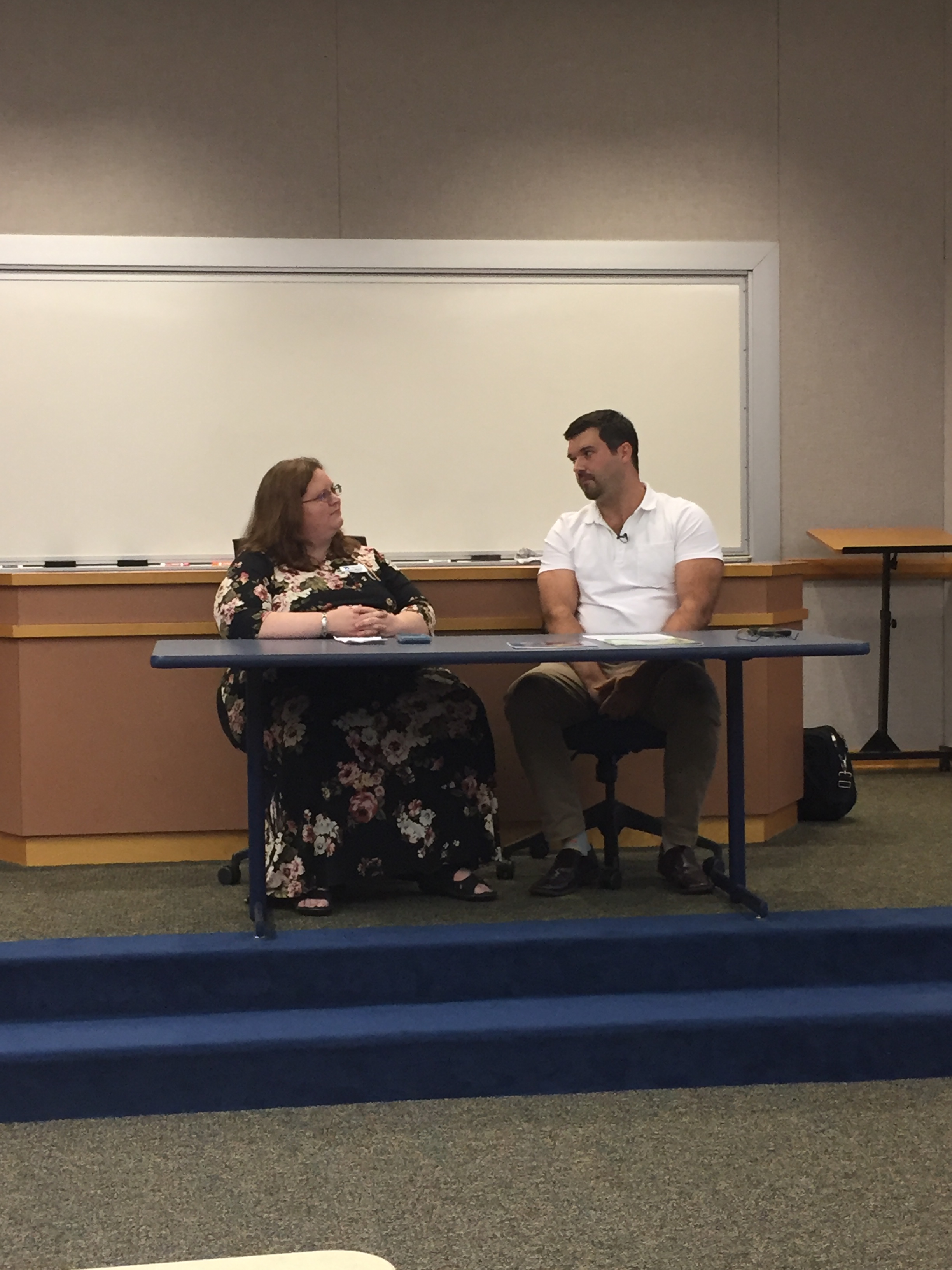



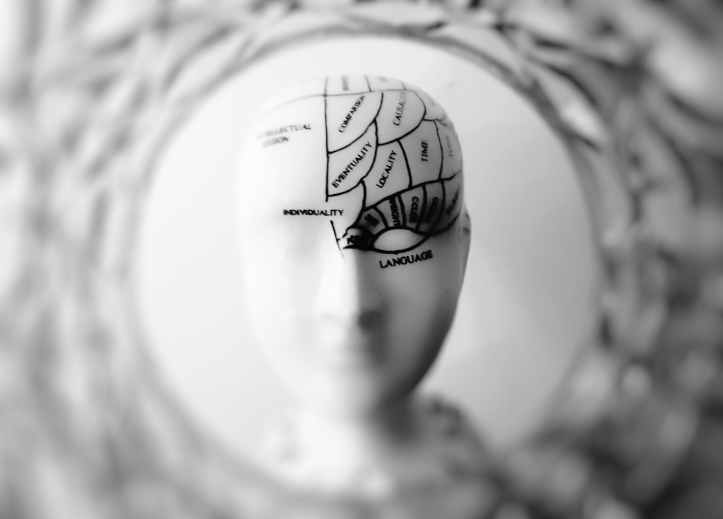


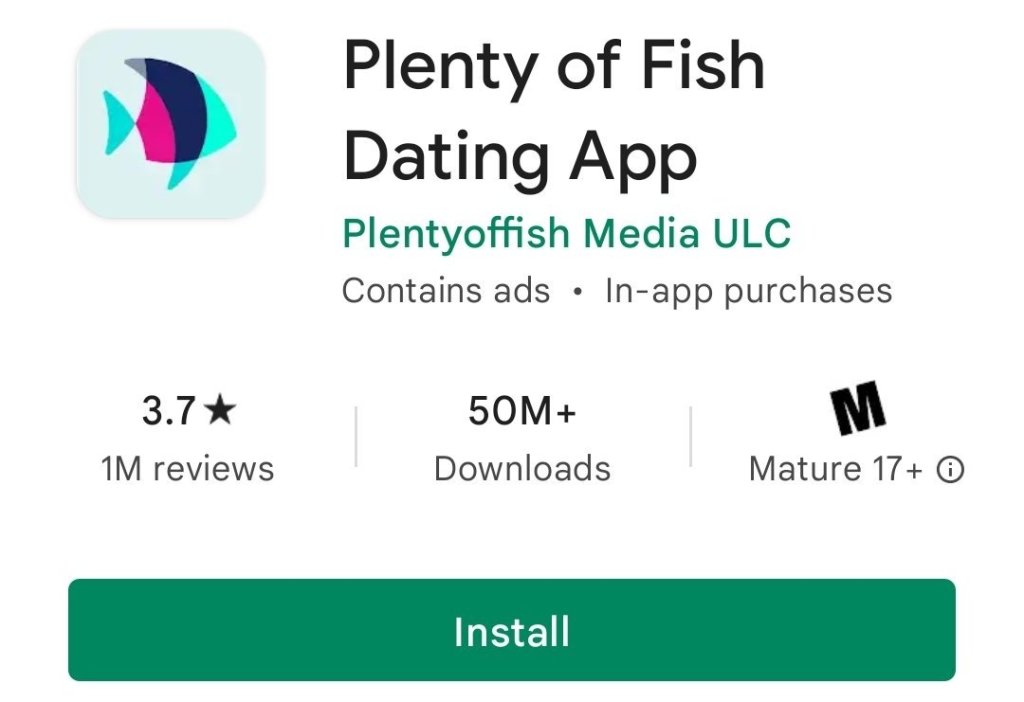

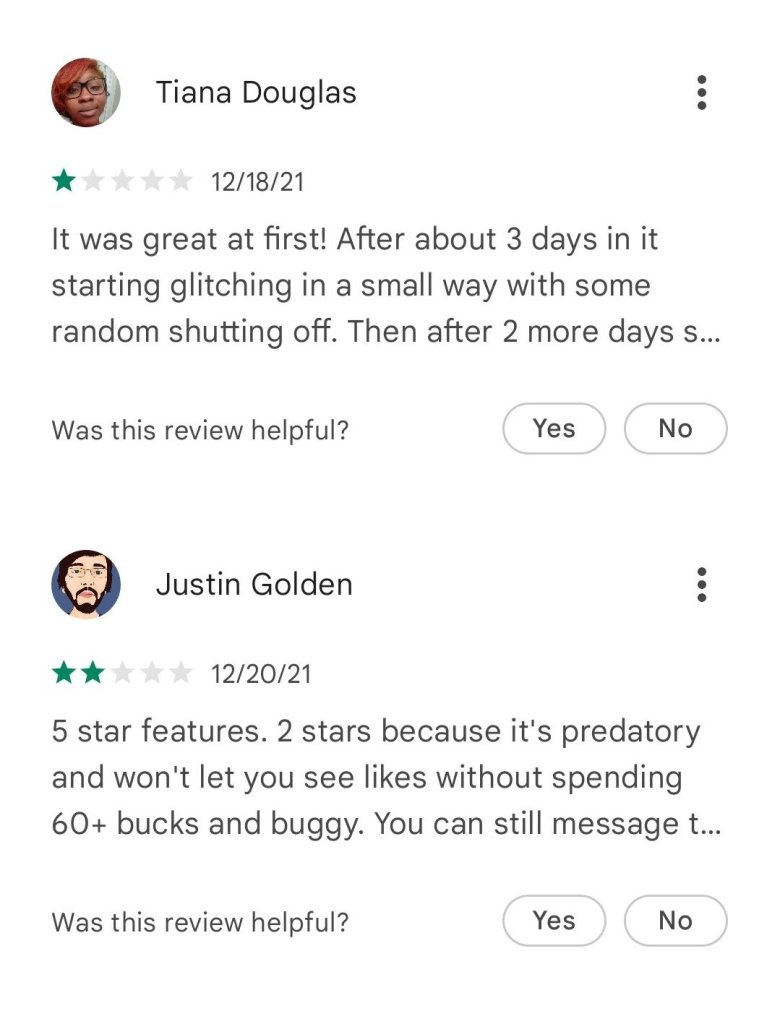





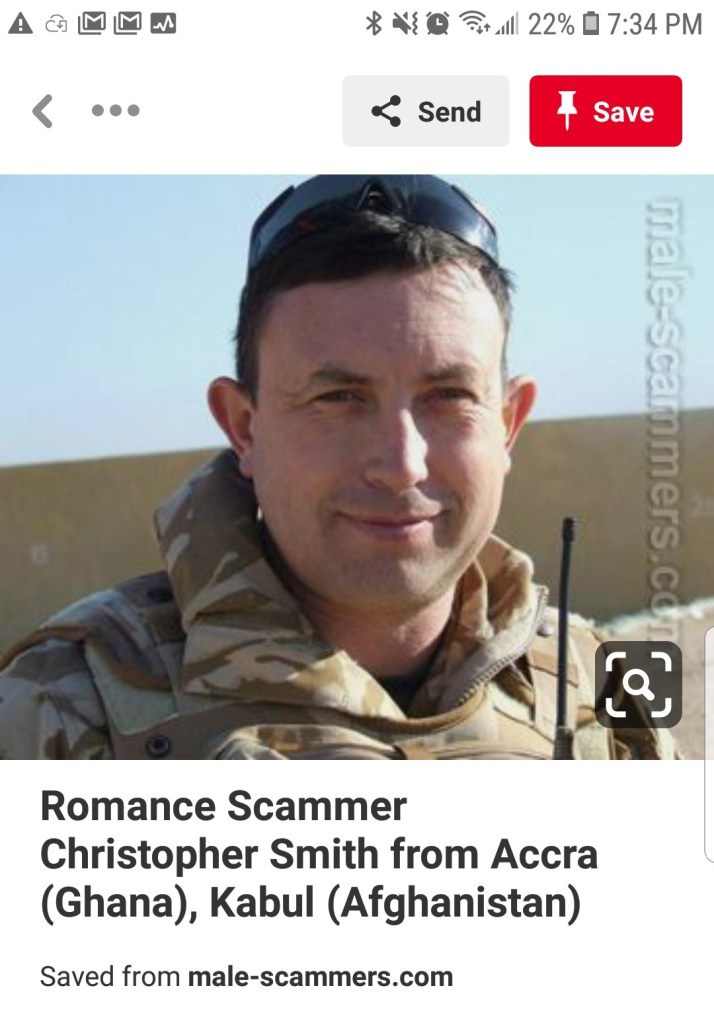


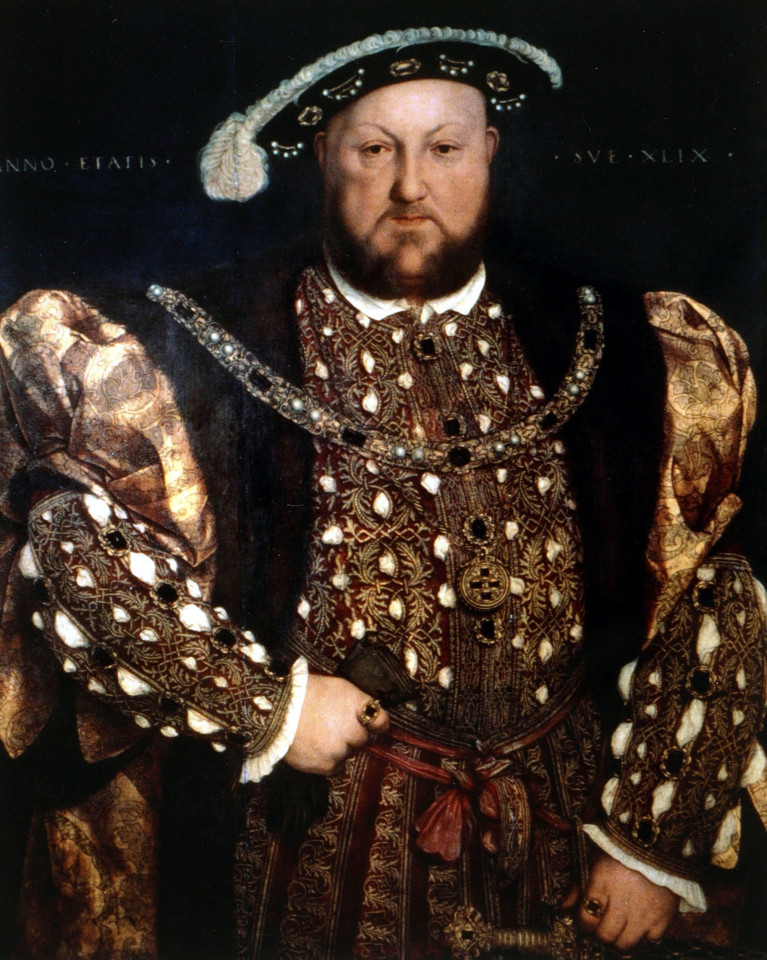
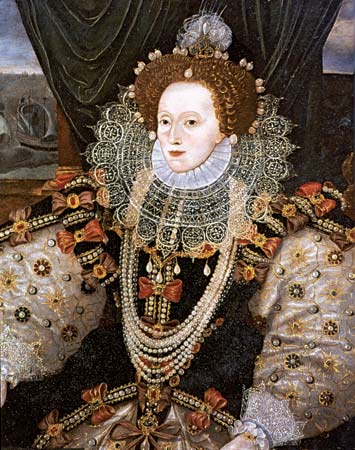


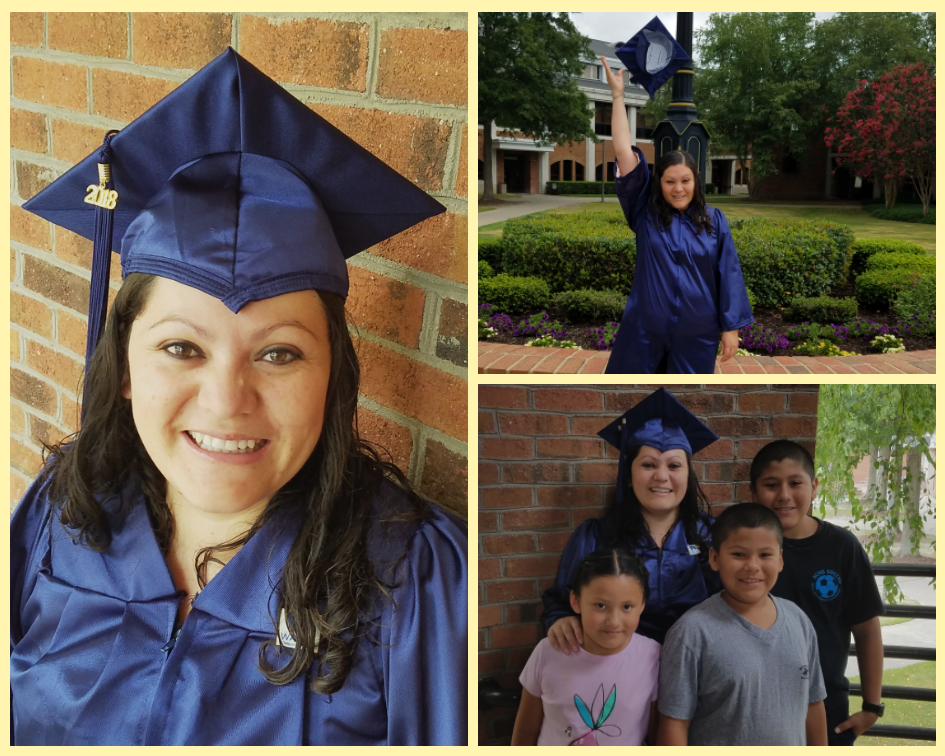



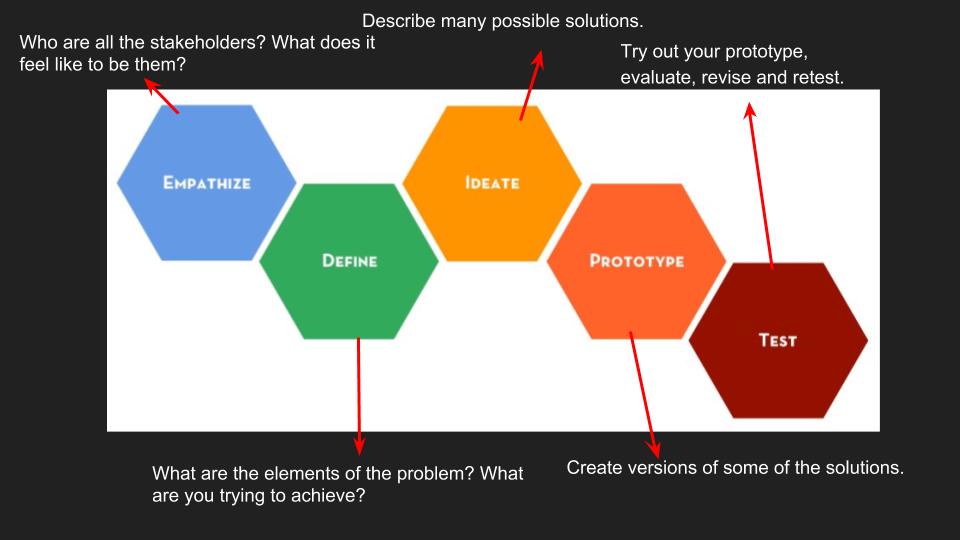
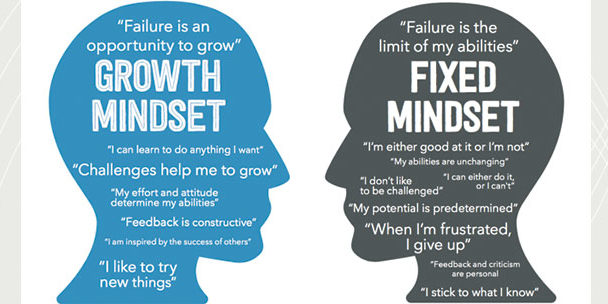
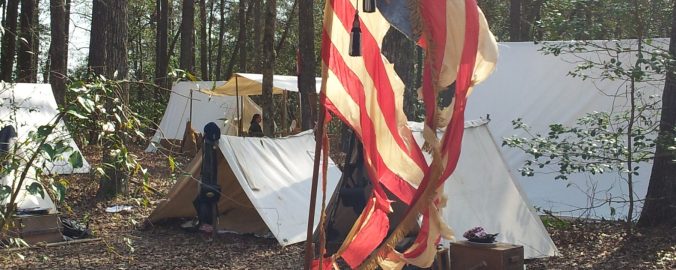
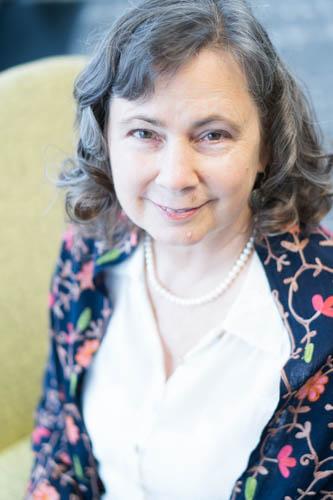











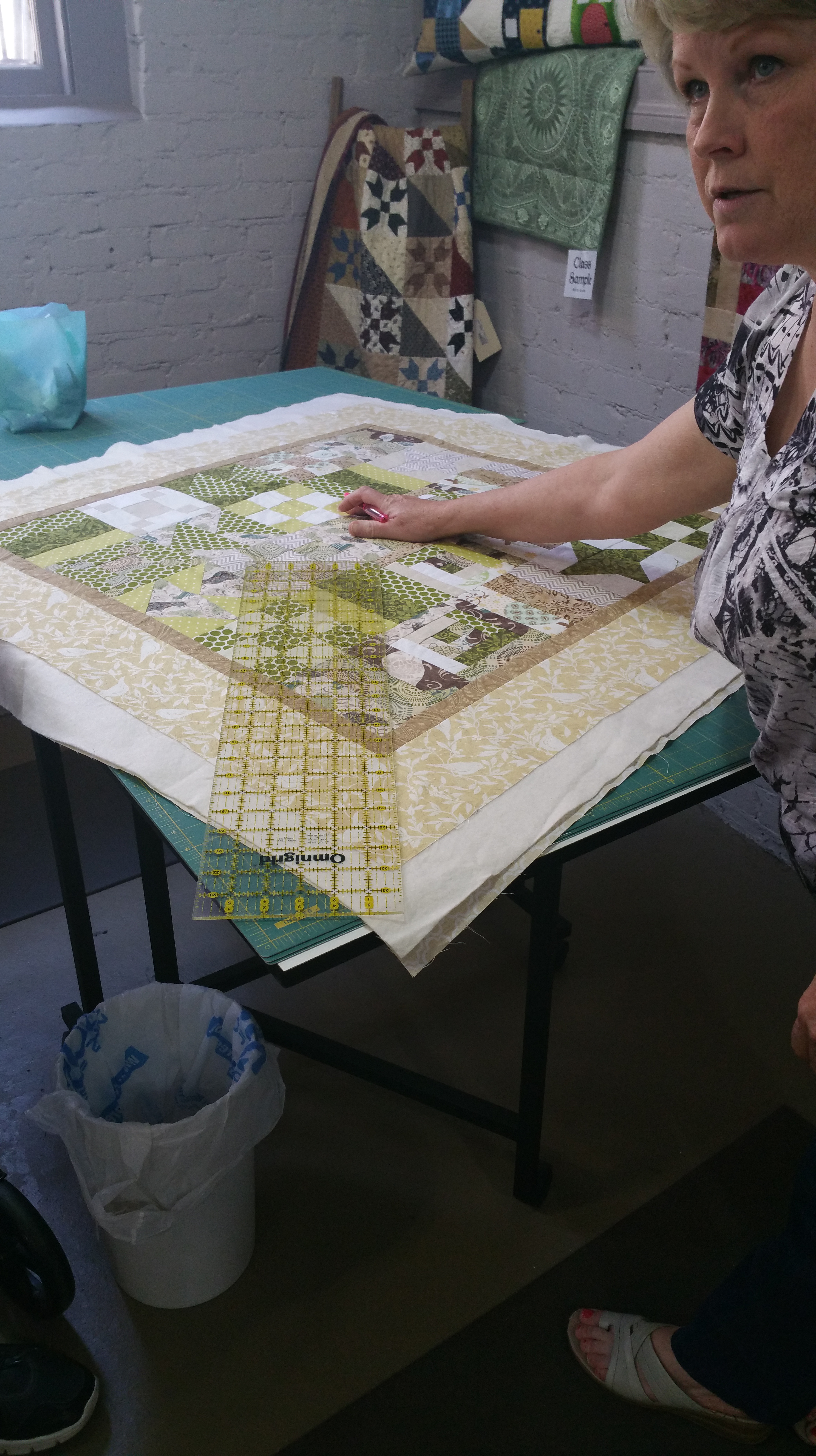


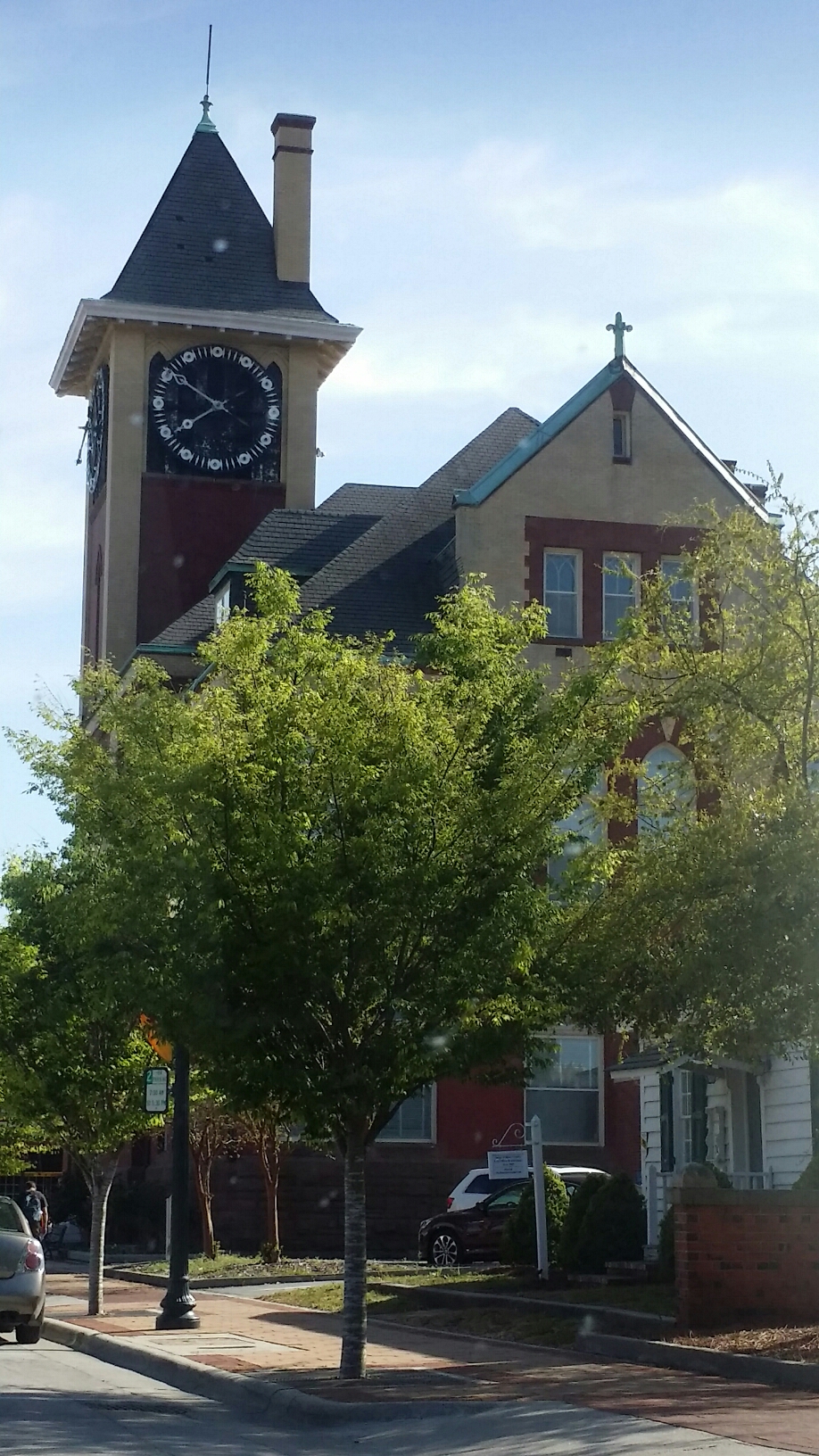
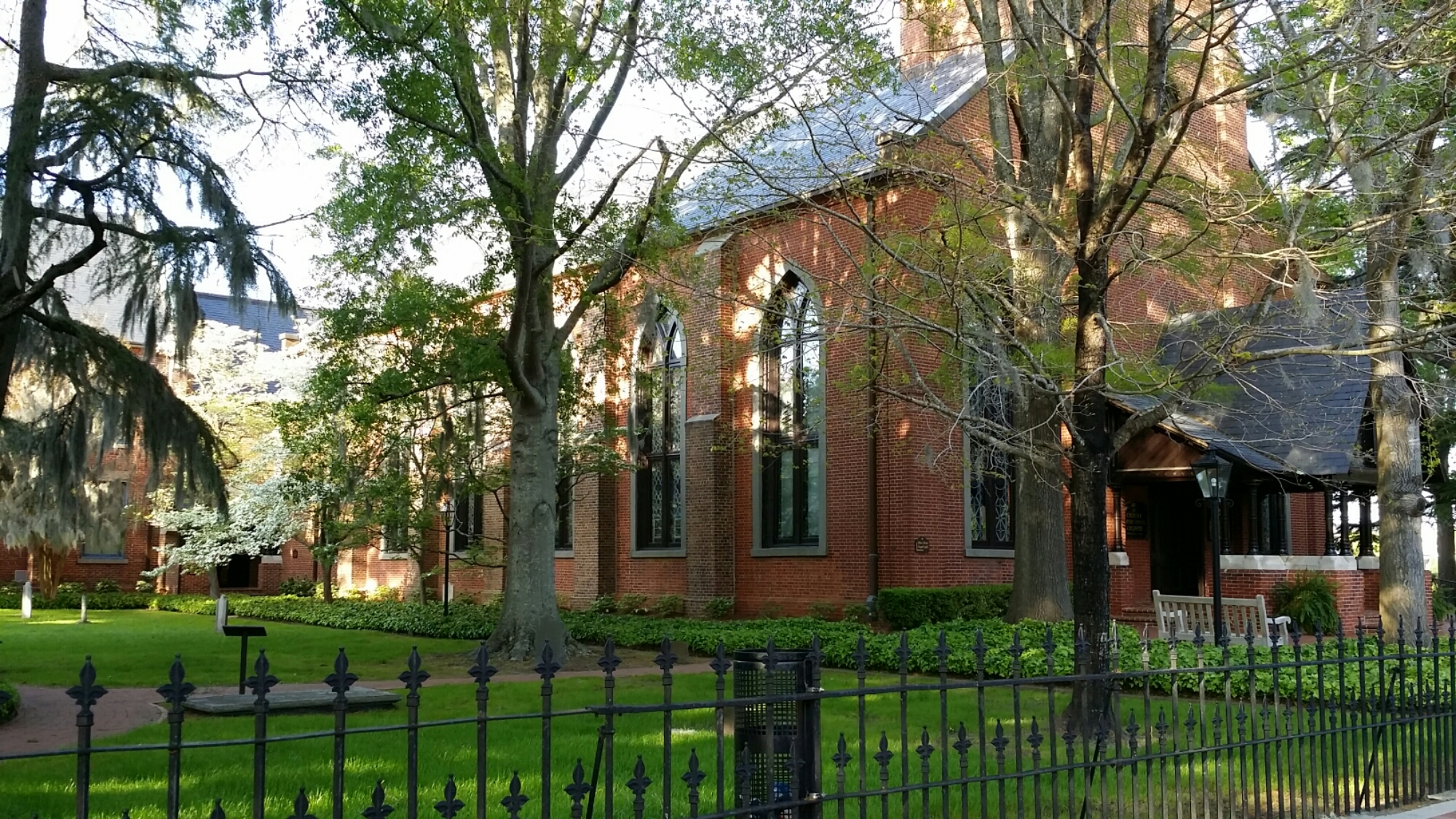



 Rebecca J Whitman