Forever Home: What the journey to buying our first and forever home taught us

Nearly a year ago this month, Clint and I were getting nervous about where we were going to live after we got married. We were engaged to be married May 31, 2025, and we had no home to move in to.

We couldn’t afford a custom build, so we knew we needed to find something manufactured…but where? Clint was convinced that we would find what we needed at one location in Mount Olive. He wanted to look at a few houses in one place, pick something, and be done with it. I had already been doing my research and knew it was not going to be that simple. In fact, I had already visited many places on my own. The first place we went together said what many had already told me: get pre-approved on your loan, then we will talk.

Something told me that our house was in Beulaville. I knew a specific seller that had a lot of options, so I insisted we went there after the Mount Olive location was a flop. We drove the extra hour and walked in a house where we were promptly told to wait a moment because we were supposed to have an appointment and be escorted. Okay…already a little more extra attention and care. I thought. When the woman came back to us, she didn’t ask how much money we had, she asked what we wanted. Her approach was so refreshing! Finally! Someone treats me like a human! I thought.

The second house we stepped into was the one. I just knew it! I opened the front door and saw our whole happy future in that place. Everything was made quality and new; I was in love with every detail. She hit everything on my bucket list and more. We went back to the office, started talking numbers, and got pre-approved for the loan to make it happen. It was that easy!
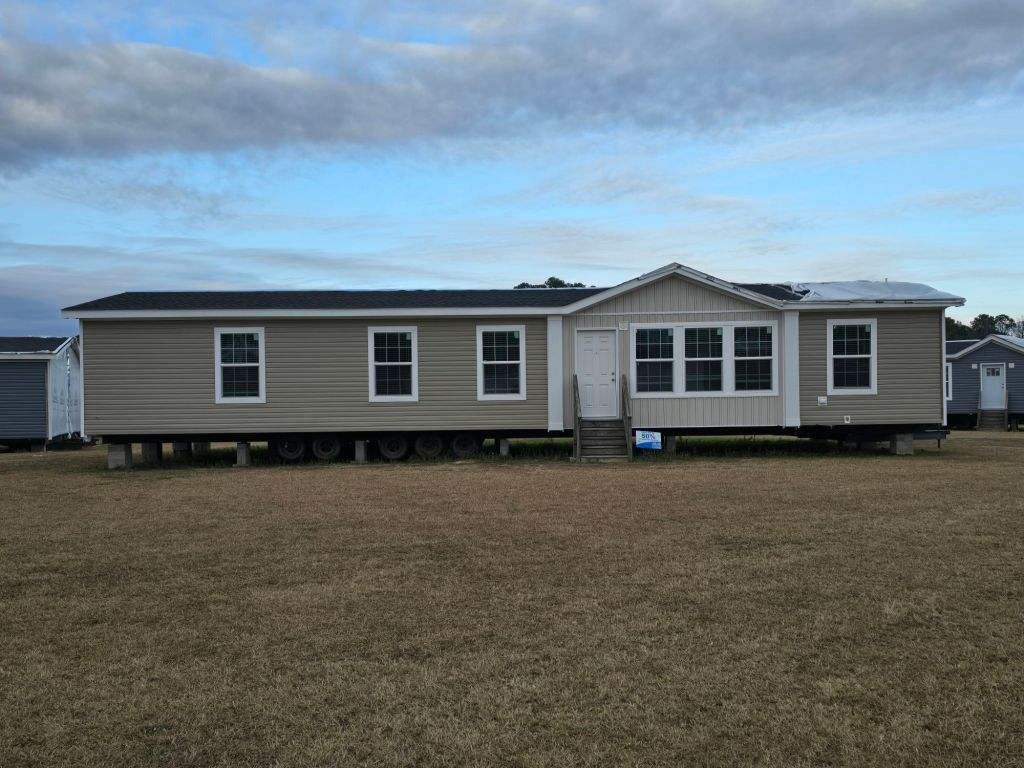
Clayton Home: Island Breeze

Well…it wasn’t that easy. To make a long story short, the lender came back with a counter offer lower than our home after they realized I am a 10-month (not 12-month) employee. The offer was too low to move forward with the house. We tried again with another lender and got the same approval then change. All the back and forth was costing us time, so we had to step down from the dream home and look at lesser homes. I was heartbroken. I cried for a week straight. Everything we looked at was a compromise I didn’t want to have to live with. The worst part was that the payment options with the lesser loan were worse than the greater one ever was originally. We were being asked to pay more for a house we didn’t love, and I just couldn’t settle for that.

After more months of trying to figure out the problem and how to fix it, we finally found a third lender that was willing to work with us for a higher loan amount. We retried for the dream house, fingers-crossed, and got approved! This time, however, I wasn’t excited. I don’t think I exhaled until the house was on our land and we’d signed the dotted line at closing.
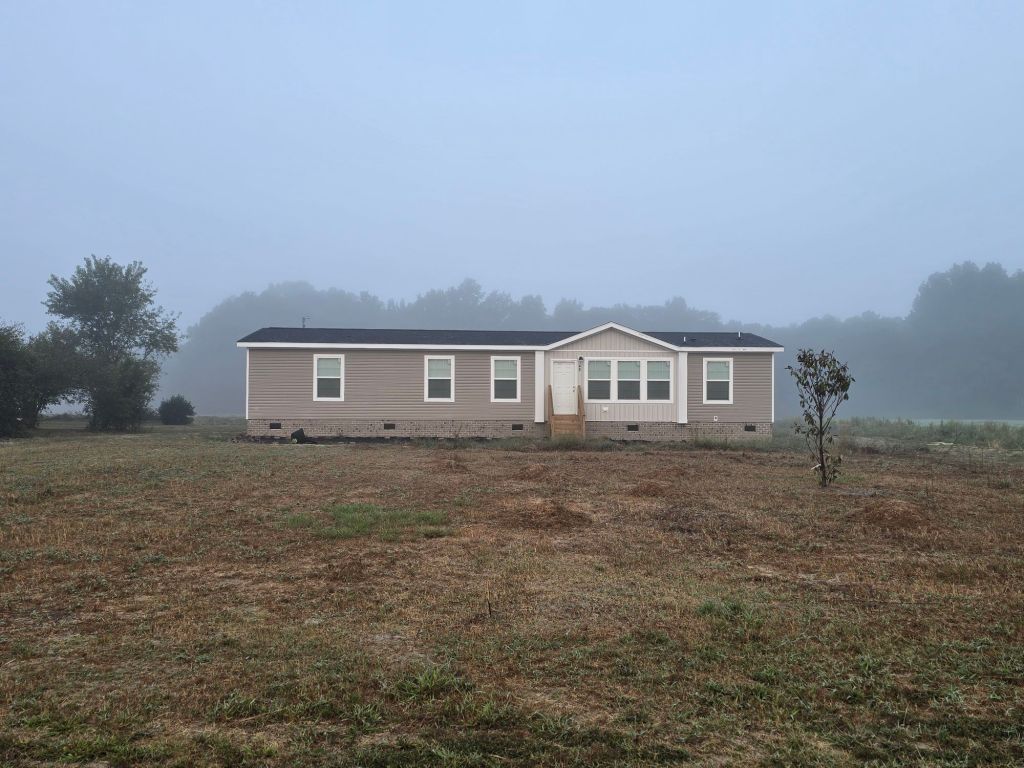
Our Forever Home: The Dream Restored

Lesson 1: It ALWAYS takes more time

When we first found our home, the sales person said we could have it here in a couple of weeks. We were seriously thinking we would have to delay the process on purpose because that would have made us have our home before we were married or financially ready for the first payment. But “have it here” is not the same deadline as move-in ready. Move-in ready means the home is on the property, the foundation is done, the utilities are done, and it’s just ready to turn the key and open the door. The “have it here” part was just getting it from the maker to the seller. Even in that stage, you have to deal with supply delays that drive up cost on the maker and make your home cost more than it has to–and take longer to make. All in, to get a turn-key home, it takes a very large team of contractors that have to all do their work right and in order. A lot of variables come into play there; it never ends up happening as quickly as you hope or even as they predict. It took about 10 months to get into our house from sale to turn-key.

Lesson 2: Expect Unplanned Costs

There are a lot of things you don’t know when you go to buy a house for the first time. I was fortunate in the fact that I had land and experience with certain things to know what I wanted and what I didn’t. For example, I knew I didn’t want anything to do with county water; I wanted a well. I knew I could trust the water in my land, but I didn’t know how fickle that trust could be. We ended up having multiple delays in the house because of the well. First, it was issues with the digger and his equipment. Then, it was issues with the well itself busting and spraying a rainbow in the backyard that you could see from the main road. Then, it was the wrong switch sparking at the power box. Then, after all of that, we had contamination and hard water. I ended up having to spend a couple hundred more to get a water softening system and have it installed at the well. Now, hopefully, we are safe.

Lesson 3: Stay Thankful

In all the ups and downs of getting our home, it would have been very easy to turn bitter and hate the place we worked so hard to get. I had a very specific vision for the home we were creating. I wanted it to be a place of peace and restoration because our blended family was not that at all. In fact, my heart’s desire was to be a better wife and mother than either of them had known. Yet that whole dream had to start somewhere, and it started with my heart, my approach. If I let myself talk bad about the house, I would end up having a negative effect on the environment I was trying to create. Therefore, I didn’t let myself speak ill of the house or anything we went through to get into it. What I say repeatedly (and I mean it) is: I love our house, I love our home, it is the best gift we could have given ourselves.

For more lessons and stories, subscribe below to get the next post emailed to you.

Sometimes The Simplest Food Takes The Most Effort: Making Gnocchi With Rosina from Until Next Sunday

Last week we toured Italy with Audry Fryer, author of Until Next Sunday. On Monday, Audry visited our podcast and shared some of the behind the scenes of writing the book. Today, we dove into the book and decided to attempt to make and share the iconic family recipe for gnocchi.

Until Next Sunday is a book about two Italian immigrants who find each other and fall in love in America during the early 1900s.

Told through the eyes of the female heroine, Rosina, the story opens with the character saying goodbye to everything she knows in Italy to board a ship to America.

The stage is set for a bit of a Cinderella story as we learn Rosina is leaving because of an evil step mother that worked her to death. She doesn’t know if she will ever get to return, but she has an opportunity to join a brother in America and have her own happiness. Though goodbyes are heartbreaking, this one came with a hopeful promise.

In America, Rosina meets Gianni, and they fall for each other. Illness puts Rosina in a sanitarium (at a time in history when bad things happened there), and the budding love has to spend the majority of its time in letters. For years, the family they have together knew nothing of the past hardships that they faced…one Sunday visit at a time…during limited visits. They couldn’t read the letters either because they were all in Italian and in a dialect hard to translate.

Until Next Sunday is an immigrant story. It is upfront about the fact that it is a work of fiction, but what I love about it is the TRUE STORY behind it. Three sisters–who were granddaughters of Rosina and Gianni–inherited a box of mementos. In that box was a scrapbook of over 100 carefully stored letters. Thanks to the sisters and their determination to know more, a translator was found who could read the difficult regional dialect, and a year of stories was unlocked for all of us to hear. Many of those translated letters are in the book.

How precious would it be if you could see a prequel of the life of your loved ones?

Rosina was a storyteller. Family gatherings on Sundays were filled with food and stories. Some of the sisters’ fondest memories were of Rosina’s Gnocchi, so they included her handwritten recipe in the book. For this review, I decided to take it on.

Making Gnocchi

Gnocchi is a potato pasta that is just three simple ingredients: potatoes, salt, and flour. The ingredients were simple. The instructions were simple. The process was not.

First of all, there is a reason that the recipe calls for a ricer. After you cook 4 potatoes, you are supposed to press them through a ricer. This would mash them evenly into fine pieces. That is extremely important as you are counting on the starch in the potato to hold everything together, but it won’t be broken down enough without a ricer.

Boiling water for gnocchi becomes the test that shows what I did wrong

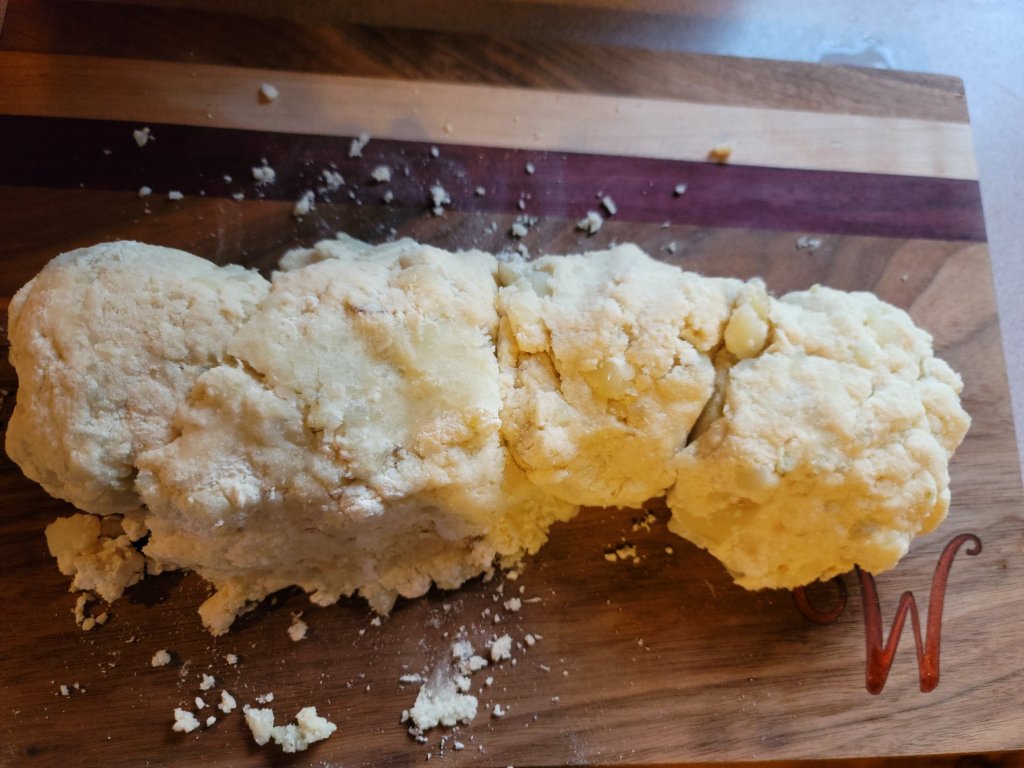
In my case, I didn’t have the ricer, so I mashed the potatoes as well as possible with a masher. What I ended up with was chunks of crystal-like potatoes in the dough that would make the dough fall apart in the water, create a cloud of starchy mash, scorch the pan, and cause me to have to drain and start over multiple times.

So…use a ricer.

Despite this rookie mistake, I did get a reasonable good dough out of it, and I did transfer it to a wooden board as Rosina suggested.

The board made it easier to cut and form the pasta, but it also further revealed how unsteady it was. It was hard to make any pinch of this hold together with chunky potatoes in it.

Still, some of them did hold long enough to rise in the water and be transferred to the sauce.

Success! Gnocchi made it to the sauce.

Gnocchi is pretty plain by itself (it’s a pasta), so you need sauce. I’m sure it would be excellent in cheese, but I wanted to be as authentic as possible and make a scratch tomato sauce.

Tomato marinara from scratch

How to make marinara

If you can get your hands on home canned tomatoes, that would be best, but I used store bought. For this sauce, I started with a generous coating of the pan in quality olive oil and spices. I used Greek cold-pressed oil, Herbs de Provence, and garlic powder. The herbs are extra fragrant, so I knew they would carry a little farther than just Italian seasoning. I sautéed that oil/herb based for a minute till it browned, then I added tomatoes. I added two 16 oz. cans of diced tomatoes (one had garlic and olive oil in it that really added flavor), one 16 oz. can of tomato sauce, and one 8 oz. can of tomato paste. You need that variety to create the consistency of a chunky sauce. The paste is important too because it acts as a thickener but with concentrated tomato flavor.

You want to bring all the ingredients together stirring them in the pan till a light boil pops. Then reduce the heat to its lowest setting and let it simmer. The longer a sauce has the chance to sit and simmer, the better it becomes because all those flavors and ingredients marry each other.

Final plate: gnocchi in homemade marinara, drizzled with Greek olive oil, and topped with grated parmesan

What Cooking With Rosina Taught Me

Making gnocchi was a lesson in itself. To get to that final plate that looks and tastes so good, you have to be willing to put in extra time, effort, and patience.

I’m not a very patient cook. After 30 minutes of messing with something, I am usually over it. I am sure half of my problems making gnocchi were from trying to make this without the proper tools. Nevertheless, this recipe said a lot about the person who wrote it. Rosina had to have been a very patient, loving, and resilient woman. What came second nature to her came because of years of making it so it would become easier.

How many things in life do we practice to perfection?

How many times do we exercise patience and persist when we want to quit?

I had to laugh at myself to keep from crying as I made this first attempt at gnocchi. Next time (and there will be a next time), a ricer will be involved. But making gnocchi with Rosina the cooking grandma, made me want to know her as Rosina the young woman. Until Next Sunday lets you do that.

I encourage you to jump on the author’s website and grab a copy for yourself. It’s worth it.