Jane Austen’s 250th Birthday Year & What Teaching Her Taught Me About Life & Writing

December 16th, 2025 is Jane Austen’s 250th Birthday. This semiquincentennial celebration has been celebrated all over the world already with special festivals, readings, reenactments, and more. I am pleased to hear she is important enough to even be on a bank note in London now. In Bath, you can visit her museum and book tickets for festivals and experiences. In America, you can learn all about her in the Jane Austen Collaborative including Summer Programs for Teachers and a whole bunch of research and interactive materials. I can only imagine how big the celebration will actually be on December 16th.

Jane Austen is loved in many ways in America. For those of us Janeites who are English teachers, we teach her books in our classes. Pride and Prejudice has been my go to for years in my English 4 class because it my favorite of all of them, but this year I was challenged to find a new book to give some love. I read Emma, Persuasion, Northanger Abbey, and Sense and Sensibility all at roughly the same time. It was crazy to me how much Austen’s voice and purpose changed in each book. The cadence and flow, the storytelling mastery that I loved in P&P were washed out or gone completely in some of them. The memorable lines of P&P from that opening line to Darcy’s confession of love were just missing entirely in Sense & Sensibility. As a movie, it is close, but as a book, I found myself constantly stopping and restarting to figure out what was happening. Jane Austen shouldn’t be that hard to follow. She was well ahead of her time for engaging her readers.

Jane Austen as sketched by her sister, Cassandra, to whom she wrote many letters. 2025 © Copyright National Portrait Gallery

What surprised me as I read the other books was how much of an activist Jane Austen really was. In Emma, she was well into her career and chose to take on a character she knew she would love more than her readers. Emma is fiesty, independent, and does not need a man. If she falls in love and marries, it is by choice not society’s force. She goes against the customs of her day and embraces her own dreams for her life. From the first page, I found her character very intriguing and modern. It made me love Jane Austen as a writer more because she was taking risks and being a voice for change.

In Persuasion, there was a similar activist purpose. In this book, the main character is dealing with a lot of society pressure to do things and live to certain standards. It cost her a marriage to the man she really loved and overspending made her family have to downsize to become more fiscally responsible. These were big ideas to take on in an Austen novel. Usually social commentary is something you would expect more in Dickens or Bronte, but Austen was finding her way to do it too. It may have taken her getting into a groove and becoming popular enough to afford being able to take a risk, but she still did it.

Northanger Abbey was a surprise of a different kind. In this little book, Austen talks directly to the reader several times about writing! Not only does she reveal some historical shade on reading novels, but she gives her own opinion on the issue in general. She talks about writing and the importance of reading all while showing a character who took her love of reading too far. Northanger Abbey was a coming of age novel. It was a little slow to get into and very dated in the details, but the story did catch our attention. Anything this old that can capture a teenager’s attention deserves recognition.

What Austen Taught Me As a Woman

I have always admired Austen for being a woman who took care of herself and provided a living for herself while she was single and living with family. Austen never married, and that has always made me sad. How could someone write about love and relationships with so much clarity and focus, yet not be able to secure it for herself? Maybe someday I will do a deeper dive into her letters and personal correspondence to get to know Austen better, but for now it is just a dull question in the back of my mind…why?

If anything, I think the answer is in Persuasion. Supposedly Austen had a man pursue her and she wanted to say yes to him, but her family did not approve. Persuasion is a similar story, but with a much better ending. Sometimes I wonder if Austen’s writing wasn’t just trying to make her own happy endings and life choices over again. Why didn’t she show the activism on her pages within her own four walls? Maybe she did and we just don’t know it.

Still, regardless of her love life, Austen was a fierce woman for her time and someone to admire even today. She has left a mark and told us women that we are capable of so much more than our culture may dictate. If I could interview her today, I think Austen’s advice to young women would be “if you have a dream, pursue it; don’t let anything hold you down.”

What Austen Taught Me As a Writer

Reading so many Austen books at once gave me the chance to focus on the common threads between them. I would listen to how the character development progressed and later novels were stronger than early work (with the exception of P&P). I also listened for a familiar structure, cadence, or form. I realized that we writers do develop a style that is pretty hard to get away from no matter what the topic may be. Austen’s style is conversational, approachable prose with a lot of dialogue to show the story more than tell it. l found the books that were good were the ones that did this. The rest were just hard to get into.

I also came to the realization that the really great writers in the world are those that use their platform for good.

Dickens used his writing to encourage reform in society (for example child labor and poverty). Bronte also spoke about education reform and other society issues. Austen entertained us with romance but made us question our society norms at the same time. Women were held back in her time, and her honesty with this repression on the page changed things for women in the future. I believe the great writers like Dickens, Bronte, and Austen were great and unforgettable not just because they were good story-tellers but because they used their skills to make a difference in the world around them. After all, what other purpose can be there be for an artist than to hold a mirror to their world and ask them to make it better?

Why School Matters: The Importance of Education Today

Let’s talk about why school matters (or if it does at all). This is something that I never used to question. In fact, it is something that students in general never questioned till recently. According to a recent survey, over 40% of high school students consider themselves disengaged now. I really blame Covid for that because everyone seemed to come back with an apathy for education and others like they just don’t care or want to care about anything beyond themselves. I’m not alone in this assessment either. A lot of research is showing that there has been a shift in students since Covid that is resulting in lower performance in schools. In short, kids don’t see why they should care anymore.

I think the best answer for why school matters is to imagine a world where school doesn’t exist at all. What would happen to our knowledge then? Would we read? Do our own math? Do any experiments? If so, how would we know what to do? I think the point of K-12 is that it is the foundation of everything else you will ever learn in life. You can’t read without the foundation of first learning how to read and why it is important. You can’t argue without someone teaching you how to articulate a good argument. You can’t make change in a restaurant without someone teaching you the basics of adding and subtraction.

All life boils down to what we know and how we apply it. Knowledge is power and creates true haves and have nots when people ignore or devalue it. We teach the past and a lot of things that are not happening now because those who do not know their past are doomed to repeat it. In literature, we teach the past because all other writing today builds upon the knowledge of the greats that went before us; we want to keep people knowing the foundations of what made us today. Some of my first poems were written in response to something Lord Byron said that angered me. I can’t imagine a world that doesn’t know or care about Byron or Shakespeare or any of the rest. 

There may be a lot of problems–and even some redundancy–in K-12 education today, but we still need it. K-12 education is all about teaching you how to be a human, how to know what the rest of us know, and how to contribute to society. Education gets more specific from here, but that base foundation is everything we all stand equally on. Without it, how can we hope to be a civilized society at all?

Keep Moving: How to Stay Active with Your Dog While Traveling

By Mia Price

Traveling with your dog can transform any trip into an adventure. It’s not just about finding
pet-friendly accommodations or making sure your dog is comfortable during travel, but also
about ensuring that both you and your pet stay active and healthy. Whether you’re planning
a weekend getaway or a long vacation, incorporating activity into your travels can enhance
the experience for you and your furry friend. Here are some tips to get you started!

Selecting the Right Destination

When you’re planning your travel, look for destinations that cater to pet owners. Seek out
places that boast dog-friendly parks, scenic trails, and beaches. These spots offer you and
your dog ample space to run, play, and explore the great outdoors together. This not only
keeps your dog physically engaged but also stimulates their senses with new sights, sounds,
and smells, making for a happier, healthier pet.

Monitoring Your Stress Levels

Monitoring your stress levels is important not just for your well-being but also for your pets,
as they can pick up on your emotions and react accordingly. Pets often mirror their owners’
stress, leading to changes in behavior, appetite, or energy levels. Taking steps to manage
stress – such as regular exercise, mindfulness, or setting work-life boundaries – can create a
calmer environment for both you and your furry companion.

Packing the Right Gear

To make the most of spontaneous opportunities for exercise, make sure you pack the right
supplies. A durable leash, collapsible water bowls, and waste bags are must-haves for any
trip. These essentials ensure that you’re always prepared to hit the road or trail at a
moment’s notice, allowing you and your dog to maintain an active lifestyle no matter where
you are. Remember to also consider the specific needs of your dog, such as any
medications, a first-aid kit, and a comfortable harness, which can make physical activities
safer and more enjoyable for them.

Arranging a Home Swap

If you’re looking for an affordable, pet-friendly travel option, consider a home swap with
another dog owner. This arrangement allows you to exchange homes with someone who
has a similar setup and shares your love for pets. While you’re away, their dog can enjoy
your space, and you can take care of their dog in return. Not only does this eliminate the
cost of pet boarding or hotels, but it also gives you peace of mind knowing your furry friend
will have a familiar and loving environment.

Taking the Weather into Account

To avoid the midday heat, especially in warmer climates, plan your longer walks during the
cooler morning and evening hours. This makes the walk more comfortable for both you and
your dog and can lead to more enjoyable and extended playtime. It’s also a perfect time to
explore as the softer light provides a beautiful backdrop for memorable photos of your
adventures together. Adjusting your schedule to suit the weather conditions will not only
make your activities more pleasant but also protect your dog from overheating and
dehydration.

Engaging in Fun and Games

Don’t forget to bring along your dog’s favorite toys. Engaging in games of fetch with a frisbee
or tennis ball can significantly contribute to both your step count and your dog’s activity level.
Additionally, keep an eye out for local activities like dog yoga classes, agility courses, or
group dog walks. Participating in these can add a fun, social element to your exercise
routine and provide your dog with valuable interaction with other dogs.

Traveling with your dog doesn’t mean you have to compromise on your activity levels. With a
bit of planning and creativity, you can ensure that both you and your furry companion enjoy a
dynamic, healthy, and fun trip. By choosing the right destinations, packing essential gear,
and taking advantage of local activities, you set the stage for a memorable and active
holiday with your dog. So, lace up your walking shoes, grab the leash, and prepare to
explore the world one paw print at a time.

Find inspiration and guidance for creating a balanced, fulfilling life with Rebecca J.
Whitman.

For more great advice from Mia, check out her blog!

The Warehouse Brings A Community Hangout to Mount Olive NC

When people think about Mount Olive, NC, they think of a charming small town with an annual Pickle Festival celebrating its biggest business–the Mount Olive Pickle Company. Mount Olive is also the home of a private four-year university, The University of Mount Olive (UMO). The University attracts an incredibly diverse and international population, but many of the students do not have access to transportation. Any activity they partake in becomes limited to on-campus or within a walking distance to it unless they have a car. Apart from the student population, local residents of the Mount Olive area have had few places to turn for local entertainment. Many grew up parking in the Rose’s parking lot to hang out on nights and weekends. One of Mount Olive’s newest businesses, The Warehouse, hopes to change all that.


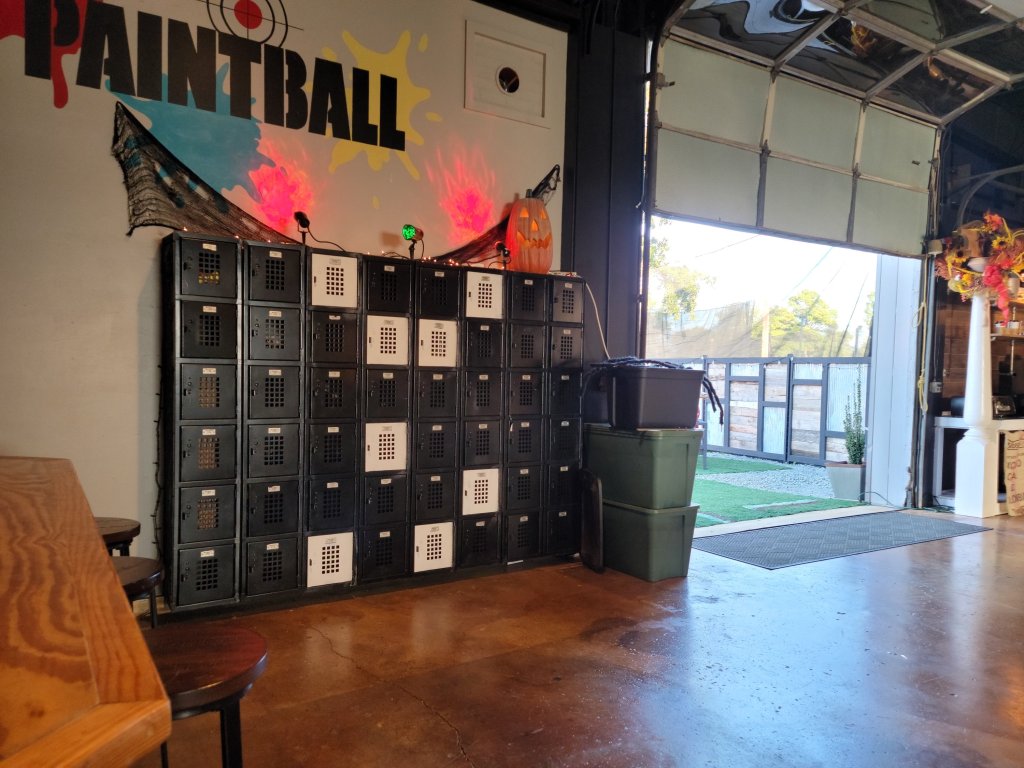
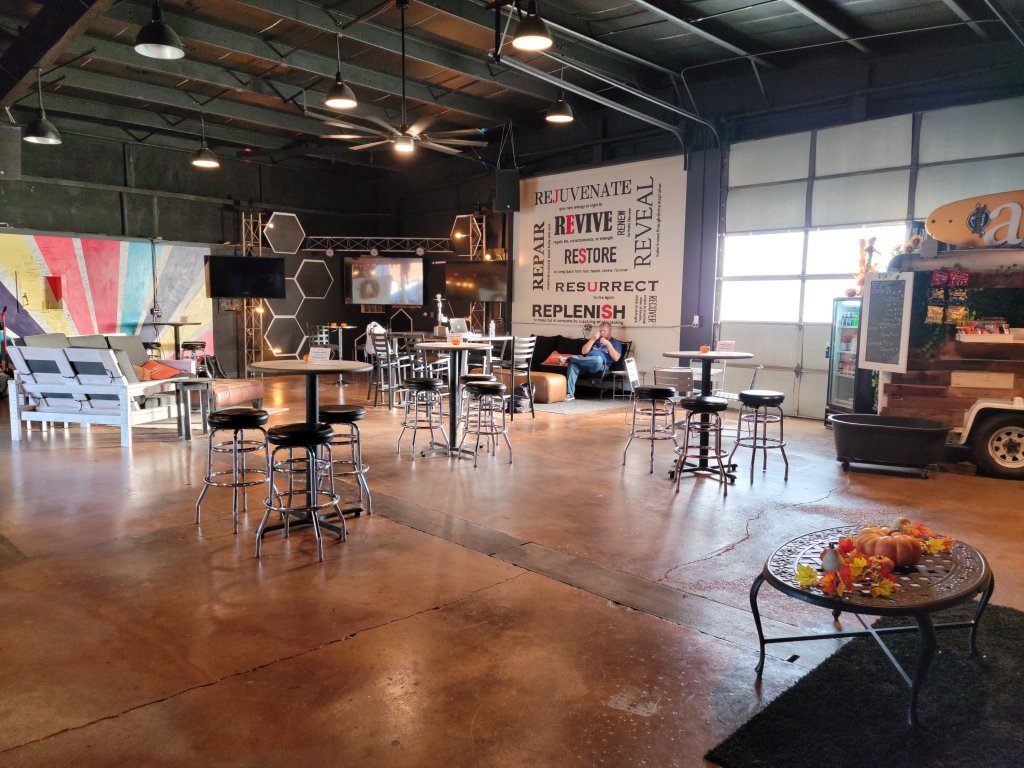
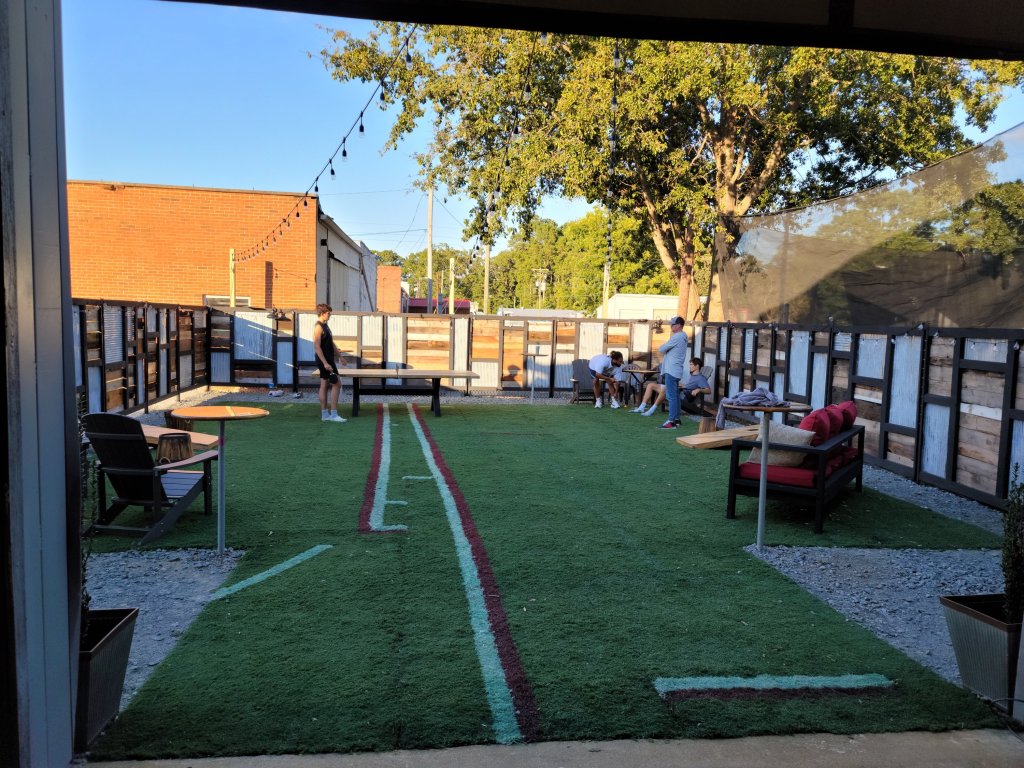
At 506 North Breazeale Avenue in Mount Olive, NC, The Warehouse is an alcohol free family environment with paintball, ping pong, checkers, pool, coffee, dairy-free ice cream, Internet, and comfortable places to sit and meet with friends. “We want to be a place where people can come and hangout and just be,” says Owner Lester Rector.

Lester Rector and his wife Holly moved to Mount Olive in June 2019 to become the Campus Pastor for UMO as well as the Directors of UMO’s renowned acapella choir, Carolina Sound. The Rectors had their own successful career in indie music as Lester and Holly prior to coming to Mount Olive. They had the opportunity to work with artists like the Katinas, manage Voices of Lee, work with Disney, and travel through large and small locations. “It doesn’t cost nearly as much to produce nowadays as it used to. You can cut the overhead and make hits in your own room. Music is all about connections if you are ever going to grow beyond your community. If there is any downfall to being an indie artist, it is the lack of professionalism. There are a lot of hacks mixed into the sea of artists creating now,” Lester says.

“My wife and I felt like part of the reason we had to come here from Orlando was to invest in the university where we work but also in the community,” Lester said. They revamped all of campus ministry then began to recruit and develop Carolina Sound. Later, driving around the area, Lester saw the location that would become their community outreach. The building had been a gas and service station in the 50s and 60s then it turned into Charles Swinson’s cabinet shop. For almost a decade, the building sat vacant, fell into disrepair, and was overrun by rats. Then owner, Gerald Bell, began making repairs and renovating it to rent it, and the Rectors stepped in. For a year, they rented it and continued to transform it with a vision for what it could be. In March 2022, the Rectors bought the building completely and opened to the public that August.

The Warehouse is actually part of a three-phase plan led by the Rectors’ non-profit, Face to Face Worship, Inc. The vision for this part of the plan was inspired by Pins Mechanical in Nashville–a bar that offers similar games but is not family friendly past a certain time of night. “The simplest things can be fun in the right environment,” Lester said.

Phase Two of the plan was to launch five need-based programs: Counseling for children and families, Health and wellness nutrition, Spiritual counseling, Financial counseling, and Strategic planning for businesses. “The goal is to bring in people who are experts in their field and offer a night where anyone can come and hear the expert share their particular thing. Then if anyone wants counseling, we would be a facilitator for connecting them to the right people to help them,” Lester said.

Phase Three of the plan will be to launch a place of worship where people can enjoy the community and discipleship elements already established and have a place of worship as well. “Our route for ministry is different. We feel that there are already enough Sunday morning gatherings. My goal is just to engage with people, man,” Lester said. “506 is our address but it is also our mission. It comes out of the place in John where Jesus asked the man at the pool in Bethesda if he wanted to be well. We want people to feel like they can release everything negative they are dealing with right now and just come in here and find a place of refuge and encouragement…There has always been negativity in the world but accessibility of one over the other has changed over time. It seems now that all you ever hear–what sells more–is bad news. Good news seems harder to find. There is nothing new under the sun, it’s just more downloadable.”

The Warehouse is already a popular place for meetings, studying, and games. The paintball course is also steadily booked. “Our paintball park is a pay and play all day fast course that is wide open with all inflatable bunkers. You can never memorize the course because we move them every week. We are always trying to keep it as fresh as possible,” Lester said.

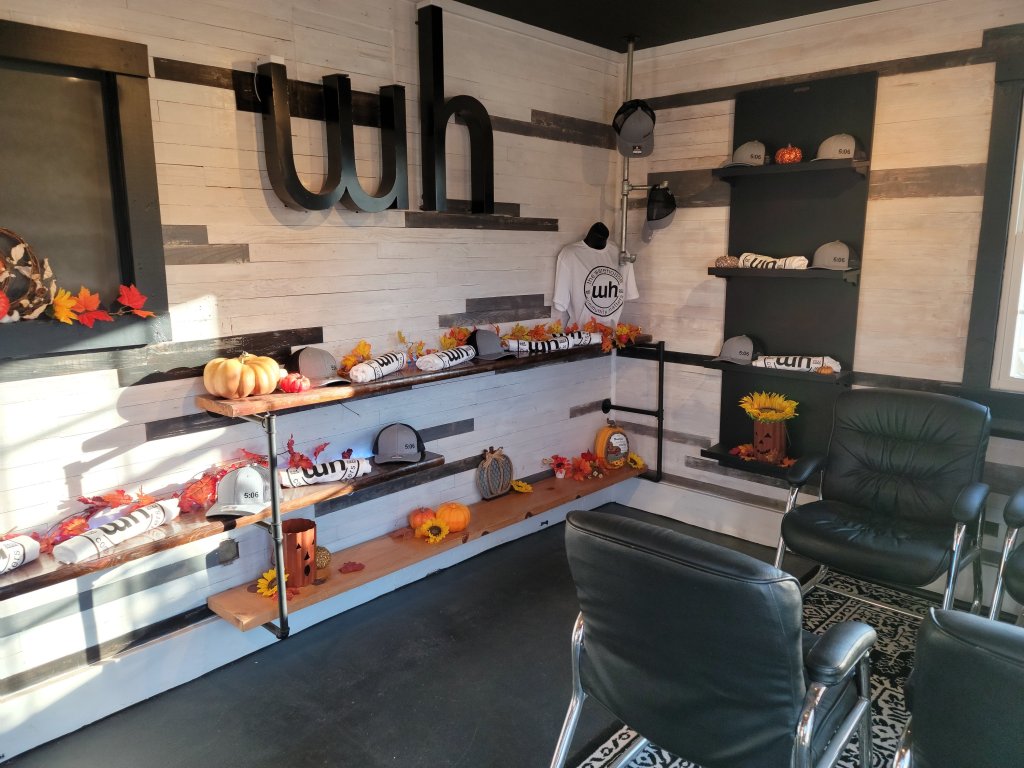
People can support the vision of The Warehouse by either making a tax free donation to the non-profit, or by purchasing from any of the for profit entities in The Warehouse: Real McCoy paintball and Cafe 506 coffee with AMR non-dairy ice cream. To see upcoming events and videos inside The Warehouse, check out their posts on Facebook and Instagram.

Life Lessons From A Generational Farmer

To sit a while with Garrett Strickland of Strickland Farming Partnership is to sit with a man so deeply entrenched in North Carolina that he can regurgitate 150 years of its history from a life that lived much of it. “To know about the whole county, you have to be involved in politics and the agriculture community–which of course I was,” Mr. Strickland said in his signature guttural Southern drawl.
Garrett Strickland is a former Sampson County Commissioner and a Board Chairman of his family’s farming operation now. According to their website, Strickland Farming Partnership is a “progressive 7th generation diversified crop and livestock family farm operation. Garrett and his son Reggie still farm much of the land their ancestors farmed as far back as 1861…in Wayne, Sampson, and Duplin counties farming corn, soybeans, wheat, tobacco, pickle cucumbers, and sweet potatoes and finishing over 22,000 swine each year for Prestage Farms and grow out over 120,000 turkeys for Butterball.”

Farming has changed a lot over the years because of the white rabbit of consumerism that farmers are always chasing. “The population of the United States hit 100 million during my early lifetime. It’s 360 million now. The population of the world has gone from 5 billion to 7.5 billion. Land is being taken up for highways, housing developments, and shopping centers. We are feeding more and more people on less land. The only way we can continue to do that is to increase the productivity of the basic crops we are growing. So much of the basic food of the world is based on two crops: corn and soybeans,” Garrett Strickland said.

Having more people to feed on less land is not the only problem farmers face today. The other threat is a global market with unequal standards. “It used to be that we consumed all we made here. You could look around where you live and know all the crops there. Now other parts of the world determine what we grow more than we do. South America, Australia, and now Africa are large agricultural countries. Farms here average 1,000 acres while farms there average 10,000 and do not have to comply with regulations and government oversight as much as we do,” Garrett Strickland explained. “Compliance makes us have a disadvantage in the world market because we can’t do it as cheaply as them. Where we can get ahead in the global market is with specialty crops like sweet potatoes and tobacco that only grow in limited locations. Another way is through partnerships with companies that need our products. The world’s largest producer of hogs, for example, is right here in Sampson and Duplin counties.”

Reggie and Garrett

Reggie Strickland is following his father’s example in terms of staying involved in all aspects of farming life. His passion is to keep the farm moving forward, but he does that first by valuing his family. He will be the first to tell you that his father is his “best friend”, his wife is his “secret weapon”, and his children are “his whole world”. Still farming keeps him on the road more times than not. Reggie stays busy traveling the country on the boards of various committees advocating for the quality of US products as well as learning what is new and upcoming in grain crops and other agricultural products. He not only knows cutting edge facts when they matter, but he finds time to promote education in all its forms from agriculture students in college to media tours of the farm or answering phone calls from other farmers needing advice.

One of the biggest things that the public can do to support agriculture today, according to both Reggie and Garrett Strickland, is to understand that farmers are good stewards of the land and the environment. “We have a lot more interest invested in the land than other organizations outside of it,” they said.

The vision to diversify and expand the business really came from Reggie. He knew from an early age that he wanted to go into the family business, and he was excited to work hard and put in the time to make it grow. It was under his vision that the farm diversified into animal production as well as crops. “You want to diversify but not past what you know you can control,” Garrett said. “When things are good, it is easy to over expand and outgrow your management abilities. Learn to use all the tools available to you such as insurance, leasing vs. purchasing, technology, etc. Make decisions after you have made a list of the pros and cons of doing so.”

Farming is full of life lessons, and Garrett shared some of his. “Every generation is going to have hard times, but we get through it by mentoring and learning from each other. It is the bad times that show you what is important as well as who and what you can lean on…Everything that happens in life, good and bad, is a direct relation to your decisions and relationships with others. If you have a disagreement with someone, you are responsible for going to them and correcting it. In life, it is important to learn how to take care of things and then shed them (don’t hold on to grievances).”

The Stricklands find it very important to stay informed about scientific and market research such as the altering of plants to be able to grow in different climates and produce higher yields. “I am always learning. It is important to me to be a lifelong learner. If we ever quit learning, we quit living,” Garrett says. “Farming today is about studying the market and projecting growth for both the crops and the needs of the consumers. It isn’t just putting a seed in the ground and waiting. Most of the time, it is a well calculated risk and an educated guess mixed with a lot of faith.” The Strickland Farming Partnership also leverages technology to help them make the most of their farm. GPS precision planting and equipment that creates field records available via satellite are just part of the tools they use.

Farming is increasingly made difficult by politics and competition, but it is still the vital heart of our society. Ask any farmer today and they will tell you they do not own the land; they are simply caretakers of it. More than any other profession, farmers are keenly aware of the cycle of life. For farms to exist through generations in one family, however, there has to be a love of the land and a desire to continue in that way of life. It is the one concern that can bring both Strickland father and son to tears. “I hope that someone in our family will see fit to carry forward caring for the land after me or at least put it in a land trust to keep it agricultural,” they said.


To All My Followers: A Message About All The Silence

With this post, I want to take a moment to thank the many subscribers I have that watch for regular announcements of my work. Your support has been amazing and helped me grow my writing business. I couldn’t do what I do without you, and I hope you will continue to follow this journey.

That said, I went quiet without explanation about August 2022. I want to apologize to all my fans for that abrupt pause, and I want to explain what happened here now.

What Happened

When I started blogging, it was a side thing to help my students. In 2021, however, I left teaching to pursue other opportunities including building a full time writing business. I loved being able to travel freely and write all over the place. It was liberating to finally have control of my own time. But to be successful, I had to cut expenses, think outside the box, market myself like crazy, take on jobs outside my passion, and hope it all worked out. I was scared a lot but also building faith in God to be my provider.

I struggled financially a couple of times and by July, I cried out to God to help me because I didn’t see a way forward anymore. I was stressed and tired of trying to talk people into the value of my work. I’ve never liked sales, so the marketing side of my work was sucking the fun out of my writing passion. I was also growing anxious and living in a lot of fear. It wasn’t healthy for me.

Family suggested that I get back into teaching. I did not want to teach at all, but I went looking to appease them. I found a couple open positions in a nearby school and started applying. I got halfway through the process and talked myself out of it.

Then one day one of my writing commissions asked me to take a bus ride with the district’s superintendent. Not only was he a nice guy, but everywhere we went seemed happy to see him. That impressed me. One of the schools we visited happened to also be the one where I left a partial application.

I went into that school and met the teachers and administrators as a reporter. The next day, they called me in for an interview and offered me the job. Thereafter, I found out that the job wasn’t supposed to be listed and my application wasn’t supposed to be in a pool to interview because it was incomplete. The job came to me when it wasn’t supposed to be mine at all. I took that as God moving and orchestrating things in my life.

My New Chapter

I accepted the teaching job with great joy. I had a lot of support from my colleagues and comfort in the subjects I had to teach because I was already familiar with the material.

What I was not prepared for was the students. Teaching teens really is a lot different than adults. For one, they are not there by choice, so you are fighting uphill against apathy for their attention. The other thing is they are driven by their emotions. Teenagers love, hate, and fight before they even think twice about consequences. In my first semester of teaching them, I had more lockdowns than in all eight years of teaching adults.

Where I am now has been scary, but it is rewarding when even one kid feels safe enough to come to me with his problems and talk them out. Making a difference in their life will be a legacy of change I can be proud of. Teaching teens has started a new chapter in my life.

What Now

I’ve decided to stay the course with teaching, and that means I also have to become a student again to get my teaching license. Every age group has qualifications required to teach it, and I never pursued qualifications to teach kids before. Now I will have to in order to keep my job.

I haven’t stopped the writing business, but it has slowed down to give me room to focus on this new chapter.

The Good News

Expect to see new content on here starting on Mondays at noon this month!

As much as possible, I am building new content for you now. I didn’t have time amidst my other writing jobs and teaching, but I am working on all that now.

I hope you enjoy the new stories. Thank you again for reading.

Phinite Drying Systems: Innovation from Australia Brings Revenue and Problem Solution to Pork Farmers

(Previously published in The Duplin Times)

On Wednesday, June 29th, an Australian inventor from Crocodile Dundee country visited Duplin County to show pork farmers a way to turn the sludge in their lagoons into additional revenue. 

Inventor and founder of Phinite, Jordan Phey, was a water engineer working to bring “simple and robust safe water treatments” for aboriginal people in northern Australia. He discovered two technologies to make money from water, and he began the process of developing them. In 2016, the Environmental Protection Agency (EPA) held a contest called the Nutrient Recycling Challenge. Phey entered his invention in the challenge and won an award at the White House for being one of the 10 best ideas in the world. Smithfield Foods was a judge in the competition, and they were so impressed with Phey’s work that they invited him to North Carolina. 

First, Phinite partnered with the NC Department of Soil and Water Conservation to conserve water in a wetland in Bladen County in 2019. In 2021, The Department of Soil and Water Conservation secured a Project Impact Grant to help make the technology accessible for farmers. “We have spent 16 million dollars in projects so far,” Executive Director Amanda Sand said. “We consider ourselves a conservation incubator.”

Phinite learned a lot from the wetland project and began to see the changes necessary to make their product commercially helpful for farmers. “Lack of access to cost effective drying systems is why farmers have such a big problem with waste today,” Jordan Phey said. “I felt this was a problem worth solving.” 

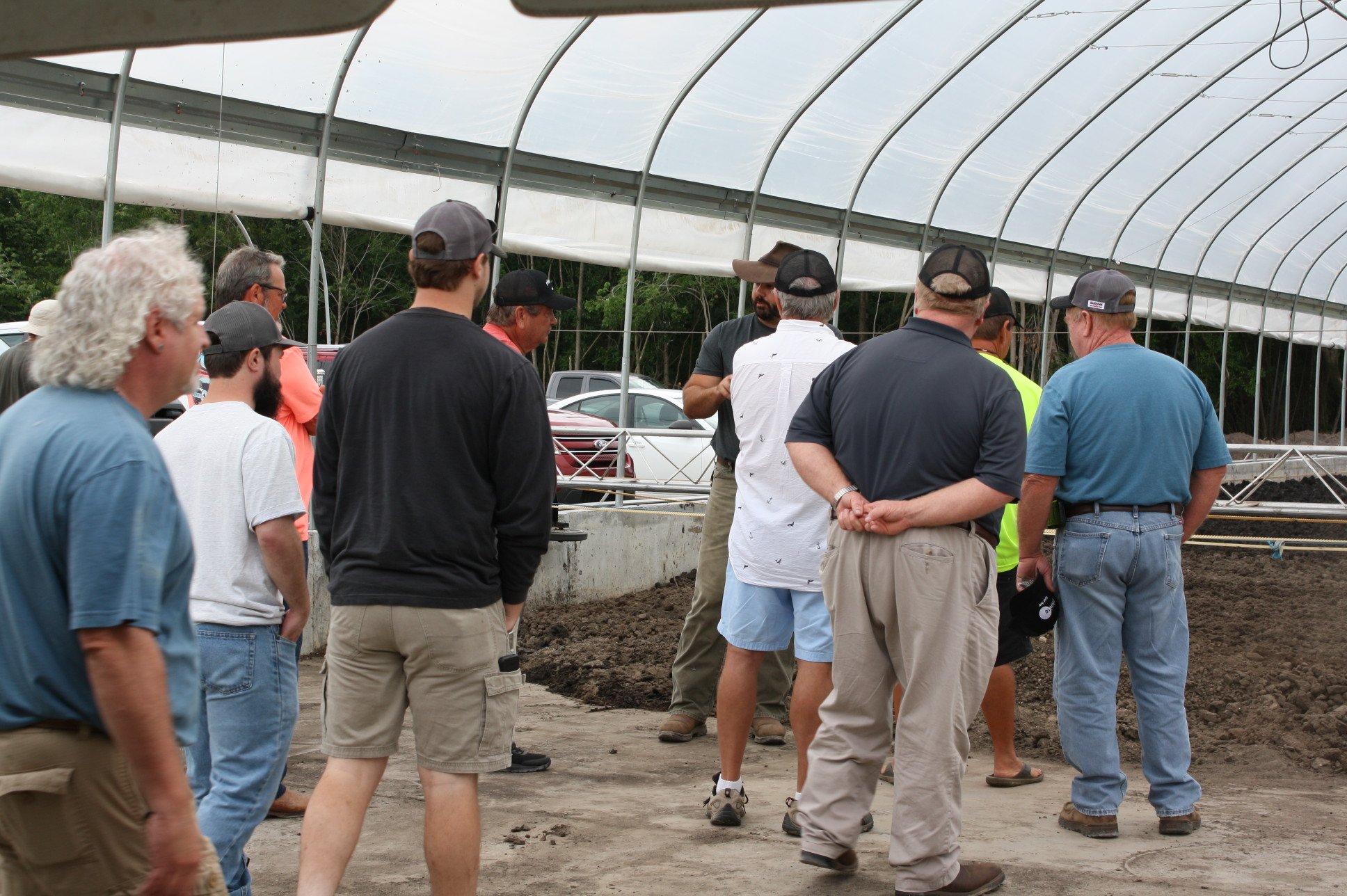
Jordan explains his drying systems process to farmers.

Phinite is a drying system that mines solids from hog lagoons and dries them in onsite drying stations using natural air flow and remotely operated equipment. Within 4-6 weeks, a batch of manure–approximately 100 tons–is dried. Then it is crushed and put through screen filters to prepare it for market. “We are in the business of mining solids,” Jordan Phey explained. “Solids are where the good minerals are, and 30% of them are within a foot of the liner in lagoons.” Phinite uses long-reach back hoes and other custom designed equipment to mine lagoons. They are able to harvest two years of manure for every one year of waste production. Set up in a research and test site on Dexter Edwards’ farm, they plan to have all the kinks worked out of the product and able to use them on farms as early as this October.     

Phinite handles the whole process from mining to market sales and returns a percentage of the sales to the farmer as a return of investment on their asset. Initial costs to install the equipment as well as some small maintenance is the responsibility of the farmer, but the difficult technical operations and everything else are managed by Phinite. 

Dexter Edwards, Don Butler, and Jordan Phey talk to pork farmers about Phinite Drying Systems.

Long term pork farmer, Phinite investor, and Phinite North American Representative Don Butler said, “in order to be successful, we have to address one of the biggest issues in North Carolina and that is our accumulating sludge. Phinite takes a problem and turns it into an asset. We think we have a valuable product that is perfectly timed for what is happening in the market (with fertilizer availability and cost). We view this as an ongoing mining operation with a revolving service.” 

Dexter Edwards, an executive with Smithfield Foods and one of the largest pork farmers in the state, said, “we’ve had a lot of people come to us claiming they had a solution. (We are well known for and made rich by our pork, turkey, and chicken products.) We are overproducing our product but today we have a solution that turns the waste burden into a product itself. I invested in bringing this to my property as long as Phinite was committed to making the changes to make it work. We are only time away from having this become a money maker for Duplin County. What we are going to be able to have is something that helps everyone. We will remove the argument that we are over producing (and we will have) a product to return to the farmland.” 

Dexter Edwards is known for being a frugal investor, but the Phinite operations on his farm are considerably large. He is not the only investor that sees Phinite as a working solution. HogSlat, Prestige Farms, and several other large family farms have invested in the company.
Farmers interested in having a Phinite Drying System are encouraged to contact the company through their website, via email to: info@phinite-us.com, or by calling 910-337-5662.