Warrior Woman Part 2: The Loving Warrior

If a man does not keep pace with his companions, perhaps it is because he hears a different drummer. Let him step to the music he hears, however measured or far away. –Henry David Thoreau, Walden

Whenever I go out with a crowd, I am usually the slowest one in the bunch. I could say it is because I am shorter or heavier than most of my friends, but that is not the truth of it. It’s because, like Wordsworth, I often wander lonely and aimlessly like a cloud. I am too busy enjoying the world around me to keep up with busy steps and schedules. This truth about me was especially annoying to my siblings as we toured Europe; I was forever holding them back from seeing more because I didn’t walk fast enough. They were anxious to skim across the surface, but I wanted to “live deep and suck out all the marrow” of it like Thoreau.

What I have learned over time is that we are all different, and not all types of people get along well together. My type of person drives the fast-stepping-tightly-scheduled person crazy. Nevertheless, we both have valuable approaches to life; we are both a reflection of God’s uniquely vast character (Genesis 1:27).

Recently, I went downtown and relaxed into a sturdy cedar rocker with a cool glass of freshly made lemonade. As I rocked, I watched a diverse group of people pass by me.

There was a young quinceanera princess in a long pink ruffled gown surrounded by gold party maidens and young tuxedoed princes. I admired as two of the princes held the princess’s long train as she walked. These young men were likely brothers or cousins, but they were showing her honor. The entire party filled the city center with happiness and laughter as drones hovered taking pictures.

Near me sat a beautiful African goddess. She wore a bright yellow two-piece jumpsuit that draped and swayed in the wind like the cape of a superhero. Her hair bounced in short black curls and the sun glistened off her Hollywood sunglasses. She smiled with warm affection and waved people in as they passed. She stood for strength, femininity, confidence, and pride. People were drawn to her.

From the corner behind me darted a tiny Asian woman. She was carrying a bag of takeout food from the Thai restaurant two doors down, and she was hurriedly talking on her cell phone. Her voice was calm and low, but it commanded attention. Her steps were quick and intentional. She had all the control and responsibility of a mother in the body of a worn and tired little girl. She smelled of ginger and jasmine and freshly fried rice.

Each of these women, though vastly different, reflected a piece of the beauty of God to me. Few, if any, of them knew that though. Christ was shining through their beauty and seeing purpose in our messy humanness.


If you read Ezer-Kenegdo Part 1, you already know part of my story and part of the power of this word describing women. If you have not read it, you may want to pause here and do so. In this part of the story, I want to talk about the loving heart of the woman we are meant to be.

As I watched the many men and women pass me, I wondered how many of them struggle with feeling less lovable than the people around them.

How many of them felt seen and heard?

How many of them felt valued?

How many of them felt needed?

These are all things that Christ came to show us, and they are things God designed us to long for. God designed us to want Him.

I may not get along with every type of person in the world, but I am supposed to love them. In so doing, I help point people back to the God they truly long for (Galatians 6:1). The kind of love I am talking about is kindness. We Christians are called to show kindness to those who are not living at God’s best in order to inspire them towards pursuit of it (Galatians 5:13-26).

Our loving kindness is Christ’s attitude adjustment shining through. It doesn’t always come easy. In fact, there are some people I would rather punch in the face than show love to. Nevertheless, I am learning that the people who rub like sandpaper across the surface of my life are opportunities for me to grow. People in the south have a saying for this; they say “bless their heart” for such as these with all the veiled venom of a rattler. I don’t have that skill…but I sometimes really wish I did.

In what ways do people challenge you?

How can you overcome those challenges to still show them grace and kindness?

Dumbing Down: What We Hide & Why We Hide It

I remember one of the earliest tasks I had in junior high school was to look up words in a dictionary that I did not know and expand my vocabulary. I couldn’t tell you now what some of those words were, but I can tell you they were hard. I remember the feeling of accomplishment as I learned them. I was getting smarter and the pride of knowing it made me feel better about myself than I knew was possible.

I remember the first time I started hiding my words. I was at a family gathering and everyone around me was talking in short, simple sentences. I remember thinking that my big words would sound out of place and snobbish if I spoke them there. I remember intentionally not using them so I could avoid hurting the people I loved. That was the beginning of my dumbing down.

Dumb down = to convey some subject matter in simple terms to avoid seeming condescending with technical or academic language; to become simpler in expression or content; to become unacceptably simplistic

Synonyms: oversimplify, downplay, trivialize, vulgarize, simplify

I told myself that dumbing down was a good thing because I wasn’t making others around me feel bad; I never stopped to consider that I might have challenged them to better themselves. It never occurred to me that I was potentially causing more harm than good.

South Beach Diet Whipped Chocolate Almond Snack Bars Close

I remember when diet food first started coming out. It was all the rave to find chocolate in low calorie, low fat versions. We thought all of these options made chocolate more approachable for those of us who found extra pounds in the real thing. But no matter how good a bar or cookie or cake looked, it was but a poor understudy for the real thing. It left you wanting the real thing even more.

When you oversimplify something, you create a distorted view of the truth and you set yourself and others up to believe the lie that something is not as important as it really is. When I dumbed down my language, I trivialized the importance of education and intellect. I robbed myself and others of the beauty of my work by removing its refined, subtle, and complex qualities.

I let shame and fear hide my intellect because I thought a simplified version of myself would be more inspiring and relatable. But when I think of the people I have found inspiring and relatable, I realize they were all people who were not afraid to be themselves and strive for excellence in their particular set of skills. They challenged others and bettered the world not by downplaying their gifts but by intentionally sharpening them. I believe that is what we are all called to do.

What are you gifted at doing?

What are you doing to better yourself in those areas?

How are you sharing those gifts with others?

Warrior Woman Part 1: What It Means To Be A “Helper” Of Men

Eve is given to Adam as his azer kenegdoor as many translations have it, his “help meet” or “helper.”…But Robert Alter says this is “a notoriously difficult word to translate.” It means something far more powerful than just “helper”; it means lifesaver.”The phrase is only used elsewhere of God, when you need him to come through for you desperately…. Eve is a life giver; she is Adam’s ally. It is to both of them that the charter for adventure is given. It will take both of them to sustain life. And they will both need to fight together. –Ransomed Heart Ministries

I remember the first time I ever learned about the “help meet”. I was doing a deeper study of the creation story in Genesis through a book from the Matthew Henry Bible Commentary. These books were massive, by the way, and filled shelves in my dad’s study as well as the studies of several other pastors I would come to love and admire over my lifetime. They weren’t just popular, they were the resource pastors were taught in school to consider a go-to for understanding the word of God. But Matthew Henry’s style of explaining the Bible was different. He was smoothly poetic at times and, other times, fiercely wordy. He read like a cross between Shakespeare and C.S. Lewis, and I imagined if I saw him, he’d have a long white beard and a gentle smile because that’s what wisdom looked like to me when I was a child. So this kind old Moses told me that there was a divine purpose for why Eve was made from a rib of Adam in the creation story.

…the woman was made of a rib out of the side of Adam; not made out of his head to rule over him, nor out of his feet to be trampled upon by him, but out of his side to be equal with him, under his arm to be protected, and near his heart to be beloved. —Matthew Henry, commentary on Genesis 2:22

I grew up with this knowledge that I was something truly designed to be special and treasured in this world. I was anxious to find my Adam and, like most little girls that feel this way, walk out the relationship of love and nurturing that God intended for us. I remember filling journals with my ramblings and questions: Is it this guy? Is it that guy? Again, like so many of my peers, I filled myself with shame for this longing. I felt utterly pathetic to not have a date by my sixteenth birthday, and completely worthless when he still didn’t show by my twenty-first. It is embarrassing how much I searched for him—and how much I had to say about it. I walked head first into a lot of hurt because of what C.S. Lewis calls the vulnerability of love.

“To love at all is to be vulnerable. Love anything, and your heart will certainly be wrung and possibly be broken. If you want to make sure of keeping it intact, you must give your heart to no one, not even to an animal. Wrap it carefully round with hobbies and little luxuries; avoid all entanglements; lock it up safe in the casket or coffin of your selfishness. But in that casket—safe, dark, motionless, airless—it will change. It will not be broken; it will become unbreakable, impenetrable, irredeemable.”  –C.S. Lewis “The Four Loves”

Our hearts were meant to love, but sometimes love is a battlefield.

Pat Benatar would say love and romance is about fighting with and hurting the one you love, but it’s really supposed to be more like how Warren Barfield sings it; love is not a fight but it’s something worth fighting for. That song came out of a place of real hurt and real healing. A change of perspective didn’t just save the Barfield marriage; it saved the marriages of others who heard the song. You can read more about that here.

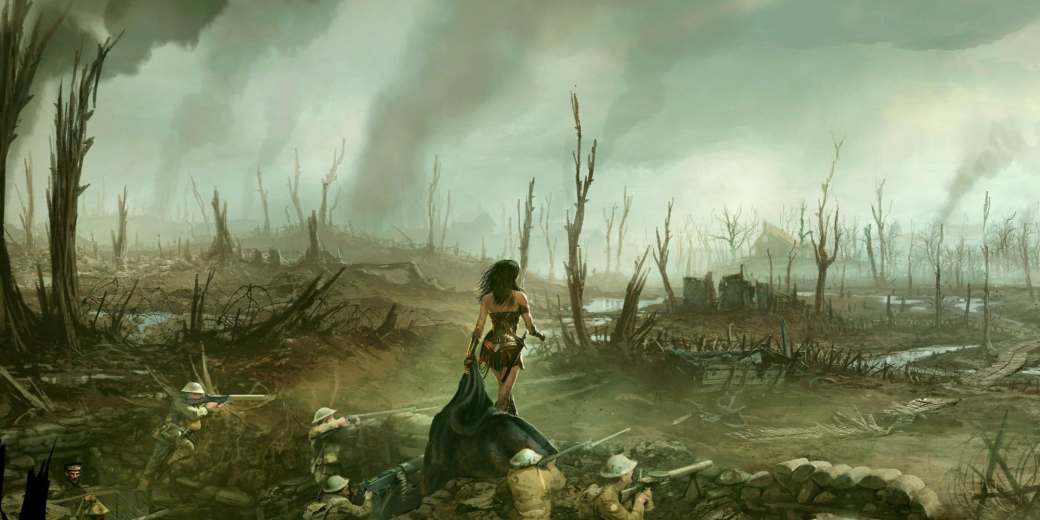
Women everywhere are uniting in excitement over a new Hollywood heroine: Wonder Woman. In this film, the role of a kick-butt rescuer is given to a woman. There is a scene in the film where Diana–Wonder Woman–goes out into battle in World War I to rescue enslaved people on the other side of the Germans. To rescue them, she has to cross No Man’s Land, a place where no man has been able to cross alive. No. Man. While the men are telling her not to go, Diana drops her cloak and runs into the war.

Wonder-Woman-Movie-Concept-Art

Images credited to the film “Wonder Woman”, Gal Gadot. Warner Brothers, 2017.

Diana is a fierce defender of truth and justice. She fights for love because she sees fallen mankind from a godlike perspective and wants to restore them. She can see the victory before it happens because she knows the source of her strength is with the gods, and she trusts that the gods want mankind to be healed. Diana is a symbol of what the Christian woman is supposed to be.

In Christ, we have a higher calling to love and battle. We are called to intercede for the lost as representatives of Christ in the world (Ephesians 5:1-33; 2 Corinthians 5:20). We are called to fight for others with strength and courage (Deuteronomy 10:17-19; Deuteronomy 31:6). Why? Because Christ is calling back his Creation from the fall (Colossians 1:15-23).

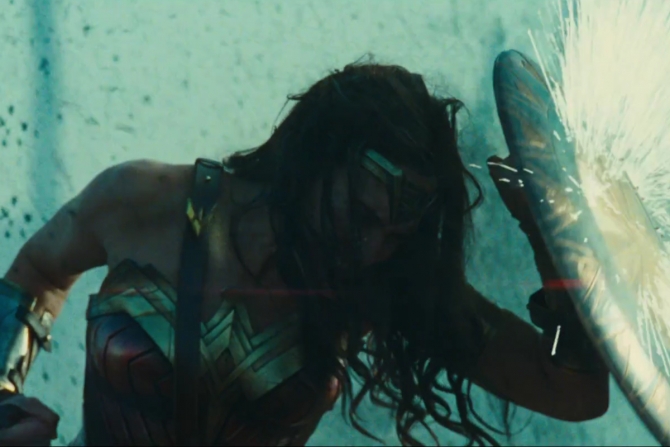
I’ll admit that my first experience with this symbolism did not set well with me because she was fighting like Azer-Kenegdo (pronounced Azur-ned-go) with or without a man beside her. She didn’t stop to have a pity party that her Adam was not there to fight life with her (what I would have done). No, Diana ran out to battle alone because she knew who she was and what she was fighting for. I believe Christ is calling us to be bold for him and, in the same way, pursue our purpose in the world.

wonder_woman_battlefield_no_mans_land

Images credited to the film “Wonder Woman”, Gal Gadot. Warner Brothers, 2017.

The good news is that Diana isn’t left to fight alone. An Adam does show up for her. The point, though, is that she was not dependent on him to live out her purpose in this world. In fact, sometimes she has to fight alone even when she has him (that’s a story for another day). In the same way, ladies, God is calling us to rise up and see and join the fight.

To learn more, consider following the 14-Day FREE Devotional, The Heart of the Warrior, on the YouVersion Bible app. This devotional is based on a great book by this title written to tell the man’s part of the story. You can read more about it here. The Eldridges are well-known for their books on this subject for both women and men: Captivating, Becoming Myself, and Wild at Heart. You can read more on their website here.  Last but not least, you may want to consider a full getaway emersion experience here.